Bridge strikes: what the driver must do in the first five minutes, and what lands on you as operator
A Scania from my old fleet hit a railway bridge on the A5 in 2019. Nobody was hurt. The reporting alone took three days. Here's what operators must do, and the paperwork trail that follows.
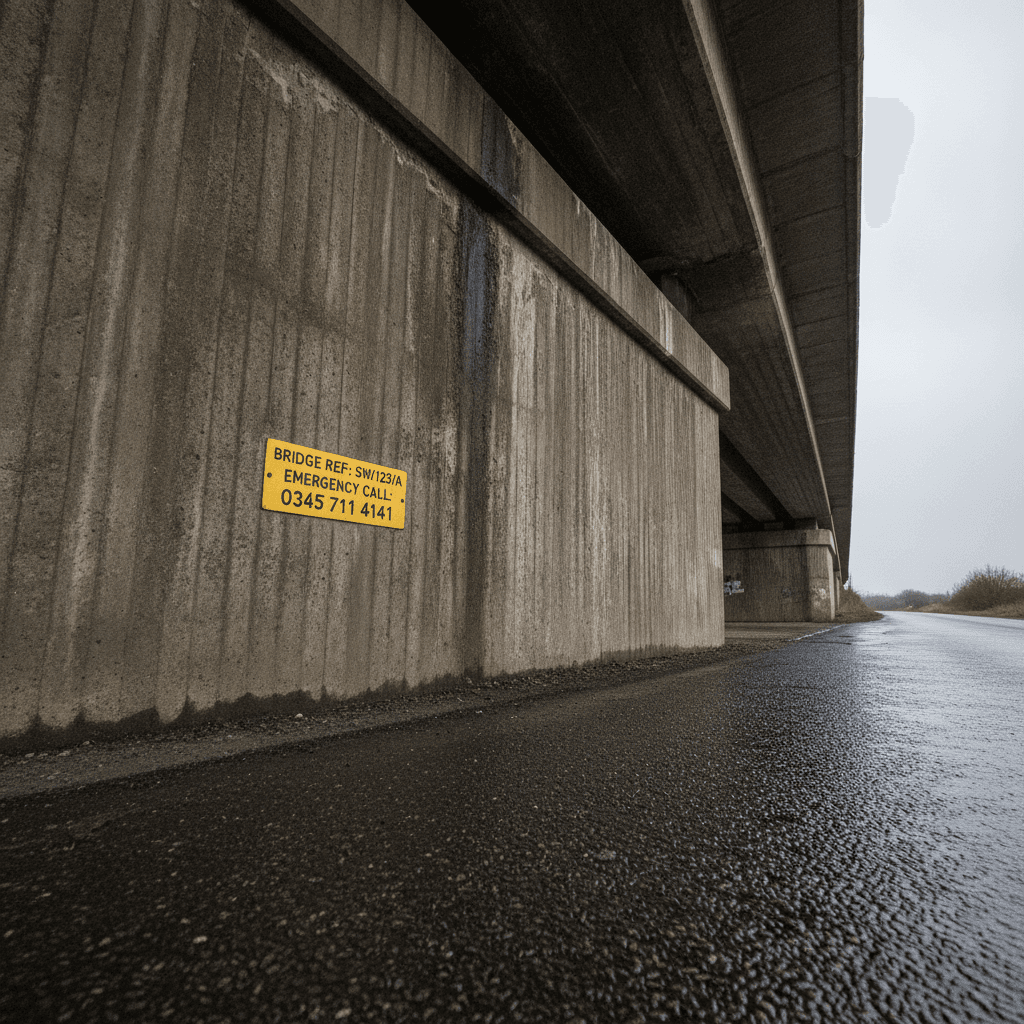
A Scania curtainsider from my previous fleet hit a railway bridge on the A5 in 2019. The driver had taken a diversion route that his satnav suggested, missed a height restriction sign, and the top corner of the trailer caught the underside of the bridge. Nobody was hurt. The trailer sustained about £4,000 of damage. The bridge, according to Network Rail's subsequent inspection, had superficial marks.
The reporting, the inspection coordination, and the management time spent handling the aftermath took the better part of three days. Not because the incident was severe — it wasn't — but because there's a specific reporting and notification process that has to run correctly regardless of the severity, and getting it wrong creates a second problem on top of the first.
What a bridge strike actually is — for compliance purposes
A bridge strike is any contact between a vehicle or its load and a bridge structure. That includes railway bridges, road bridges, and canal bridges. The contact can be with the bridge deck, the abutments, the parapets, or the support structures. It doesn't need to cause damage to count as a strike. The contact itself is the event.
Under the Road Traffic Act 1988, if a vehicle is involved in an accident on a road that results in damage to property — including a bridge — the driver must stop and, where reasonably practicable, report the accident to a police officer or at a police station within 24 hours. A bridge is property. This applies regardless of whether the damage looks minor.
Separately — and this is the bit that surprises operators — there are specific reporting obligations for railway bridge strikes because of the risk to railway infrastructure. A strike that looks minor from the road may have compromised the structure in ways that aren't visible from the ground but that affect the safety of trains passing over it. That's why the notification chain for railway bridges is more involved than for other property damage.
The first five minutes: what the driver must do
Stop immediately — safely, without obstructing traffic any more than necessary. Assess the driver and any passengers for injury. If there are injuries, call 999 immediately.
Then: look for the identification plate on the bridge. Every railway bridge in Great Britain should have a plate showing a reference number and a telephone number for the relevant railway infrastructure manager — in most cases, Network Rail. That plate is the first point of contact. Call the number. Report the strike, describe the location (bridge reference number from the plate, plus nearby road markings or milestones), and tell them the nature of the contact and whether any debris fell. Don't leave the scene until you've made that call or until the railway infrastructure manager has told you it's safe to do so.
No plate visible, or the plate is damaged? Call the Network Rail emergency helpline directly: 03457 11 41 41. That number runs 24 hours.
After the railway notification: call the police. Report the accident as required under the Road Traffic Act. The police will log it and may attend, particularly if there's any question about structural integrity or if traffic management is needed.
What the operator does next
Your driver should call you — or the depot — as soon as they've made the bridge notification and police call. You need to know:
- The bridge reference number and location
- Whether Network Rail or police have attended or are attending
- The extent of vehicle/trailer damage
- Whether the driver is fit to drive the vehicle away or whether recovery is needed
- Whether any other vehicles or persons were affected
Your next call is to your insurer. Notify them of the incident as quickly as possible — most fleet insurance policies require prompt notification of incidents likely to result in a claim, and a bridge strike almost always qualifies. Some policies have specific bridge strike clauses. Know what yours says before an incident happens, not while you're in the middle of managing one.
Network Rail's inspection and your liability
Following a railway bridge strike report, Network Rail will inspect the bridge. If they find structural damage attributable to the strike, they'll invoice the vehicle operator for repair costs. These costs can be significant — repair work on railway infrastructure isn't cheap, access has to be arranged around train timetables, and possession costs are real. Minor strikes with no structural damage might result in a small inspection fee. More significant contacts can run to tens of thousands of pounds.
This is where your goods-in-transit and fleet insurance intersects with your liability exposure. Most fleet policies cover damage to third-party property, including bridge damage. But insurers will ask for the full sequence of events: what height restriction was displayed, what height was the vehicle, did the driver follow your height restriction policy, and what height restriction information was loaded in the vehicle's navigation device?
That last question has become more prominent in the last few years. Operators who provide drivers with commercial HGV navigation devices (CoPilot, TomTom Trucker, and equivalent) loaded with current map data, and who can show a policy requiring their use, are in a materially better position with insurers than operators whose drivers use consumer satnavs or phone apps that don't have accurate HGV routing.
The DVSA and Traffic Commissioner angle
A bridge strike by itself doesn't automatically trigger DVSA or Traffic Commissioner action. It's a road traffic event, not inherently an O-licence enforcement matter. But a bridge strike caused by a vehicle exceeding a height restriction is potentially a prohibition-triggering incident if the vehicle was overloaded or incorrectly configured, and any serious bridge strike that generates a police report may appear in the OCRS system as a road traffic offence outcome.
The situation that does generate Traffic Commissioner interest is a pattern. A single bridge strike is an incident. Multiple bridge strikes on the same fleet within a short period are evidence of a systemic failure in driver training, routing policy, or load planning — and that's the kind of pattern that generates a 'minded to' letter from the TC asking for an explanation.
After any bridge strike, carry out an incident review. Not a blame exercise — a genuinely analytical review of how the vehicle came to attempt that route, what the driver was using for navigation, whether the height restriction signs were visible, and whether your height restriction policy was adequate. Document the review and what you changed. That document is worth considerably more than silence if the question ever comes up at audit.
Fleet height restriction policy: what it should cover
Every HGV fleet should have a written height restriction policy that drivers receive at induction and that's reviewed annually. It should cover:
- The maximum vehicle height for each vehicle type in the fleet
- The requirement to use HGV-specific navigation
- The procedure for any route that hasn't been pre-cleared
- What to do if a height restriction sign is obscured or unexpected
- The reporting procedure for any contact with a structure
- The consequence for deliberate non-compliance
The reporting procedure should be explicitly: stop, call the bridge number or Network Rail emergency line, then call the depot. Drivers who don't stop and don't report are a significantly worse position — for themselves and for the operator — than drivers who handle it correctly.
Low loaders, abnormal loads, and special cases
Standard fleet vehicles up to 4.95m in height (the typical maximum for a curtainsider or flatbed configuration) face different bridge risk exposure than abnormal loads and low-loaders carrying tall machinery or structures. For any load that approaches or exceeds standard height limits, a pre-planned route is essential — not optional. The route planning for abnormal loads requires police notification, and for very tall loads, bridge owners including Network Rail will need to be consulted as part of the Special Types movement permission process.
Standard fleet vehicles hitting standard bridges is almost always a driver behaviour or navigation failure. Abnormal load bridge contacts are almost always a planning failure. They need different root-cause analyses and different preventive measures.
The standing order every driver should carry
I keep a laminated card in every cab. On one side: the vehicle's maximum height and the height of the trailer currently attached. On the other side: the bridge strike reporting procedure — Network Rail emergency number, depot number, and the note that stopping and reporting is always required regardless of visible damage.
It costs nothing. A driver who hits a structure at 11pm on a deserted road and doesn't know the procedure is at risk of driving away without reporting, which transforms a manageable incident into a criminal one. The laminated card removes the 'I didn't know what to do' defence.