HGV driver working for two operators: whose download obligation is whose
My driver worked Mondays to Wednesdays for me and Thursdays to Fridays for another haulier. One driver card, two operators — both legally required to download it. Neither of us had a system for it. Here's how the obligations split.
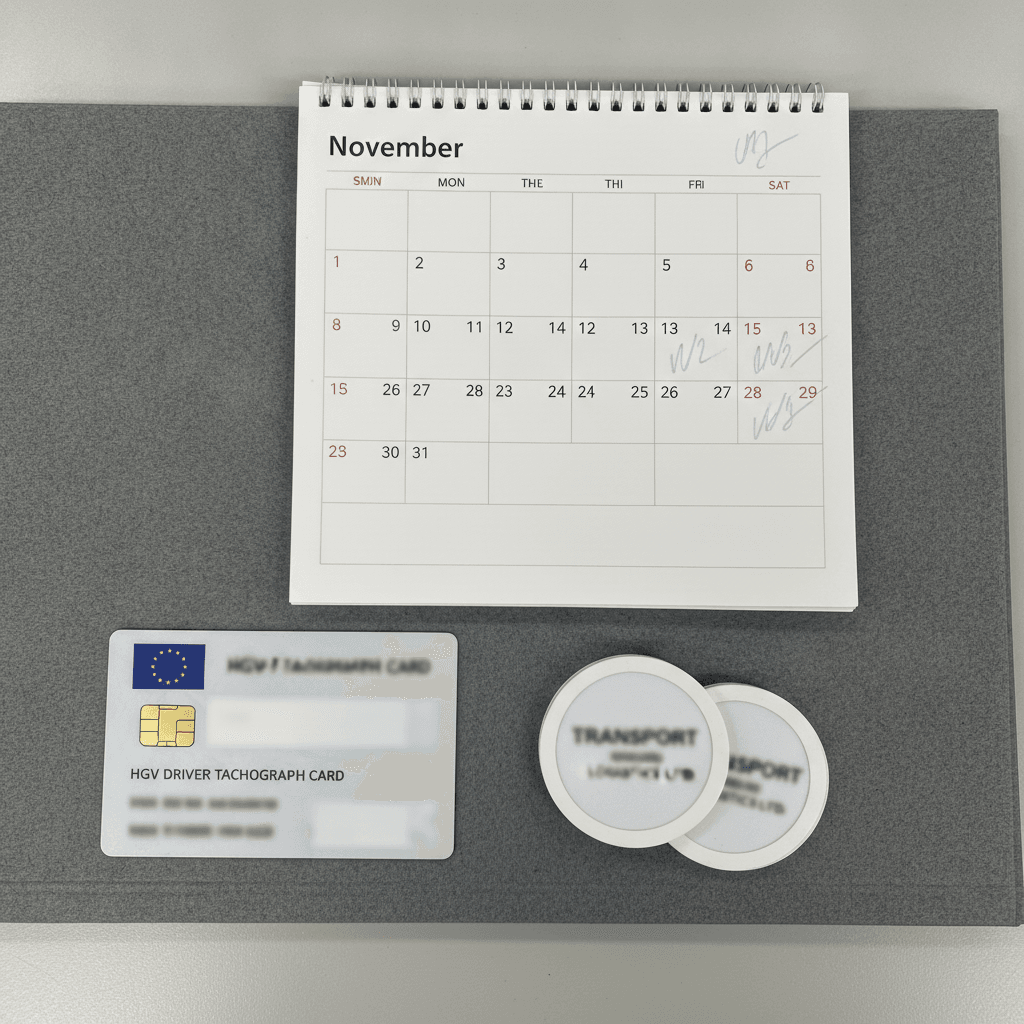
The arrangement seemed straightforward at the time. My driver — good, reliable, local — wanted to pick up extra shifts. Another haulier about three miles away was short on Thursday and Friday cover. For about eighteen months, he worked three days a week for me and two days a week for them.
One driver card. Two operators. Both of us with a legal obligation to download that card within 28 days of the previous download. Neither of us with any system that accounted for the other operator's download activity. When DVSA came to my premises for a documentary audit, the examiner asked to see the download log. The card had been downloaded on day 26 — by the other haulier. I had no record of it, no knowledge of it, and no download of my own to show for the period.
We sorted it out — the other operator was able to provide a copy of the download record — but it was a near miss and it highlighted a gap I've seen at other fleets since. Drivers who work across multiple operators are more common than people think, particularly in regional haulage where drivers do casual agency shifts alongside their main employer. The tachograph compliance obligations don't simplify just because the driver has a foot in two camps.
The 28-day download rule and why it applies to each operator
Article 10 of Regulation (EU) 165/2014 (retained in UK law post-Brexit) requires that driver cards be downloaded at regular intervals. In UK practice, DVSA's guidance and the standard under the Earned Recognition scheme sets this at a maximum of 28 days between downloads. An operator must be able to demonstrate that every driver card used in their vehicles has been downloaded within the 28-day window.
When a driver works for two operators, each operator is responsible for downloading the card within 28 days of whenever the driver last drove for them — or, more precisely, within 28 days of the previous download, to ensure no data is lost from the card's rolling memory. The card doesn't care which operator downloads it; it stores the last 28 days or so of driver activity regardless of which vehicles that activity occurred in.
This means that if Operator A downloads the card on day 1, and Operator B downloads it on day 18, and the driver then works only for Operator A for the next month — Operator B may believe they're compliant because they downloaded on day 18, but Operator A's next download obligation has technically been met by whoever downloads first past day 28 from the last download. In practice, most tachograph analysis systems track the download date per card, not per operator. The analysis software doesn't know which operator did the last download unless someone tells it.
The practical solution I now use: a simple agreement with the other operator that we share download confirmation — a brief email or WhatsApp message when either of us downloads the card, so the other knows when the 28-day clock last reset. It takes 30 seconds. It means neither operator is ever surprised by the calendar.
What each operator sees when they download
When you download a driver card, you get the complete data on the card — not just the activity from your own vehicles. The tachograph card records activity across all vehicles the driver has used, identified by vehicle unit number. If your driver has been working for another operator in their vehicles, that activity is visible in your download.
This raises obvious GDPR questions. The activity data for the periods when the driver worked for the other operator is the other operator's data in a business sense — but it's the driver's personal data in a GDPR sense, and you're a data controller processing it. The lawful basis is legal obligation under the tachograph regulation and CDG/drivers' hours law: you're required to hold and analyse the card data to demonstrate compliance. But you should only use the data for that purpose — demonstrating your own compliance obligations — and not share the cross-operator activity data with third parties for any other reason.
In practice, this means: download the complete card, analyse the complete data for working time and driving hours compliance purposes, but don't share the activity data from the other operator's periods with anyone who doesn't have a direct compliance need to see it. Keep it in your tachograph analysis system in the usual way. If DVSA asks to see the download, you produce it in full — the cross-operator activity is relevant context for understanding the driver's complete rest and driving hours position.
Infringement debriefs when the driver works two fleets
Your obligation to debrief infringements extends only to the periods when the driver was working for you. If an infringement shows up in the download that occurred on a day when the driver was operating the other haulier's vehicles, that's the other haulier's debrief obligation — not yours.
But. You can see it. You have the data. And the question of whether you have any obligation to flag it to the other operator — and whether doing so would be appropriate under GDPR — is genuinely murky. My approach is to inform the driver that there's an apparent infringement showing in the cross-operator period and that they should raise it with the relevant operator. The infringement record in my system notes that it falls outside my operating period and was referred to the driver. It satisfies my obligation to have reviewed the full card data without requiring me to actively debrief activity I wasn't responsible for generating.
Vehicle unit downloads where both operators use the same driver
Vehicle unit downloads are simpler, because the unit is clearly yours or theirs — it stays with the vehicle. Your obligation is to download your own vehicle units every 90 days. The other operator downloads theirs. No shared complication there.
What can get complicated is when a driver regularly swaps between vehicles from different operators on the same day — say, collecting a vehicle from the other operator's yard early morning, running a delivery, then switching to one of your vehicles for an afternoon job. The tachograph records everything sequentially. Both vehicle units capture the activity from when the driver was in that cab. Both operators need to download their own units on schedule. Again, no procedural complexity — just the usual 90-day discipline applied separately to each fleet.
Agency drivers: the same issue, less coordination
Everything above applies — in a more distributed way — to drivers who work via an agency across multiple operators in the same week. An agency driver who works for three different hauliers in a week is generating tachograph data in three different vehicle units, all on one card. Each operator they worked for in the 28-day period has a download obligation. In practice, most agency operators download the card at the start of the engagement, and then at the end or at the 28-day mark — but there's no coordination between the different hauliers who used the same driver.
For agencies, this is a known problem. The reputable ones brief their drivers specifically on card download obligations and maintain their own download records. For operators using agency drivers, the safest practice is to download the card yourself at the start of any engagement lasting more than a few days, and again when the driver leaves your fleet — regardless of whether the agency has confirmed their own download.
It sounds administratively burdensome. Once you have the system, it takes about three minutes per driver. The alternative — a documentary audit where you can't produce download records for a driver who worked for you for six weeks — takes considerably longer.