HGV tachograph seal: who can break it, what triggers a re-seal and the workshop record DVSA checks
DVSA found a broken tachograph seal on one of my trucks at Knutsford services. My driver knew nothing about it. A body repair shop had cracked the housing replacing a windscreen six weeks earlier. Here's what the sealing rules require and why workshops get this wrong.
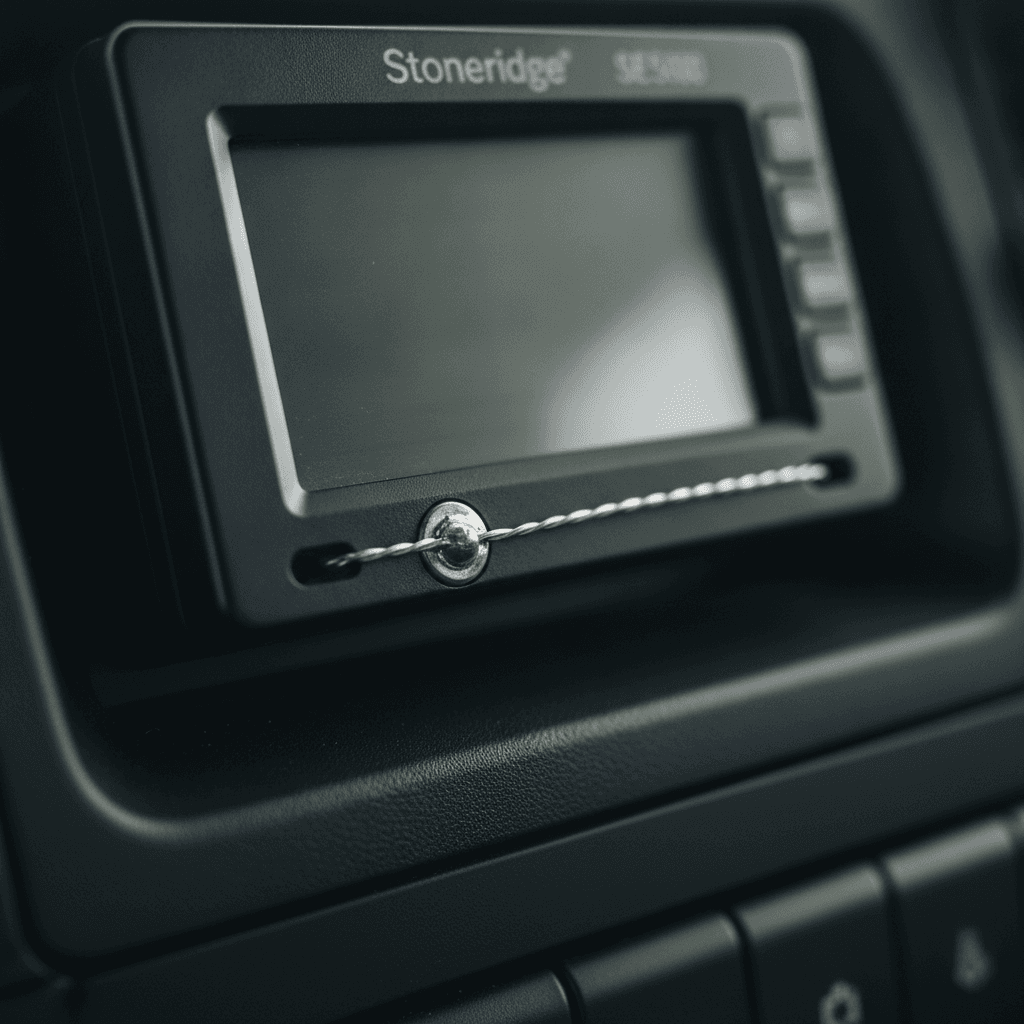
The DVSA examiner at Knutsford asked my driver to pull over for a documentation check. Forty minutes later she called me. The tachograph had a broken seal. Not tampered with — the examiner was fairly clear it didn't look deliberate — but broken. The vehicle unit housing had a hairline crack where the seal wire had been attached.
I spent two days working backwards through the maintenance history before I found it. Six weeks earlier, a body repair shop had replaced the windscreen after a stone chip. They'd apparently needed access to the dash area and, in the process, had disturbed the tachograph housing. Nobody at the workshop knew what the seal was, nobody flagged it when they put the vehicle back together, and my PMI that month hadn't spotted the crack.
The outcome: immediate prohibition, recovery to a DVSA-approved tachograph centre, re-seal, and a PG9 clearance process. The paperwork and lost operational time cost more than the windscreen job. And my OCRS took a mark it didn't deserve from an error I wasn't responsible for but was responsible for catching.
Why the seal matters
The tachograph seal exists to protect the integrity of the calibration. When a DVSA-approved tachograph centre calibrates a vehicle unit, they set the unit to the vehicle's exact wheel circumference and speed parameters. The seal — a wire seal attached to the housing and sometimes to the wiring connections — demonstrates that nobody has accessed the internal components since that calibration was done. A broken or missing seal raises the question of whether the calibration data has been altered.
This is why a broken seal is taken seriously even when there's no evidence of deliberate interference. The legal framework under Regulation (EU) 165/2014 (retained in UK law post-Brexit) requires that seals on tachograph components be intact and that any removal or replacement be carried out only by approved installers and repairers — DVSA-approved tachograph centres.
In practical terms, the seal is small, easy to damage accidentally, and often invisible to anyone who doesn't know to look for it. A broken seal is not the same as a tampered tachograph. But at a roadside stop, the examiner can't know which it is — and the burden is on the operator to demonstrate compliance.
Who can legally break the seal
Only one category of person is authorised to work on sealed tachograph components: a DVSA-approved tachograph installer and repairer. This is a specific approval, separate from a general vehicle workshop approval. Not every MOT station holds it. Not every commercial vehicle workshop holds it. Certainly not general bodywork or windscreen repair shops.
An approved tachograph workshop is authorised to: install and calibrate tachograph units, break seals to access components for legitimate repair or calibration purposes, and re-seal and re-calibrate after work is completed. Every approved centre holds an approval certificate from DVSA, and DVSA maintains a list of approved installers and repairers that operators can check.
If any other workshop — MOT station, body repair shop, general garage — needs to access the area around the tachograph, they must not disturb the seal. If they do need to work in that area and the seal is at risk, they should either decline the work (and refer to a tachograph-approved centre) or make absolutely certain the seal is undamaged after their work and, if in any doubt, direct the operator to an approved centre for re-inspection.
In practice, general workshops don't always know this. My windscreen shop certainly didn't. And the driver — who was there when the windscreen was fitted — didn't know enough about tachograph seals to check. The failure was mine, for not briefing the driver on what to check after any cab work, and for not including a tachograph seal inspection in the walkaround check routine.
What triggers a legitimate seal break
Routine tachograph calibration is the most common reason for an approved centre to break and replace seals. Every tachograph must be calibrated every two years, and the calibration process necessarily involves the approved centre accessing the sealed components. Post-calibration, a new seal is applied and the calibration plaque — fixed inside the cab, usually next to the tachograph — is updated to show the date of calibration and the next due date.
Other legitimate triggers include:
- Replacement of a faulty tachograph head or vehicle unit — the replacement unit needs to be installed and calibrated by an approved centre
- Repair of a fault in the tachograph's movement sensor or wiring — again, approved centre only
- Type change on the vehicle (new engine, new axle configuration) affecting the wheel circumference parameters the tachograph is set to
- Following a vehicle accident that may have disturbed the tachograph wiring or housing
What is not a legitimate trigger is general cab refurbishment, dash work, or any repair that happens to be near the tachograph but doesn't require access to the sealed components. The approved centre should be involved as soon as any work is planned that could affect the tachograph — not called in after the fact when the damage is already done.
What DVSA looks for at the roadside and at audit
At a roadside stop, an examiner checking a tachograph will look at the calibration plaque in the cab — this should show a date within the last two years, and the details of the approved centre that did the last calibration. They'll look at the seals visible on the vehicle unit housing. A seal wire cut or missing, or a housing that shows signs of forced access, will result in the vehicle being prohibited pending inspection at an approved centre.
At an operator audit, DVSA wants to see the calibration certificates from the approved tachograph centre for each vehicle — showing date of calibration, next calibration due date, and confirmation that the unit was sealed. These should be kept on file for the life of the vehicle, or at minimum for the period covered by your maintenance record retention (15 months for PMI records, though calibration certificates are worth keeping longer).
If a seal has been broken and replaced outside of a routine calibration — say, because of an incident or a workshop error — there should be a record of that: which centre replaced the seal, on what date, and why. An unexplained gap in calibration continuity — a seal that's clearly newer than the calibration plaque date — is a red flag at audit.
What I changed after the Knutsford incident
Three things. First, every driver briefing now includes a specific item about tachograph seals: what they look like, where they're located, and the instruction to check them after any cab work — windscreen replacement, dash repair, electrician work — and report any damage immediately.
Second, my PMI inspection sheet includes a tachograph seal check as a specific line item. Before Knutsford, I'd assumed the tachograph was covered under "instruments and gauges." That's not specific enough. The seal check is now explicit: seal present, seal intact, calibration plaque date within two years.
Third, any supplier who works on the cab area of my trucks now gets a one-page briefing note: do not work on or near the tachograph unit, and if in doubt, call me before proceeding rather than after. It takes two minutes to send. It would have saved me the whole Knutsford afternoon.