Bath, Bradford, Sheffield and Tyneside Clean Air Zones: the charges catching van fleets off-guard
My driver got a Bath CAZ penalty the second week we started running down the A4. £9 a day doesn't sound like much until it's £63 a week per van.
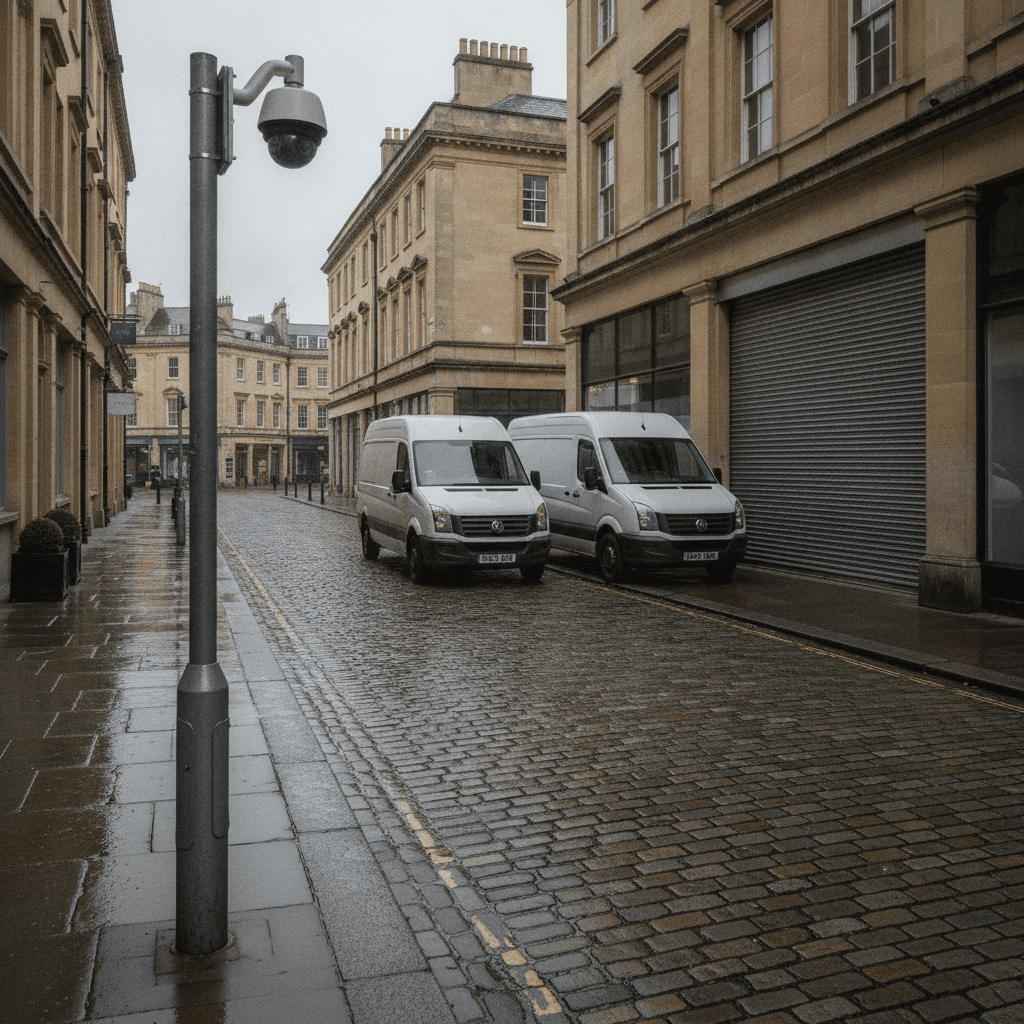
The Birmingham and London charges get all the column inches. Meanwhile my driver was quietly accumulating Bath CAZ penalties every Tuesday for a fortnight before I noticed. Nine pounds a day doesn't sound catastrophic. But we had three vans on that route. Three vans, two days a week each, for two weeks — that's £108 before I'd even seen the first notice.
There are seven live Clean Air Zones in the UK right now. Not including London's ULEZ and LEZ, which operate under separate legislation. The seven national CAZ scheme zones are Bath, Birmingham, Bradford, Bristol, Portsmouth, Sheffield, and Tyneside. Manchester gets mentioned constantly — it's not live. The scheme was cancelled.
If you run diesel vans or HGVs into any of those seven cities, you need to know which ones charge your vehicles and what the daily rate is. Because the charge is per day, per vehicle, whether you're in the zone for five minutes or eight hours.
Why CAZ zones work differently from ULEZ
The national CAZ framework sorts zones into four classes. Class A covers buses and taxis. Class B adds HGVs, coaches and minibuses. Class C adds LGVs — your vans. Class D adds cars.
Each city implements whichever class they were given approval for. Some only charge certain vehicle types. Some charge across the board. Before assuming your vans are hit, you need to check each zone's class and whether your vehicle standard (Euro 5 or Euro 6 for diesel) is compliant.
The general rule: diesel vans that are Euro 6 are compliant in most zones. Euro 5 diesel vans typically aren't. Petrol vans generally are compliant if they meet Euro 4 or later. But that's the general rule and zones have specific criteria — check the national CAZ vehicle checker at gov.uk, not a third-party site.
Bath: the expensive one nobody takes seriously until they get the bill
Bath's zone covers the city centre and charges private cars, LGVs, HGVs and buses. It's a Class D zone. That means your Euro 5 diesel van is caught.
The daily charge for non-compliant LGVs (vans up to 3.5t) in Bath is £9. For HGVs over 12 tonnes, it's significantly higher — Bath charges around £100 per day for non-compliant large goods vehicles. If you're running a 44-tonner into a Bath distribution centre twice a week with a non-compliant tractor unit, that's a substantial weekly cost.
Bath's zone is geographically compact but it catches vehicles on routes that don't feel like city-centre driving. The A4 through Bathford skirts the zone boundary. Some operators assume they're clear until the penalty notice arrives showing their plate inside the zone boundary.
Use the national CAZ vehicle checker with your specific plate. Don't eyeball the map.
Bradford: live since 2023, often overlooked
Bradford's zone went live in September 2023. It charges non-compliant private hire vehicles, taxis, LGVs, HGVs and buses. The zone covers the city centre and runs until 8pm daily.
Bradford is a Class C zone for LGVs and HGVs. Non-compliant diesel vans are charged. If you're running into Bradford's industrial estates or distribution centres off the ring road, check whether your routes pass through the zone boundary.
The Bradford zone caught a number of national operators off-guard because the launch was relatively quiet compared to Birmingham's. I spoke to one TM running a mixed fleet in West Yorkshire who genuinely didn't know the zone was live for two months after it opened.
Sheffield: phased and ongoing
Sheffield's Clean Air Zone has had a complicated rollout. The original plans were revised, and the version that went live focuses on taxis, private hire vehicles and buses rather than vans and HGVs. The Class B elements — buses and coaches — are included. Whether your diesel vans are charged depends on the current iteration of the scheme.
Sheffield is the one I'd check most carefully before assuming you're clear. The city has made changes to the scope since the original announcement, and what was true twelve months ago may not be the current position. The national CAZ vehicle checker with your plate is the only reliable way to confirm whether you're paying today.
Portsmouth: charging since 2021
Portsmouth went live in November 2021. It's a Class B zone, which means it targets buses, coaches, taxis and LGVs — your vans are caught if they're non-compliant Euro 5 diesel.
Portsmouth's geography creates an issue for operators: the city is effectively on a peninsula, so any delivery route onto Portsea Island that goes through the zone boundary gets charged. There's no way around it for certain postcodes. If you're servicing residential or commercial customers in the city centre, Portsmouth, you're in the zone.
The penalty notice process for non-payment is the same across all CAZ zones: penalty notice at the daily rate, a discount window for prompt payment (typically 50% off if paid within 14 days), then the full penalty if you miss that, then debt recovery. Same structure as a PCN.
Tyneside: Newcastle and Gateshead together
Tyneside covers Newcastle and Gateshead and is Class B — buses, taxis and LGVs. It launched in January 2023. The zone runs across both banks of the Tyne, and vehicles crossing the river into the zone from either direction can be caught.
Tyneside catches operators who service both sides of the river without realising the zones link up. A van running deliveries in Gateshead and then crossing to Newcastle in the same day may be charged once for the zone entry, depending on how the zone boundary sits relative to the routes. Check the map.
Manchester: the one that didn't happen
Manchester gets mentioned constantly in discussions about CAZ enforcement. It was heavily trailed. The Greater Manchester combined authority developed detailed plans for a Class C zone covering the city. But the scheme was cancelled in 2021 following significant political opposition and concerns about the financial impact on drivers and small businesses.
As of now, Manchester has no live Clean Air Zone. There's no daily charge for entering Manchester in a non-compliant vehicle under the national CAZ framework. ULEZ-style charging doesn't apply there. If someone tells you they're getting CAZ fines from Manchester, they're confusing it with something else, or they're operating in one of the other zones.
That matters for fleet route planning. Manchester shouldn't be in your CAZ mitigation budget.
Checking and paying
The national vehicle checker is at gov.uk/clean-air-zones — you put in your registration and it tells you which zones you're affected by and what the daily charge is. It covers all seven live zones. Pay daily through the same service or through each zone's own payment portal.
For fleets, you can set up direct debit arrangements with some zones. Birmingham has a fleet account system. Bath and Bradford have similar arrangements. It's worth setting these up if you have vehicles running into those zones regularly — manual daily payment across a 20-van fleet is a lot of admin.
Auto-pay doesn't mean auto-compliance. You still need to understand which vehicles are compliant and which aren't. Because the cheaper option, where it's viable, is upgrading the vehicles rather than paying daily charges indefinitely. A Euro 6 diesel van that's compliant in all seven zones is more economical on longer fleet replacement cycles than paying £9 a day for a Euro 5 that's got three years left in it.
Penalties and the keeper liability problem
CAZ penalty notices go to the registered keeper, not the driver. If your vans are registered to the company, the notices come to you. That's normally straightforward. But if you're running leased or hired vehicles, the penalty notice goes to the leasing company first — and they pass it on to you, often with an admin fee on top.
Check your lease agreements for how CAZ penalties are handled. Some lease companies charge a fixed admin fee per notice, similar to how they handle PCNs. If you're running a mixed lease fleet into Bath twice a week with four vans, those admin fees stack up alongside the actual charge.
Get your routes mapped against the live zone boundaries before you commit to contracts in those cities. The compliance cost is a real input to pricing and route planning — treat it like a fuel or toll cost, because that's effectively what it is.