Driver penalty points and your O-licence: the notification obligation fleet managers get wrong
A driver on my fleet picked up six points in January. I found out in March, when DVSA asked why I hadn't told them. Here's the 28-day rule and why it catches operators every year.
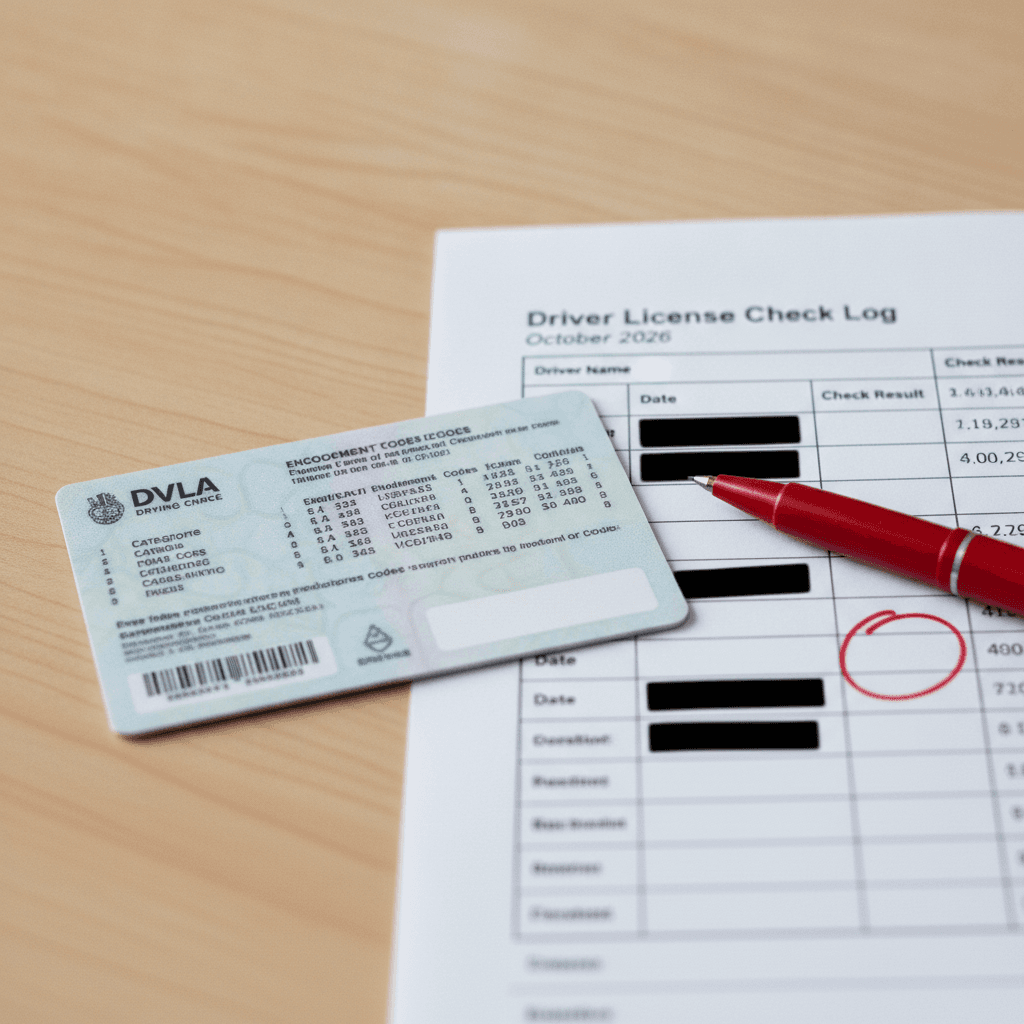
The 28-day clock started when he got the points. Not when I found out.
January 2022. One of my drivers was caught using a handheld mobile phone in his private car over Christmas. Six penalty points, fine paid, said nothing to me about it. I found out in March during a routine DVLA licence check. By that point I was already outside the 28-day notification window — and when DVSA raised it as part of a documentary audit later that year, I had to explain why I hadn't notified the Traffic Commissioner.
The answer — 'I didn't know' — didn't fully work, because my maintenance undertakings required me to have systems in place to find out. That was an uncomfortable conversation, and it changed how I handle driver licence checks and my employment contract obligations.
What operators are required to notify the TC about
The O-licence undertakings that every standard operator signs include a commitment to notify the Traffic Commissioner promptly of any material change to the information provided on the application. Operator licensing guidance and statutory documentation from the Traffic Commissioners makes clear that changes of relevance include information that affects the good repute of the operator, the transport manager, or named individuals.
Driver penalty points are relevant in two ways.
First, if the driver is also your named transport manager, penalty points — particularly those arising from road traffic offences — may affect the TC's assessment of their good repute. A TM with a drink-drive conviction or a series of speeding offences is a TM whose fitness for role the TC is likely to consider. That requires notification.
Second, and more broadly, there's an operator-level obligation to maintain proper oversight of drivers. The O-licence undertakings require operators to ensure drivers are fit to drive and comply with road traffic law. Regular licence checks are the mechanism. The notification of material changes to driver fitness — including significant penalty points — is part of demonstrating that you're maintaining that oversight.
The 28-day rule
Under the standard O-licence undertakings, material changes must be notified to the TC within 28 days of the operator becoming aware. This is why the 'I didn't know' defence only goes so far. If your licence check frequency means you could remain unaware for two months, that's a systems problem DVSA can use to question whether your oversight is adequate.
Specifically on transport managers: if your named TM acquires a conviction relevant to good repute — drink-driving, dangerous driving, serious mobile phone offences — you must notify within 28 days of knowing. For smaller operators where the owner is the TM, this might be self-notification, but the obligation is the same.
And if the TM leaves or becomes unable to fulfil the role, that's also a 28-day notification event — with an additional obligation to appoint a replacement or apply for a temporary variation within the permitted period.
Monthly licence checks: the mechanism
The standard recommendation for HGV driver licence checks is at least monthly. The DVLA offers a fleet licence check service — Share Driving Licence — which allows employers to check drivers' licences electronically, provided the driver has given their consent via a signed DVLA consent form (D906).
The consent form is a legal requirement for accessing DVLA data electronically. Without it, you can't use the Share Driving Licence service. And the consent form records the driver's agreement that their employer can check their licence. Have one on file for every driver, signed before their first day of driving, updated if their details change.
Monthly checks mean you'll catch penalty points within 30 days of them appearing on the licence — which usually means within 30 days of the conviction taking effect. For most road traffic offences processed through the magistrates' courts or fixed penalty system, points appear on the licence within a few weeks of the offence. Monthly checks aren't a guarantee, but they're defensible.
What to do when you find points
First, assess the severity. Three points for a minor speeding offence on a private car is different from six points for a mobile phone offence in an HGV, which is different again from twelve points triggering a totting-up disqualification. The action required scales with the finding.
For any significant penalty points — typically anything above 3, or anything involving driving conduct in an HGV — document the discovery immediately: date found, licence check reference, points total, nature of offence if known.
If the points were acquired in an HGV, or the nature of the offence raises questions about fitness to drive, take the driver off driving duties while you assess. Get the full picture from the driver. Check whether the offence was notified to DVLA, as drivers with HGV category licences have specific notification obligations for endorsable offences under the Road Traffic Act 1988.
If the total points on the licence are approaching nine, or if there are existing points from previous offences, take legal advice. A driver approaching a totting-up disqualification is a risk management issue — both for your operation and, if you knowingly continue to use them while points escalate, for your O-licence.
When a driver is disqualified
A driver disqualified from driving cannot drive for you. That sounds obvious, but I've heard of operators where a driver's disqualification was discovered on a routine check three weeks after it took effect — during which time the driver had continued to work. Disqualification is absolute; there's no grace period and no 'we didn't know' mitigation for continued use of a disqualified driver. The vehicle isn't insured, the driver is committing an offence, and your O-licence is at risk.
If you discover a disqualification is imminent — because totting-up looks likely and you've been monitoring — plan ahead. The driver isn't required to tell you in advance, though good employment practice (and a clear employment contract) will specify that licence status must be disclosed immediately.
Employment contract wording
Most fleet employment contracts include a clause requiring drivers to notify their employer immediately of any endorsements, convictions, or changes to their licence status. Make this explicit: 'You must notify [employer] within 24 hours of receiving any penalty points, disqualification, or court summons involving a driving offence.'
Without that clause, there's no contractual basis for discipline if a driver conceals points. With it, failure to notify is a breach of contract, which gives you a route to address the conduct — and evidence that you had reasonable controls in place even if they weren't followed.
What DVSA looks for at audit
At a documentary audit, a traffic examiner will ask for licence check records going back at least six months. They'll look for: the dates of checks, the consent forms on file, any records of points found and what you did with that information, and any notifications made to the TC.
If they find points on a driver's current licence that don't appear in any of your records — and the dates suggest you should have caught them in a monthly check — you're explaining why your system didn't work. That's a difficult conversation. Having regular, documented checks makes it much shorter.
The driver in my 2022 example is still on my fleet. His licence is clean again. But we now run checks every three weeks for any driver with existing points, and monthly for everyone else. The consent forms are signed on day one, the check records are filed, and the employment contract has explicit wording about disclosure obligations. That's the system I wish I'd had in January 2022.