Fleet PCN management: ULEZ charges, bus lane fines and the 28-day keeper liability window most operators miss
Three ULEZ penalty notices landed in the same week. One was already at £180 because we'd missed the discount window. Here's the fleet management process that stops this.
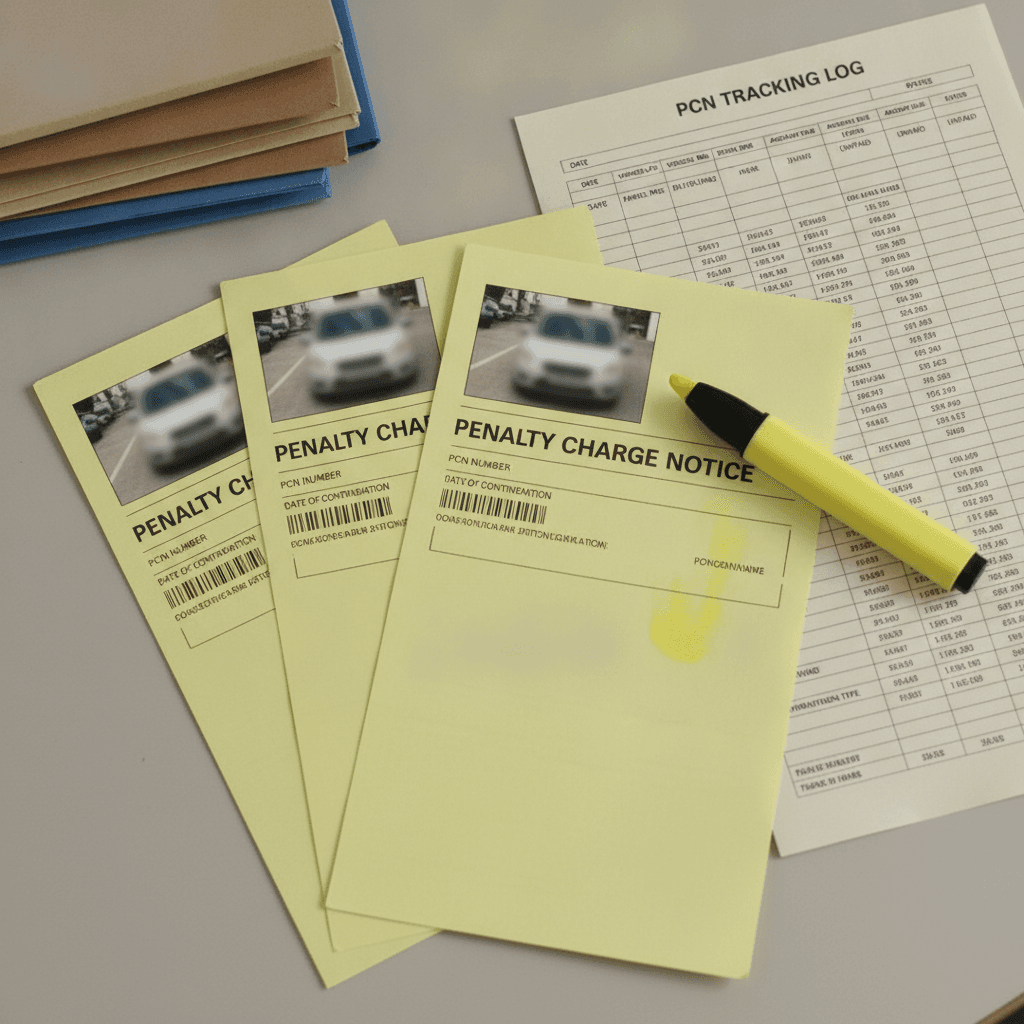
Penalty Charge Notices are one of those things that feel like a minor admin irritant right up until they start accumulating. A ULEZ charge here, a bus lane fine there, a missed Dart Charge — none of them is going to end your business. But five of them in a week, half already at the full rate because nobody caught the discount window, and a driver who can't remember which vehicle they were in on which day? That's a mess you can manage, but you shouldn't have to.
Here's how PCNs actually work for fleet operators, and the process that stops them becoming a running sore.
The three types of PCN a fleet will typically see
Parking PCNs are issued by local councils for parking contraventions — yellow lines, loading restrictions, permit zone violations. These come under the Traffic Management Act 2004 (for England and Wales) and follow a specific timeline with discount windows and appeal stages.
Moving traffic PCNs cover contraventions captured by camera — driving in bus lanes, box junction infringements, turning prohibitions, mandatory cycling facility infringements in certain London boroughs. Again, issued by local authorities, same framework as parking PCNs in most cases.
Road user charging penalty notices are a separate animal. ULEZ, the Congestion Charge, Clean Air Zones in cities like Bath or Birmingham — and the Dart Charge at the Dartford Crossing — operate under different enabling legislation but produce similar penalty notices. Miss the daily charge and a penalty notice follows. It's not technically a PCN in all cases, but it functions the same way for practical purposes.
Keeper liability: how the clock works
This is the bit that matters most for fleets. When a PCN is issued, it goes to the registered keeper of the vehicle — the person or company recorded at DVLA as keeper. For most fleets, that's the operator company, the leasing company, or the finance house. Whoever it is, the notice lands with the keeper.
Under the keeper liability provisions of the Traffic Management Act 2004, if the registered keeper doesn't pay and doesn't name the driver within a specified window, they become personally liable for the penalty. The exact timelines depend on the type of PCN and the issuing authority, but the principle is the same: the keeper who doesn't respond becomes liable, even if they weren't driving.
For parking PCNs, a Notice to Keeper is issued if the penalty isn't paid within 28 days. At that point, keeper liability attaches. The window to challenge or name the driver doesn't close at that point — but the process gets more complicated, and the penalty may have escalated from the discounted rate to the full rate and beyond.
Discount rate: most parking PCNs offer a 50% discount if paid within 14 days of issue. Miss that window and you pay full rate. Miss a further period and the notice goes to a debt recovery process. The discount is the single most important factor in fleet PCN management — catch the notice within 14 days, identify the driver, and either pay or challenge. Everything after that costs more.
The appeal process
There are three stages. First: informal challenge to the issuing authority. This can be made at any point before the Notice to Owner/Keeper stage, and the discount rate is usually preserved during this period. If the authority rejects the informal challenge, they issue a Notice to Owner with a further 28 days to make a formal representation.
Formal representation: this is the statutory stage. If the authority rejects it, they issue a Notice of Rejection — and you then have 28 days to appeal to an independent adjudicator. In England and Wales, parking adjudication is handled by the Traffic Penalty Tribunal (outside London) and the London Tribunals for TfL and London borough PCNs. These adjudicators are genuinely independent. They overturn decisions where the council got the law wrong, failed to follow procedure, or where the contravention simply didn't happen.
Good grounds for challenge: the vehicle was not in contravention at the time (camera angle unclear, mitigating circumstances); the PCN was served outside the statutory timescales; the signs or road markings were not properly in place; the driver was a hire driver and the hire agreement was in force (transferring liability). Each of those needs evidence — a photo, a contract, a tracking record.
ULEZ: the daily charge and the penalty structure
Transport for London's ULEZ applies across Greater London. As of the scheme's most recent expansion in 2023, it covers the full London area within the M25. Non-compliant vehicles — broadly, diesel vehicles that don't meet Euro 6 standard and petrol vehicles below Euro 4 — pay a daily charge of £12.50 for vans and cars, and £100 for heavy vehicles.
Miss the daily charge and TfL issues a Penalty Charge Notice — check current rates on the TfL website, but the penalty for non-payment is significant and reduced if paid within 14 days. Heavy vehicles attract a higher penalty than cars or vans. The notice goes to the registered keeper. For leased vehicles, the leasing company typically receives the notice and re-charges it to the fleet operator — sometimes with an admin fee on top.
Check your vehicles against the TfL compliance checker before they operate in the zone. The checker is at the TfL website and uses registration number to confirm compliance. Non-compliant vehicles either need to pay daily or stay out. A vehicle that routinely operates in London without paying ULEZ charges will accumulate penalties faster than any other source of PCNs on a typical fleet.
Dart Charge: the one operators forget
The Dartford Crossing charge operates under road user charging provisions rather than the PCN framework — but the penalty structure is effectively the same. Miss the charge and a Penalty Charge Notice issues at £70 (reduced to £35 if paid within 14 days) for most vehicles; higher for vehicles over 3.5t.
The Dart Charge account system is the solution: set up an account for each vehicle that uses the crossing, maintain funds in the account, and the charge is deducted automatically as the vehicle crosses. An account vehicle doesn't need to remember to pay — it pays as it goes. Penalty notices on Dart Charge accounts should be essentially zero. If you're still getting Dart Charge notices, your drivers are either using unregistered vehicles on crossings or the account lacks funds.
A Dart Charge account also gives you a complete record of crossings by vehicle and date — which is useful evidence if a PCN is issued for a crossing that the account should have covered.
Birmingham and Bath Clean Air Zones
Birmingham's Clean Air Zone covers the inner ring road area. Vehicles that don't meet the emission standards pay a daily charge — £9 for taxis, £18 for vans and LGVs, £50 for HGVs and coaches (check current rates on the Birmingham CC website, as these have been subject to review). The penalty for non-payment is a £120 PCN reduced to £60 within 14 days.
Bath's Clean Air Zone is smaller but similarly structured. Check vehicle compliance before operating in either zone. The compliance checks are based on Euro emission standards tied to the vehicle's registration and vehicle type.
The fleet process that keeps this manageable
Three things: a central inbox, a responsibility matrix, and a 48-hour rule.
Central inbox: all correspondence for the fleet — including PCN notices for owned and leased vehicles — goes to one email address or one physical inbox, monitored daily. Don't have notices going to individual managers' desks where they sit in a pile for two weeks.
Responsibility matrix: for each PCN, who is responsible for identifying the driver (transport office), making the initial challenge decision (TM), and authorising payment or pursuing appeal (finance + TM jointly). With a clear matrix, nobody waits for someone else to act while the discount window closes.
48-hour rule: any PCN received must be logged and an initial decision made within 48 hours of receipt. Challenge or pay. Don't park it for 'when we have time.' The 14-day discount window is tight. Notices sometimes take several days to arrive in the post. By the time a notice hits the central inbox and someone looks at it, you may already be at day five or six of a fourteen-day window.
Leased vehicles: the pass-through trap
If your vehicles are on finance lease or operating lease, the registered keeper is the finance company. PCNs go to them, and they pass them through to you — sometimes with a £25-£35 administration fee per notice. By the time the notice reaches you, several days have passed.
Get the timescales from your leasing company: how quickly do they forward PCNs? Some are faster than others. Factor in that delay when you're calculating whether you can make the discount window. If the leasing company's process means notices typically arrive with five days left on the discount window, that's your real operational deadline — not 14 days from issue.
Some leasing companies offer a managed PCN service. Worth evaluating, but check the admin fees — on a large fleet with regular London operations, those fees can exceed what you'd spend running the process in-house.