Fleet tyre plating: how to avoid a PG9 at the roadside
A PG9 for a mis-spec tyre is the daftest one to get. I've caught three of them in my own yard in the last four years. Here's the 90-second check that would've saved me every time.
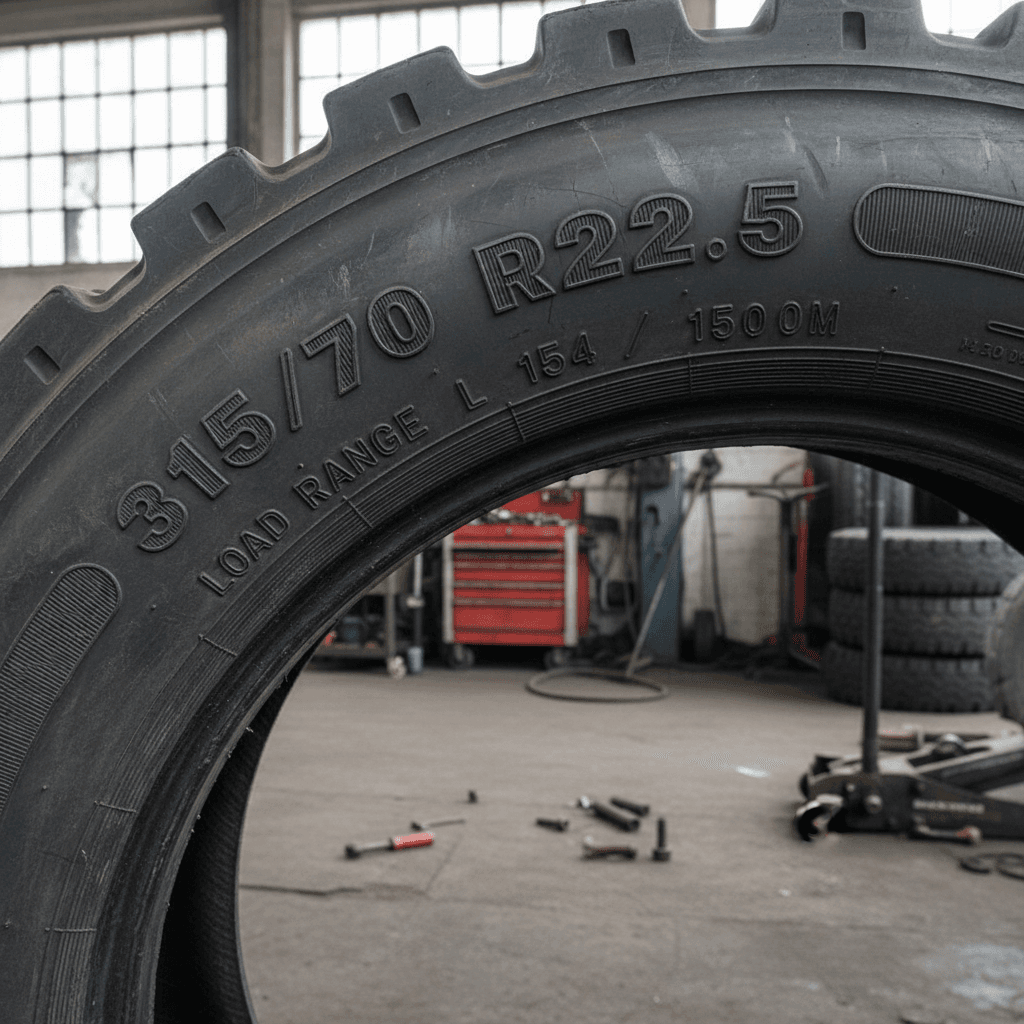
The daftest PG9 I ever took was for a tyre.
Not a blown sidewall. Not a shredded carcass from a kerb strike. A perfectly good-looking Michelin on the nearside front of an 18-tonne rigid, fitted the week before by a tyre contractor I'd used for years. Examiner at Norton Canes checkpoint walked round, stopped at the wheel, and asked my driver Dave for the plating. Dave handed over the paperwork. Examiner looked at the tyre sidewall. Looked at the plate. Wrote out a PG9.
Load index mismatch. The tyre's rated capacity was below the plated axle weight. Not by much. Enough.
That one still irritates me.
What the examiner actually does at the wheel
It takes them less than a minute. They're not reading your maintenance file. They're reading three things: the tyre sidewall, the ministry plate on the cab or near the nearside door, and the axle weight allocation on that plate.
On the sidewall they want to see four things. The size. The load index (the two or three digit number before the speed letter). The speed rating. And the date code – the four-digit DOT code at the end, telling them the week and year the tyre was made.
On the plate they're reading the design axle weights. If the tyre's rated capacity doesn't cover the axle weight, that's it. Prohibition. No argument.
The tragedy is this check is free. You can do it yourself in the yard with a torch and a scrap of paper. Most of us don't.
Where the numbers live
Stand at the nearside of the tractor unit or rigid. The ministry plate is usually inside the passenger door pillar or on the bulkhead behind the seat. It's the yellow or aluminium one with the VIN, the gross weight, and the per-axle weights.
Write down the design axle weight for each axle. On a 4x2 tractor it'll be something like 7,100 kg front, 11,500 kg drive. On a tag-axle 8-wheeler it might be 7,500 / 7,500 / 9,000 / 9,000.
Now walk to the tyres. Read the sidewall. A common fleet tyre on a steer axle – say a 315/70 R22.5 – will show something like 156/150 L. The first number is the single-wheel load index. 156 equates to 4,000 kg capacity per tyre. Two tyres on the steer axle gives you 8,000 kg. Comfortably covers a 7,100 kg design weight. Fine.
Change that tyre to a 154 index – 3,750 kg per tyre, 7,500 kg the axle – and you're still within tolerance. Change it to a 150 index – 3,350 kg per tyre, 6,700 kg the axle – and your plating says the axle's designed for 7,100 kg, but the tyres won't legally hold it. PG9 country.
Speed ratings matter too. A tyre rated L (120 km/h) on an artic that's been designed and plated for road use is usually fine. Drop it to an M-rated tyre and you're still legal on UK roads. Fit a J-rated (100 km/h) off-road tyre on a road-going artic and the examiner's got you.
The PG9 itself, briefly
A PG9 is a prohibition notice. It's not a fine. It's a legal order saying you can't use this vehicle until the defect is fixed. Ordinary PG9 – fix it, get it cleared, back on the road. S-marked PG9 – same thing, but the 'S' means 'significant failure of maintenance'. The S-mark is what your Traffic Commissioner reads. Collect enough of them and you're in front of her at a public inquiry explaining yourself, and that's a very expensive day out.
I've had three ordinary PG9s for tyres in the last four years. Two for under-spec tyres like the one above. One for a cut that was over 25mm long on a drive axle. The sidewall had a neat slice from a pallet corner that got tucked into a hedge. None of my drivers spotted it on their walkaround. I don't think we'd have spotted it if we'd gone looking. But the examiner did.
The actual legal minimum – and the gap that bites you
HGV tyre tread minimum is 1 mm across a continuous band of at least three-quarters of the breadth of the tread, round the whole circumference. That's the figure in Regulation 27 of the Construction and Use Regulations 1986, and it's been the number for decades.
1.6 mm is the car / van / LGV minimum. It does not apply to your 26-tonner.
Knowing which number applies to which vehicle in a mixed fleet is one of those things people get wrong. I've been in arguments with fitters over this – with the fitter insisting on 1.6 mm for a 7.5-tonner because that's what his van's MOT needs. A 7.5-tonner is a goods vehicle over 3,500 kg. 1 mm applies. You don't need to pull the tyre at 1.5 mm.
You might choose to. I do. I've got a 2 mm internal pull-point for anything running nights. It costs a bit more in rubber and saves me the phone call at 2am.
Other defects that'll earn you a prohibition, straight from Regulation 27: a cut in excess of 25 mm or 10% of the section width, whichever is the greater. A lump, bulge or tear caused by separation or partial failure of structure. Ply or cord exposed. And, since February 2021, a tyre more than 10 years old on any position of a bus, minibus or HGV – find the DOT code on the sidewall and work backwards.
Where the mis-spec comes from
Nobody fits the wrong tyre on purpose. Here's how it happens.
Your fitter turns up to a roadside call at 3am in the rain with a blown drive tyre. The yard's closed. The only tyre he's got on the wagon that fits the rim is a 154-index when your plate says you need a 156. He's tired, the driver's tired, and the choice is: fit it and get the lorry home, or leave it on the hard shoulder. He fits it. Tells the driver: mention it to the gaffer.
Driver doesn't mention it. Lorry goes out Monday morning. Tuesday at Norton Canes the examiner finds it.
That's a process problem, not a fitter problem. The fix is a one-line instruction on every roadside tyre job sheet: 'fitted tyre size and load index, vs plated axle weight, stated here'. If the fitter has to write it down, the mismatch gets caught before it leaves the job.
The 90-second yard check
Here's what I do. Take a clipboard. Walk the vehicle. Write four lines per axle:
- Axle number and design weight from the plate
- Nearside tyre size, load index, speed rating, DOT week/year
- Offside tyre size, load index, speed rating, DOT week/year
- Tread depth at three points across the width
On a 4x2 tractor that's eight lines. Takes me about four minutes per vehicle once I'm in the rhythm. On a tag-axle 8-wheeler it's closer to seven minutes. On a curtainsider trailer with a tri-axle bogie, six. Do it as part of your safety inspection – not as an extra – and it folds into existing workflow.
I photograph the plate and every sidewall. The photo goes in the vehicle file alongside the safety inspection. If I ever get a PG9 for a tyre mismatch, I can point at a dated photo showing it was right when we signed it off. That's not a defence if the wrong tyre's on the truck now, but it's a useful thing when you're trying to work out when a mistake crept in.
What to tell your tyre contractor
Ring them. Get them to agree, in writing, that their fitters will record the tyre load index and speed rating on every job sheet, and will check it against the vehicle's plated axle weights before fitting. This isn't controversial. Any decent tyre firm is already doing it. What you want is the paper trail.
If they refuse or fluff the answer, find a new contractor. I went through this with a regional outfit a few years back – perfectly pleasant people, but the paperwork was chaos, and we had two near-misses in six months. I moved to ATS and haven't had a mis-spec since. Not saying ATS is magic. Saying the paperwork matters.
Ask about retreads too. Retreads are legal on HGVs. They're not legal on the steer axle of a tractor or on any axle of a minibus. If your contractor is fitting retreads anywhere they shouldn't be, you want to know that before a DVSA officer does.
The documents in your file
When the Traffic Commissioner's compliance officer asks to see how you manage tyre spec, she wants to see three things in the vehicle file.
First: the original plated axle weights for the vehicle, and the original tyre specification from when it was commissioned. That's usually on the vehicle build documents – keep a copy.
Second: a dated record of every tyre change. Date, axle position, size, load index, speed rating, DOT code, fitter's name or reference, and a signature from whoever checked the match. A four-line entry per job.
Third: your safety inspection reports. They'll check a sample. If your inspections don't record individual tyre condition by axle position, add it. It's not optional.
One last thing about age
The 10-year rule from 2021 catches people out on trailers. A tractor unit gets replaced every five or six years in most fleets, so the tyres on it are rarely that old. Trailers are different. I've seen trailers in yards with 2012-date-coded tyres still on the rear axle – they'd been lifted on and off curtainsiders for years.
Check your trailer sidewalls. If you've got any DOT codes showing weeks from more than ten years ago on a vehicle that runs buses, minibuses or goods over 3,500 kg, that's not a gray area. That's a PG9 waiting for a pull-in.
Sort it before the examiner does.