FORS Silver for HGV fleets: what the audit actually covers and who finds it worth the effort
FORS Silver came up on a client contract in January. I had five months. The gap from Bronze was bigger than I expected. Here's what the audit looks for.
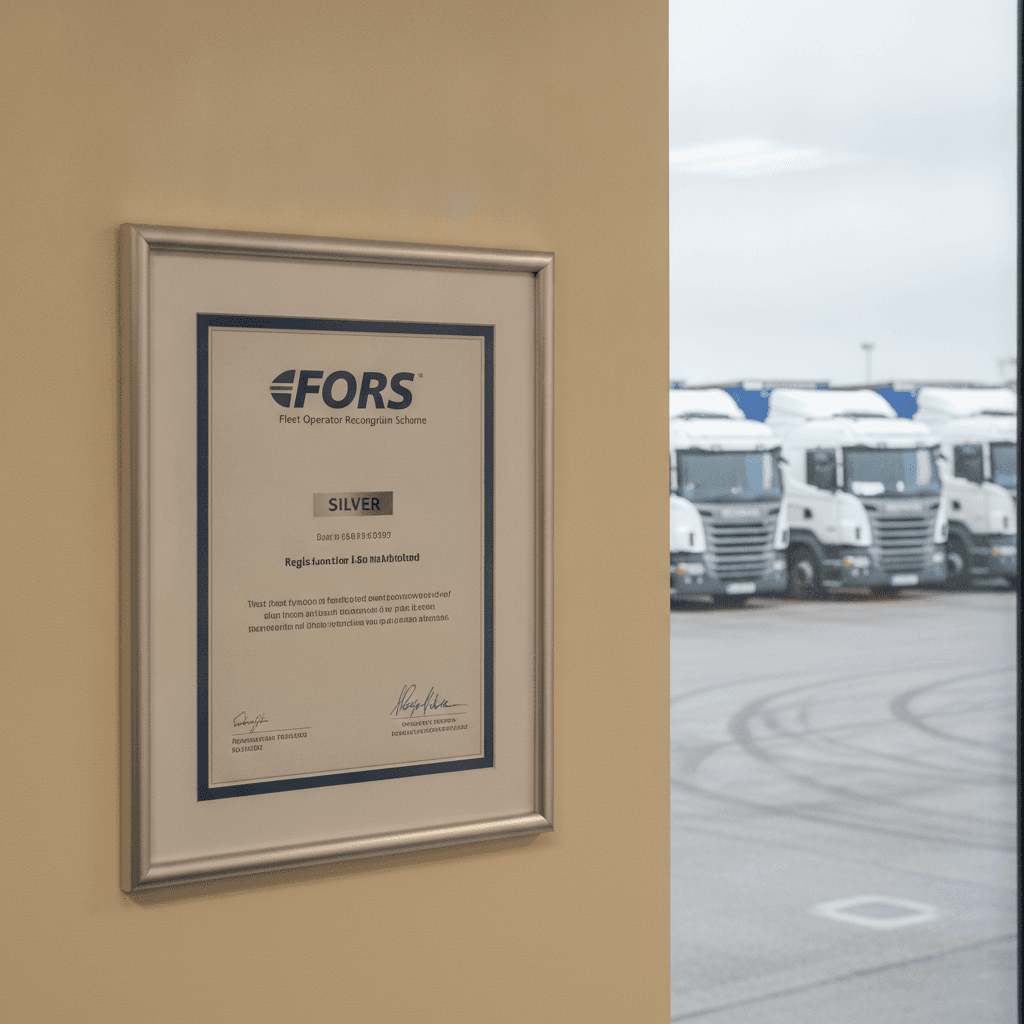
The contract requirement came first. The understanding of what Silver meant came second.
My first FORS Silver application wasn't driven by a strategic decision to improve fleet safety. A construction client in Canary Wharf told me in January that all deliveries to their site from June would need FORS Silver accredited operators. I had Bronze. I had five months. And I had absolutely no idea what the gap was.
Turned out the gap was significant. Silver isn't just Bronze plus a bit more paperwork. It requires specific vehicle equipment that most standard HGV fleets don't have. It requires a performance monitoring framework with actual targets and improvement evidence. And it requires a different level of management documentation than Bronze demands. If you're going for Silver because a contract requires it, allow yourself proper lead time.
What FORS Bronze already covers
Before getting into Silver, it's worth being clear on what Bronze establishes. Bronze is the entry-level FORS accreditation. It covers a baseline audit of your fleet management, driver management, and operational documentation. You need a driver risk management policy, licence checking, CPC compliance, vehicle maintenance records, fuel and emissions tracking, and some basic VRU (vulnerable road user) training for drivers. Most professionally-run fleets with 15-plus vehicles are doing most of this already — Bronze formalises and audits it.
Silver assumes all of Bronze as a baseline. You can't apply for Silver without holding current Bronze accreditation. The auditor won't be starting from scratch on Bronze requirements — they'll be verifying you hold valid Bronze and then assessing the Silver-specific areas on top of it.
Vehicle safety equipment: the part that costs money
The most significant practical difference between Bronze and Silver for HGV operators is the vehicle equipment requirement. FORS Silver requires that vehicles over 3.5 tonnes GVW are fitted with additional safety equipment specifically designed to protect vulnerable road users.
For a typical HGV fleet, this means — at minimum — side-scan sensors or close-proximity warning systems, side-view cameras covering the nearside blind spot, an audible warning when reversing or turning, and side underrun guards that meet the relevant standard. Some of this equipment may already be fitted on newer vehicles, particularly if they've been specified for London work or construction sites where CLOCS (Construction Logistics and Community Safety) requirements apply. On an older fleet built to a lighter spec, the retrofit costs can be substantial.
The FORS standard does specify which equipment types are acceptable and at what standard — the FORS Vehicle Safety Equipment specification sets out approved categories and installation requirements. Before you start pricing retrofit jobs, check the current specification because it's updated periodically and what satisfied a Silver audit three years ago may not satisfy one today.
Performance data with improvement targets
Bronze requires that you collect fuel consumption, emissions, and collision data. Silver requires that you demonstrate improvement against targets.
This is the difference between recording and managing. For Silver, you need to show your auditor a performance baseline, the targets you set from that baseline, and evidence that you're working towards or have achieved those targets. A spreadsheet of fuel consumption figures doesn't pass the Silver standard unless it shows trend lines, target comparisons, and documented responses to variance.
In practice, this means setting up a quarterly performance review cycle — or similar — where fuel efficiency, CO2 per tonne-kilometre, collision frequency, and similar metrics are reviewed against targets, actions are logged, and the results are documented. Many operators who are tracking this data aren't doing the target-setting and review documentation piece. That documentation is what the auditor looks for.
If you're planning a Silver application, start tracking at least six months before — ideally twelve — so you have a genuine performance trend to show rather than two months of data and an optimistic forecast.
Driver training beyond Bronze
Silver requires that managers and supervisors complete FORS Professional e-learning modules relevant to their role. The specific modules vary depending on your operation type, but they cover areas including fleet performance management, procurement of safer vehicles, and workplace transport risk management.
For drivers, Silver adds requirements around VRU awareness training — typically through FORS-approved Safe Urban Driving courses for drivers who regularly operate in urban environments. If your drivers are regularly going into city centres and construction sites, this training should be a relatively small incremental step. If you're primarily doing motorway trunking, making the case that urban VRU training is relevant to your operation requires some thought.
Bronze Driver CPC requirements still apply and must be current for all drivers. Silver adds the management training layer on top, not instead of it.
Subcontractor management
If you use subcontractors for any part of your operation, Silver requires that you have a documented process for assessing and managing their compliance. You can't hold FORS Silver and have subcontractors operating to a lower standard without being able to show how you're monitoring and managing the risk.
In practice this means — at minimum — a subcontractor approval process that checks for valid O-licence, appropriate insurance, and ideally some form of accreditation. Many Silver operators require their subcontractors to hold at least FORS Bronze. If that's not practical for all sub-contracted work, you need to document the alternative checks you're doing.
This is the area I underestimated most badly in my first Silver application. I had two long-standing sub-contractors I'd been using for years on trusted relationships. No documented checks. No approval process. The auditor pointed it out in the first hour. Fixed it before the follow-up assessment, but it added time to my certification process.
Low and zero emission transition planning
Silver requires evidence of planning for fleet electrification or emission reduction. You don't have to be running electric trucks — the standard doesn't require that. But you do need to show you've thought about it: what your options are, what your timescales look like, and what steps you're taking now to prepare.
For most operators, this means a written fleet transition statement — not a detailed engineering plan, but a genuine documented consideration of where your fleet is going on emissions and by when. A one-page statement saying 'we're reviewing our purchasing decisions to favour Euro VI and have identified two routes suitable for electric vehicles which we'll trial in 2027' satisfies the spirit of the requirement better than silence.
The audit itself
FORS Silver audits are conducted by approved FORS auditors — not DVSA, not the Traffic Commissioner. The audit lasts most of a day for a fleet of reasonable size. The auditor will review your documentation, inspect vehicles, speak to drivers and managers, and assess your evidence against the FORS standard.
Silver is valid for 12 months. You renew annually, producing updated evidence of continued compliance and performance improvement. The renewal audit is typically shorter than the initial assessment, but it does require current evidence — not a bundle of documents from last year's application.
Gap analysis before applying is worth doing. FORS publishes the standard in full, and you can map your current operation against it systematically. I'd recommend doing that exercise at least two months before applying — it surfaces the vehicle equipment gaps and training gaps early enough to act on them before the audit date.
Who actually needs Silver
Bluntly: operators who need it for contract reasons, and operators who run vehicles in London or on construction sites where CLOCS compliance is expected. For most regional distribution operators delivering to retail or industrial customers, Silver adds cost and admin without a commercial return.
But if your customer base includes local authorities, TfL-related work, major construction projects, or large corporate logistics contracts, Silver is increasingly a tender prerequisite. The question to ask isn't whether Silver is intrinsically worth it — it's whether the contracts that require it are worth winning. If they are, Silver is the price of entry.
One genuine benefit: the vehicle safety equipment, performance tracking, and driver training that Silver requires do measurably reduce collision risk. I've seen my fleet's collision frequency drop since going through the Silver process — and not just because the cameras and sensors change behaviour, but because the management review process surfaces problems earlier. Whether that justifies the cost without a contract driver is a calculation every operator has to make for their own business.