HGV operating centre approval: what the Traffic Commissioner checks for suitability and how objectors can block your application
I applied for an operating centre at a new depot in March. A resident objected in April. We didn't start operating from it until October. Here's what the suitability process actually looks like.
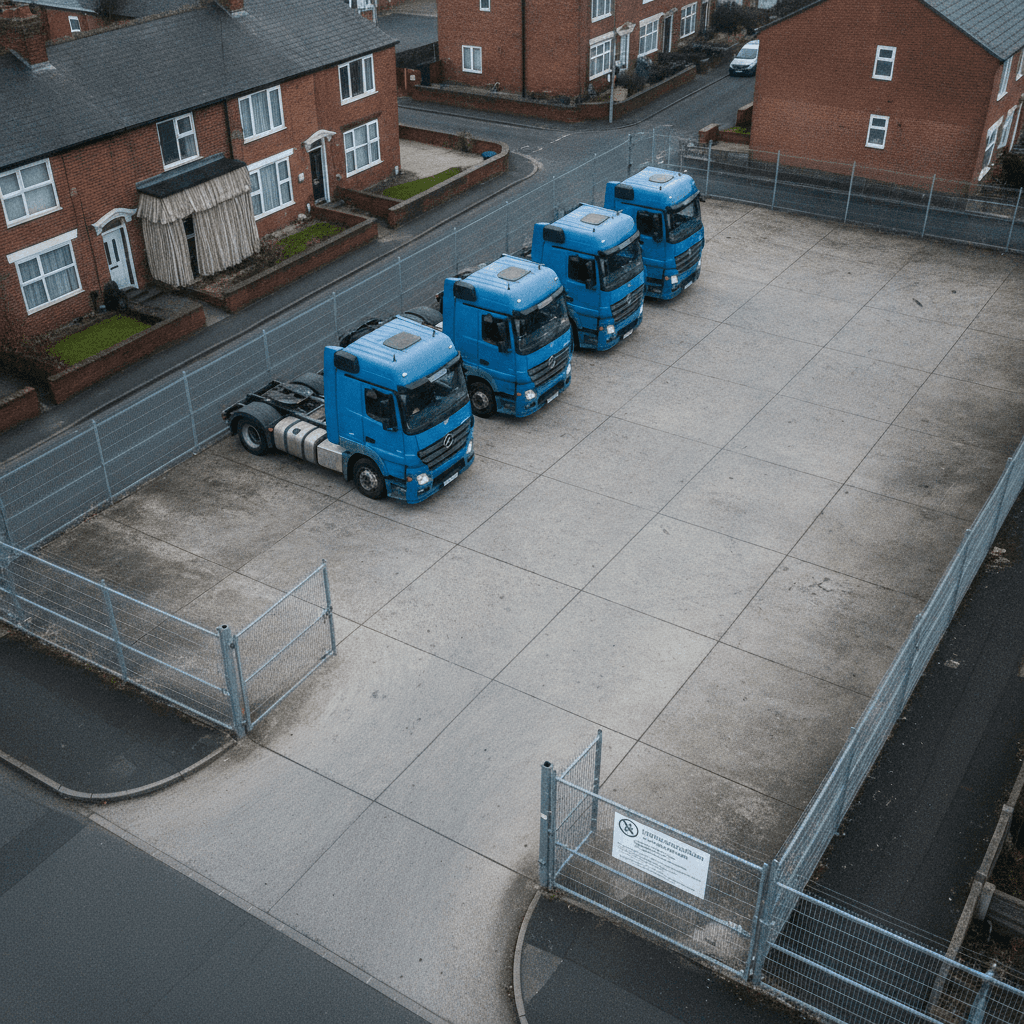
Finding the right depot is only half the battle. Getting the Traffic Commissioner to approve it as an operating centre is the other half — and it's the bit that most operators underestimate when they're planning a move or an expansion.
Operating centres don't just appear on your O-licence because you've signed a lease. They have to be applied for, published in a local notice, opened to objection, and approved by the TC before you can legally base vehicles there. That process has a statutory minimum timeline, and objectors can extend it considerably.
What an operating centre is
An operating centre is a place where authorised vehicles — those specified on your O-licence — are normally kept when not in use. It's specified on your licence and listed on your operator's disc. Vehicles must be kept at an authorised operating centre. Using vehicles based from a location that isn't specified on your licence is a breach of your licence conditions.
The TC's interest in operating centres goes beyond just knowing where the vehicles are. The approval process looks at whether the location is suitable — environmentally, in terms of access and road suitability, and in terms of its effect on the local community. This is where the objection process matters.
The nine-week statutory advertisement period
When you apply to add or change an operating centre, the application is advertised in a local newspaper covering the area where the centre is located. The advertisement must appear within 21 days of your application being submitted, and must continue to be available for objection for a period of 21 days after advertisement — but the overall statutory period before the TC can grant the application is around nine weeks before approval can be granted.
That nine-week window is the minimum. If objections are received, the TC has to consider them — and that can extend the process significantly. I've seen straightforward applications take four to six months because of a sustained objection campaign from local residents or a council environmental officer.
What the TC assesses for suitability
The statutory test under GVLOA 1995 is whether the operating centre is 'suitable' having regard to the nature and the use of the land in the vicinity. The TC considers:
Environmental impact: Noise from vehicle movements, particularly at night or early morning. Vibration. Fumes. Light pollution from a floodlit yard. Operators often underestimate how seriously the TC takes early morning HGV movements near residential properties. A 5am start time with 10 lorries leaving a yard adjacent to housing is a genuine environmental concern that the TC has to weigh.
Access: Is the road to the centre suitable for the vehicles that will be operating from it? A 44-tonne articulated unit needing to turn out of a narrow residential side road onto a busy A-road creates road safety concerns that the TC will take seriously. A transport assessment or road access report from a qualified traffic engineer can help here.
Physical capacity: Can the site actually accommodate the number of vehicles and trailers applied for? This isn't just about whether they physically fit — the TC looks at whether the parking arrangements affect access to the highway or neighbouring properties.
Planning permission: The TC is not a planning authority, but they will check that the use of the site as an operating centre is consistent with its planning use. Operating from a site that doesn't have the right planning permission is a problem — both for the TC's approval and for the local planning authority, which can take its own enforcement action.
Who can object and on what grounds
Under GVLOA 1995, formal objections can be made by:
- Local residents living in the vicinity of the proposed operating centre
- Parish councils, town councils, or community councils in the area
- Local planning authorities
- County councils (for road/environmental concerns)
The grounds for objection are limited to 'environmental matters' — specifically the effects of the operating centre on the environment in terms of noise, emissions, and similar factors. Objectors can't object on general commercial grounds (a competitor doesn't like you moving nearby) or on planning matters they should take to the planning authority.
But within those grounds, the TC takes representations seriously. A well-organised objection from a residents' group, with noise surveys, traffic counts, and professional submissions, can result in the TC either refusing the application or granting it with conditions — restricted hours of operation, limits on vehicle numbers, noise barriers, access route restrictions.
Conditions on operating centres
TC conditions on operating centres are binding licence conditions. If your approval comes with a condition that 'no more than six vehicles may be present at the operating centre between 2200 and 0600,' that condition is on your licence. Breaching it is a licence breach — the same as exceeding your authorised vehicle numbers or failing to notify a change.
I've seen conditions that operators initially accepted and then found operationally unworkable. If you're offered an approval with conditions that don't work for your business model, it's better to negotiate the conditions before accepting the licence than to accept them and breach them. Once a condition is on the licence and you've been caught breaching it, the TC's patience with your application is significantly shorter.
The objection process in practice
When an objection is received, the TC will notify you. You'll typically be asked to respond — in writing, and sometimes at a hearing. The hearing is not a public inquiry at this stage (though it can escalate to one); it's more usually a relatively informal session where the TC hears from you and from the objectors and makes a decision.
At the hearing stage, having done your homework matters. A noise assessment from an acoustic engineer. A transport statement showing the existing traffic flows on the access road and the predicted additional impact from your vehicles. A letter from the relevant local highway authority confirming the road is suitable for the vehicle types. These aren't cheap to produce, but if you're facing a sustained objection, they're what wins the argument.
The TC is not automatically sympathetic to objectors. A resident who dislikes the idea of lorries nearby, but can't produce evidence of specific environmental harm, is unlikely to succeed. But a resident with documented evidence of existing noise and evidence that your vehicles will materially worsen it has a case worth taking seriously.
What happens while the application is pending
You can't operate vehicles from the proposed operating centre during the application period. Not even temporarily. The application is pending; the centre isn't approved. If you move in before the TC approves it and start basing vehicles there, you're operating without an authorised operating centre — a licence breach that the TC will take into account when considering your application.
This is the part that catches operators who've signed a lease, agreed a contract start date, and assumed the TC approval is a formality. It isn't. Start the application as early as possible. The nine-week minimum means you should apply the moment you have a confirmed address for the site. If the lease hasn't completed but you have a heads of terms, apply as soon as you can — some TCs will accept conditional applications.
The practical timeline for an expansion
If you're planning to expand to a new site, work backwards from the date you need to be operating from it:
- Minimum nine weeks from application submission to approval (no objections)
- Add at least two weeks for DVLA processing and licence variation
- Add a buffer for potential objections — four to six weeks minimum if you're in an area with active residents' groups
That means an application needs to be in around 15 weeks before the planned operational start in a straightforward case. More if there's any reason to expect objections. If you're signing a lease and committing to a contract start date, building that timeline into your heads of terms negotiation is not optional — it's the difference between a clean transition and an embarrassing situation where you've got a depot you can't legally use.