Speed limiters on HGVs: the 90km/h cap, the sealing requirement and what DVSA checks at the roadside
DVSA found a tampered speed limiter seal on one of our vehicles during a roadside check on the M6. The driver didn't do it. Someone at a previous workshop did. Here's what happens next, and how to protect yourself.
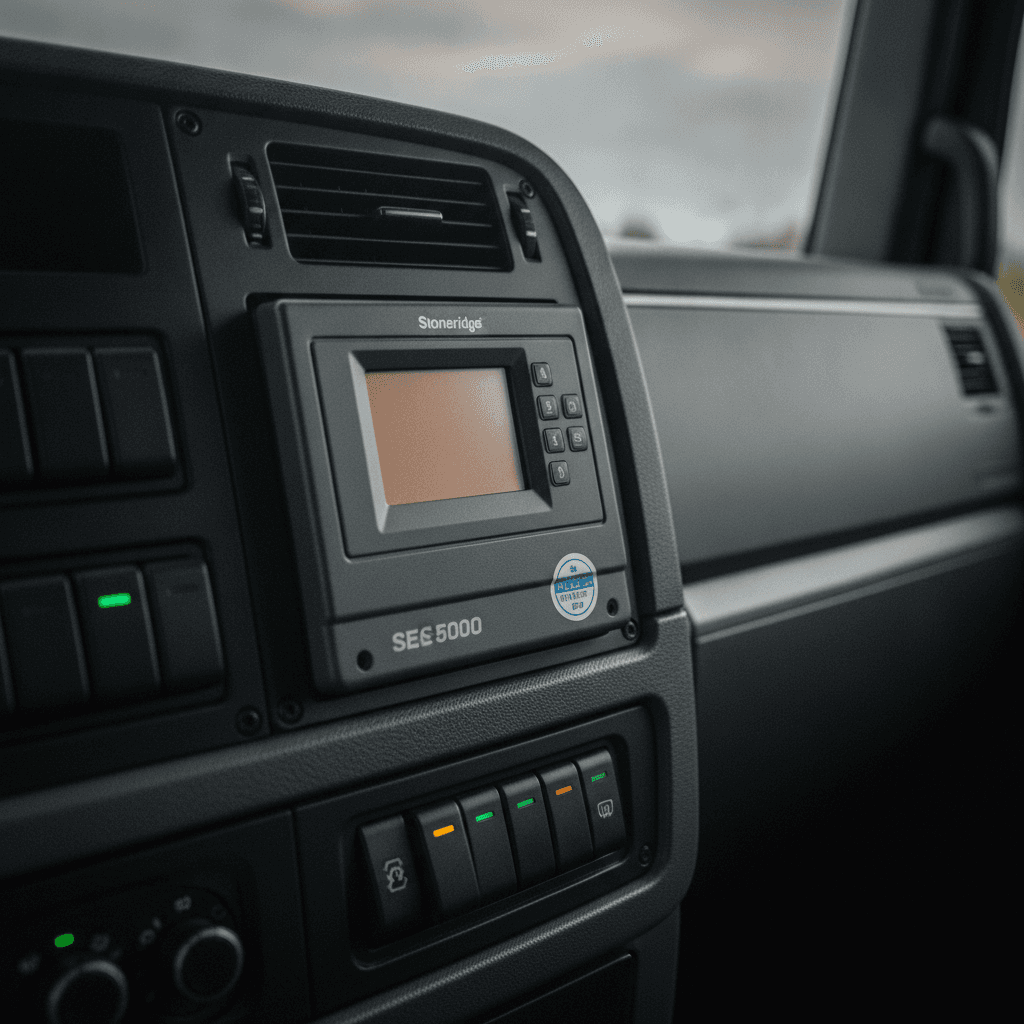
The limiter most drivers barely think about
Ask a driver whether their truck has a speed limiter and they'll tell you yes, obviously. Ask them what it's set to, what the sealing requirement means, or what happens if a workshop interferes with it, and most of them will go quiet. The speed limiter on a heavy goods vehicle is one of those compliance features that's so baked into modern truck design that it rarely comes up in daily conversation — until a DVSA examiner finds something wrong with it at a roadside check.
Goods vehicles exceeding 3.5 tonnes maximum authorised mass must be fitted with a speed limiting device. For HGVs over 7.5 tonnes, that device must restrict the vehicle's maximum speed to 90km/h (56mph). Not 60mph. Not 70mph. Ninety kilometres per hour, which translates to 55.9mph — broadly treated in enforcement as 56mph. For goods vehicles between 3.5t and 7.5t, the limit is 90km/h too, though some category distinctions apply depending on vehicle type and first registration date.
Where the requirement comes from
The obligation derives from EU Directive 92/6/EEC, which the UK incorporated into domestic law and which continues to apply post-Brexit as assimilated legislation. The Road Vehicles (Construction and Use) Regulations 1986 (as amended) implement the practical requirements — that's the legislation your workshop is working under when they install, calibrate or inspect a speed limiter.
The limiter must be type-approved. It must be installed by an authorised workshop. And critically, it must be sealed. The seal is the mechanism that proves the limiter hasn't been tampered with since its last legitimate calibration or inspection. Break the seal — for any reason, by anyone who isn't an authorised technician doing a legitimate recalibration — and you've got a compliance problem.
What the seal actually is
It's a physical security seal on the speed limiter unit itself, placed by the authorised installation or calibration workshop. In practice it's a small sticker or lead seal applied over a fastening point, marked with the workshop's identification. DVSA officers are trained to check for it. If it's missing, damaged, or shows evidence of tampering, the vehicle can be prohibited from use until the limiter is reinspected and re-sealed by an authorised workshop.
The seal check is part of the standard roadside inspection process. It's quick — takes about thirty seconds to look for and identify. Which means if your vehicle rolls into a DVSA check with a missing seal, it will come up. Every time.
What happened on the M6
The vehicle that triggered my interest in all of this was a Volvo FH that came into our fleet as a trade purchase. Previous operator, reasonable price, clean paperwork. About four months after we bought it, a DVSA examiner at a northbound M6 check found the speed limiter seal was missing. Not damaged — missing entirely.
The driver hadn't touched it. I know that because I know the driver, and because there's no reason a driver would be poking around the speed limiter unit. Someone at a previous workshop had opened the unit — possibly to do diagnostic work, possibly for less benign reasons — and hadn't re-sealed it, or had removed the seal and not replaced it.
The outcome: the vehicle was given a PG9 prohibition. It had to be taken to an authorised speed limiter workshop before it could return to use. The workshop inspection confirmed the limiter was still set correctly — the seal had been removed but the settings hadn't been changed. We had to pay for the inspection and re-seal, and the PG9 went on the OCRS record. Not catastrophic, but avoidable.
Pre-purchase checks for used HGVs
That M6 incident is why I now include the speed limiter seal in any pre-purchase inspection on a used vehicle. It takes less than a minute. You're looking for a seal that's intact, legible, and carries an authorised workshop identifier. If the seal is missing or damaged on a vehicle you're about to buy, either negotiate that it's inspected and re-sealed before handover, or factor in the cost of doing it yourself.
Sellers sometimes don't mention the seal because they don't know it matters. Occasionally they don't mention it because they know it does. Either way, it's on the checklist now.
Authorised speed limiter workshops
Not every truck workshop is authorised to work on speed limiters. You need a DVSA-approved speed limiter installer and calibrator — often called an ATC (Authorised Testing Centre) for speed limiters, though the terminology varies. Manufacturers like Stoneridge, Actia and Continental supply the units and maintain lists of approved service centres.
If you're sending a vehicle in for routine PMI work at a workshop that isn't on the approved list, make it explicit in the work order: do not interfere with the speed limiter unit under any circumstances. Some workshops will pull the unit during engine diagnostic work without thinking through the seal implications. You need that instruction in writing so that if a seal does get broken, it's traceable back to the workshop rather than creating a grey area about when and how it happened.
Recalibration after component changes
Engine replacement, significant drivetrain work, or ECU reprogramming can all affect the calibration of a speed limiter. After any major drivetrain work, have the speed limiter inspected and its calibration verified by an authorised workshop. Don't assume the settings carry over unchanged. The cost of a re-certification is small. The cost of sending a vehicle onto the road with an uncalibrated limiter — or one calibrated to the wrong value because the ECU mapping changed — is considerably larger.
The calibration certificate is the document that proves the limiter was set correctly and sealed by an authorised workshop on a specific date. Keep it in the vehicle's maintenance file alongside the PMI records. DVSA can ask for it and you want to be able to produce it quickly.
Driver checks and walk-arounds
A driver's daily walk-around check doesn't typically include a speed limiter seal inspection — that's workshop territory, not something a driver does at 6am before a run. But if a driver notices the speed limiter unit has been disturbed, or sees an unfamiliar seal or a missing seal during a cab inspection, that's a defect report waiting to be written. Brief your drivers on what the limiter unit looks like in your vehicle types and where the seal sits. Most drivers have never been pointed at it specifically.
Tampering: the serious end
Deliberate speed limiter tampering — setting a device to allow higher speeds than the legal maximum — is a serious offence. The Construction and Use Regulations make it an offence to use a vehicle on a road with a defective or non-compliant speed limiter. Using a vehicle after someone has deliberately removed or circumvented the limiter is not a paperwork problem. It's a criminal matter for the operator and, depending on knowledge and intent, potentially for the driver and workshop too.
In a fleet environment, the practical safeguard is documentation: work orders that specify no speed limiter interference, calibration records that establish baseline settings, and maintenance records that create an audit trail. If a tampered limiter is ever discovered, you want to be able to show exactly when the vehicle last had legitimate authorised work done and what that work covered.
Quick summary
Speed limiter compliance for HGVs comes down to four things: the device is fitted, it's set to the correct maximum (90km/h for most HGVs over 7.5 tonnes), the authorisation seal is intact, and calibration records are kept and accessible. None of those are difficult to achieve if the maintenance system is set up correctly. Where operators get caught is usually the seal — missing after workshop work that wasn't supposed to touch the unit, or damaged on a used vehicle that wasn't inspected carefully enough before purchase. Add it to the PMI checklist, add it to the pre-purchase checklist, and brief your workshops clearly. That's the whole job.