HGV VED in 2026: the £1 rate that just started and why the road user levy is still a separate bill
HGV VED is now £1 annual from 1 July 2026. The road user levy runs separately — and I've already seen operators miss it by assuming the £1 covers everything.
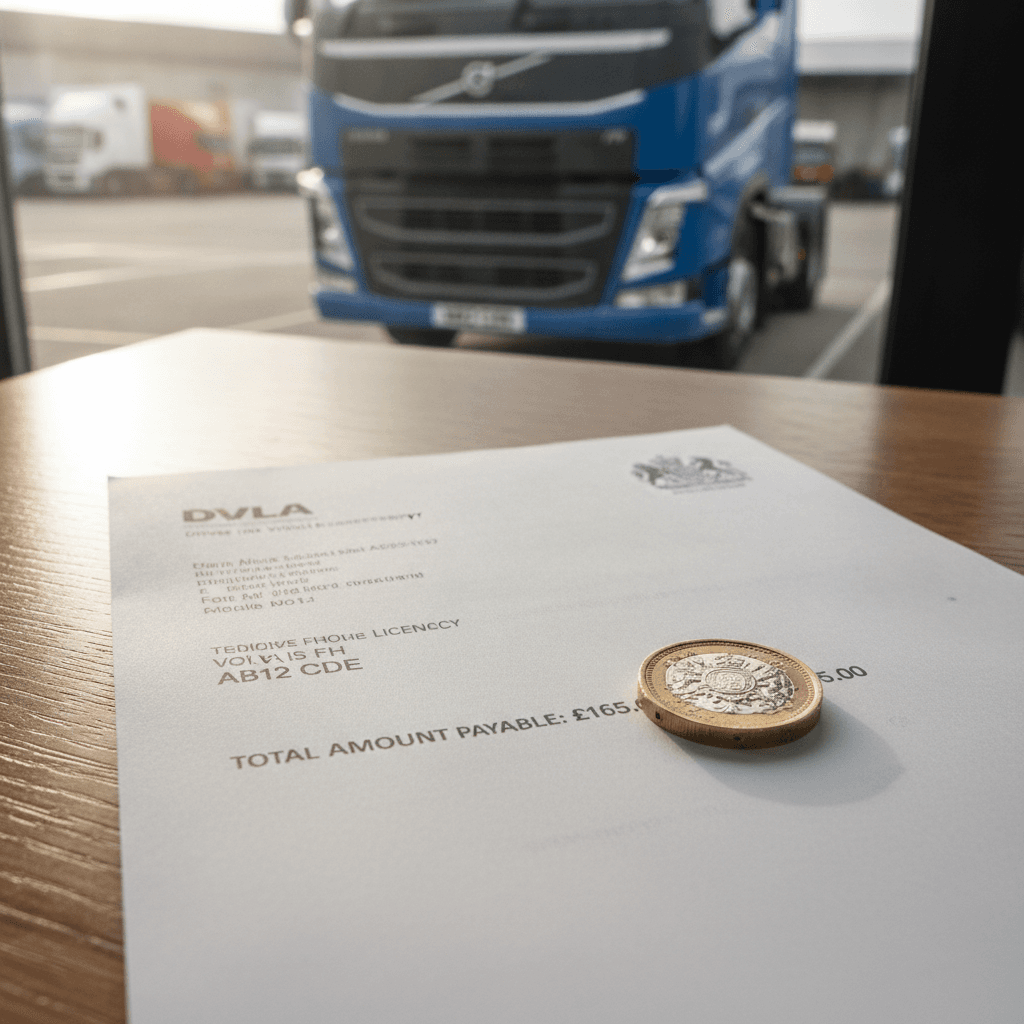
My VED renewal notice arrived for one of our Volvo FH13s in early July. I was expecting the usual bill — upwards of a few hundred pounds, depending on weight class. The renewal came back at one pound. One pound sterling. Annual vehicle excise duty for a 44-tonne artic.
The VED holiday for HGVs started on 1 July 2026 and runs to 30 June 2027. It applies to the majority of HGVs — goods vehicles over 3,500kg in the standard tax classes. And because it started in July, most operators are only now hitting their first renewal at the £1 rate.
But here's where it gets complicated: the road user levy is not part of the VED holiday. The levy still applies. It's a completely separate charge from a completely separate system. And I've already spoken to three operators this month who thought they'd covered both with the £1 payment. They hadn't.
What the VED holiday actually covers
The temporary £1 VED rate applies to eligible HGVs renewing their vehicle excise duty between 1 July 2026 and 30 June 2027. The eligible tax classes confirmed by DVSA include: standard HGV (class 1), trailer HGV (class 2), special types (class 57), combined transport (class 23), and island goods vehicles (class 16).
All must be over 3,500kg. The holiday doesn't apply to vehicles in other tax classes — vans and lighter goods vehicles don't qualify and pay standard VED at the usual rates. This is specifically an HGV measure.
The £1 applies to the annual rate. Semi-annual and monthly options may work differently — check the DVLA VED payment page for current options. The paper tax disc was abolished years ago, but VED is still a separate item in DVLA's system with its own renewal cycle, separate from the levy.
Why the road user levy is completely separate
The HGV road user levy was introduced to ensure foreign-registered HGVs using UK roads contributed to road costs — UK operators already paid VED, so the levy equalised the playing field. The levy runs alongside VED; it's not a substitute for it and it's not included in it.
You pay VED to DVLA. You pay the levy through the same DVLA system in practice — but they're two distinct charges, with their own rates, their own renewal cycles, and their own records. The VED holiday reduces the VED charge to £1. It does nothing to the levy.
An operator who pays £1 VED and thinks they've covered everything hasn't. The levy invoice still needs to be paid. If it lapses, the vehicle is running without a valid levy disc, which is a fixed penalty offence.
The levy rates: what you're still paying
The levy is banded by vehicle weight and Euro emission standard. The current annual levy rates are:
- Band A (12,000–31,000 kg): £161 for Euro 6, £209 for Euro 5 or older
- Band B (31,001–38,000 kg): £387 for Euro 6, £503 for Euro 5 or older
- Band C (38,001 kg and above): £619 for Euro 6, £804 for Euro 5 or older
A 44-tonne Euro 6 artic sits in Band C: £619 annual levy, regardless of the VED holiday. The total cost for that vehicle in the 2026–27 VED period is £620 — £1 VED plus £619 levy. Not £1. Not free. £620, with the levy still the significant cost.
If your vehicles are Euro 5 or older, the levy rates are higher. An older 44-tonner in Band C pays £804 in levy. The VED holiday doesn't change that.
How to check which band your vehicles are in
The band is based on the vehicle's gross weight — the maximum weight it's authorised to carry. Not the weight it's running at on a particular day. The authorised weight from the ministry plate.
Most operators with a mixed fleet have vehicles spanning more than one band. A 26-tonne rigid sits in Band A. A 44-tonne artic sits in Band C. A 36-tonne drawbar combination may sit in Band B or C depending on exact weight. Check each vehicle individually rather than assuming all your vehicles pay the same levy rate.
The Euro standard is from the vehicle's type approval — usually shown on the registration document or the vehicle's documentation. Euro 6 was the standard for new vehicles from September 2014 onwards for trucks and buses. If your fleet is more than about twelve years old, Euro 5 or lower is more likely.
When the VED holiday ends
The holiday runs to 30 June 2027. VED renewals after that date go back to normal rates — the rates that applied up to 31 March 2025 were frozen since 2014, and from April 2025 they increased in line with the Retail Price Index for the first time in a decade. The rates post-holiday will be higher than anything operators have paid in recent years.
If your VED renewal falls in the June 2027 window — renewals that start on 1 July 2027 or later — budget for the full rate, not the £1. Start planning for this now if you have renewals coming up in the second half of 2027. It'll feel like a sharp increase if you haven't been expecting it, because for twelve months you've been paying £1.
SORN during the holiday period
If you have a vehicle you're taking off the road — for significant maintenance, a VOR period, or temporarily surplus to requirements — you still need to declare SORN. The VED holiday doesn't change the SORN obligation. A vehicle declared SORN doesn't pay VED or levy for the SORN period.
When the vehicle comes back into use, you'll need to sort both VED and levy before it goes on a public road. At £1 for VED, the administrative cost of managing SORN periods probably outweighs the VED saving — but the levy saving is real. A Band C vehicle off road for three months saves around £155 in levy. Worth calculating if you have vehicles sitting idle.
The administrative mistake that's already happening
I've seen this three times already in July. Operator receives DVLA renewal notice. Sees "£1" or "£1.00" on the VED renewal. Pays it. Assumes that covers everything. Levy renewal comes separately, sometimes weeks later. Gets missed because it doesn't look like the big payment they were expecting. Vehicle runs without a valid levy disc.
Build a separate tracking item for levy renewals. Don't bundle it with VED in your renewal calendar — they have different cycles, different payment mechanics, and during a VED holiday the amounts are so different that it's easy to treat them as the same item and miss one.
Separately: make sure your fleet team understands the holiday is temporary. Any system that calculates annual transport costs using "VED = £1" is building on an assumption that expires on 30 June 2027. Update your cost models now so the 2027 renewal doesn't blow a budget that hasn't accounted for it.
Practical steps this week
Pull your VED renewal calendar for the next twelve months. Confirm that you've paid VED at the £1 rate for all vehicles that qualified after 1 July 2026. Check separately that the road user levy is current and paid for each of those vehicles.
If you have vehicles currently running without a valid levy disc because someone thought the £1 covered it — sort that today. The fixed penalty for no valid levy disc is £300. The levy on a Band C vehicle is £619. The maths makes paying the levy the obvious choice.
How the £1 payment actually works
The £1 applies to the annual VED rate. When your vehicle's VED comes up for renewal and the renewal falls in the July 2026 to June 2027 window, DVLA's system should automatically apply the holiday rate.
If you're renewing online through DVLA's vehicle tax service, the £1 should appear automatically for eligible vehicles. If it doesn't — if the system is quoting the old annual rate — contact DVLA directly before paying. The holiday is temporary and applied at system level; an incorrect quote at renewal isn't something you should have to challenge retroactively.
Keep the renewal confirmation. Record the £1 payment date separately from the levy payment. Your accounts should be showing two separate line items for each HGV: VED and levy. If they're rolled into one, separate them now while the VED is £1 and the distinction is obvious. When the holiday ends and VED goes back to full rates, you want a system that tracks them independently.
Drawbar combinations and articulated trailers
Drawbar trailer combinations — a rigid truck pulling a drawbar trailer — create a tax classification question that catches some operators. The tractor unit pays VED and levy as a goods vehicle based on its weight. The drawbar trailer may also require a separate levy payment if it's used independently or in a combination that takes the total weight above certain thresholds.
Get this checked for your specific combination. The DVLA guidance on combined transport and trailer HGV tax classes applies. A drawbar trailer that's being operated as a "trailer HGV" (tax class 2) qualifies for the £1 VED holiday separately from the tractor unit. But the levy on the combination still applies.
Articulated semi-trailers don't usually attract their own VED obligation — the tractor unit is the taxable vehicle in an artic combination. The trailer's annual test certificate is separate, but VED sits with the tractor. The levy banding is based on the gross train weight of the combination, which puts most artics in Band C (38,001 kg and above).
Foreign-registered vehicles and the levy
The road user levy system was specifically designed to apply to both UK-registered and foreign-registered vehicles using UK roads. Foreign operators pay the daily, weekly, monthly, or annual levy rates when operating in the UK. They're not eligible for the UK VED holiday — they don't pay UK VED in the first place.
For UK operators running international work — into Europe on ECMT permits or bilateral arrangements — the levy applies to the UK portion of the journey. The vehicle needs a valid levy disc for UK road use regardless of where the load originated. The VED holiday reduces the UK VED to £1 but the levy band and rate don't change for international-use vehicles.
The budget planning problem this creates
A year of £1 VED is excellent news for fleet operating costs. But it creates a planning trap for anyone building 2027 and 2028 transport budgets now.
If your three-year budget model assumes "VED = £1" for years two and three, it's wrong. From 1 July 2027, VED goes back to standard rates — rates that were uprated in line with RPI in April 2025 for the first time since 2014. The post-holiday VED on a 44-tonne artic is meaningfully higher than the pre-2025 rate.
Flag this in your budgeting process now. The VED holiday is a one-year measure. Anyone who's only been a fleet manager since the holiday started has never budgeted for full VED costs on HGVs. Prepare the numbers before the renewal hits, not after.