Hired and leased HGVs on your O-licence: why short-term hire doesn't mean short on compliance obligations
I hired a 44-tonner for three weeks while mine was off the road. Didn't add it to the licence. The vehicle got stopped on the A14. That conversation with the TC was not fun.
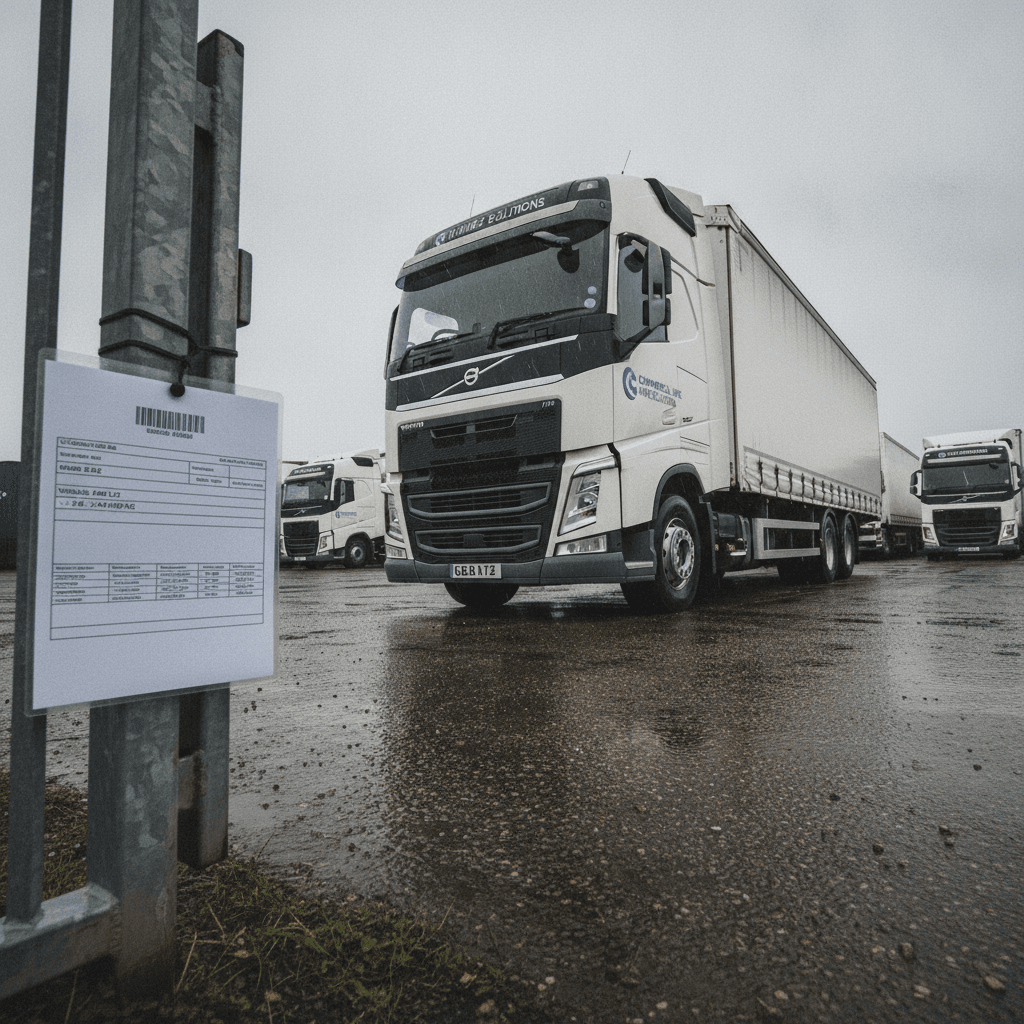
Short-term hire feels different from adding a vehicle. You've got your licence, your authorised fleet, your paperwork — and then you bring in a hire unit for a fortnight because something's in for a rebuild. It's temporary. Surely it doesn't need to go through the whole process.
It does. And getting this wrong puts you in a position that's harder to explain to a Traffic Commissioner than almost any other licence breach — because the fix was obvious, it just wasn't done.
The legal position
Under the Goods Vehicles (Licensing of Operators) Act 1995, an operator must hold a valid operator's licence to use a goods vehicle on a road for the carriage of goods in connection with any trade or business. That obligation attaches to the vehicle being used, not to whether you own it.
A hired vehicle — whether hired from a vehicle hire company, borrowed from another operator, or leased long-term from a finance house — is still a vehicle being used on a road by your business for the carriage of goods. The licence requirement applies to you as the operator, regardless of who holds the title to the vehicle.
The practical consequence: the hired vehicle needs to be specified on your O-licence during the period you're operating it. Not after. During.
How specification works for hired vehicles
If you have spare authorisation on your licence — your licence allows, say, eight vehicles and you're currently running six — a hired vehicle that brings you to seven doesn't require a variation application. You're still within your authorised number. The vehicle needs to be notified to the Vehicle Operator Licensing (VOL) system, but you can use it immediately.
If you're already at your authorised maximum — all eight vehicles specified on the licence and all eight in use — and you bring in a hire unit, you need a variation. That variation has to be in place before you put the hired vehicle on the road with goods. Not 'I'll sort it when I get a minute.' Before.
This is where operators come unstuck. They're in a time-pressured situation — vehicle broken down, contract deadline, driver sitting idle — and the sensible-seeming option is to get the hire unit out first and deal with the licence later. The hired vehicle gets stopped. The licence check comes back showing it's not authorised. Everything gets significantly more complicated from there.
Long-term leases: no different in principle
A finance lease, operating lease, or contract hire arrangement means the vehicle is legally owned by the finance company. That doesn't change your compliance position one bit. The vehicle needs to be specified on your O-licence just as if you owned it outright. The Traffic Commissioner doesn't distinguish between an operator who owns their fleet and one who leases it — the licence obligation is the same.
One thing that does differ with leased vehicles: maintenance responsibility needs to be clearly defined in the lease agreement, and your PMI arrangements need to cover the leased vehicle exactly as they would an owned vehicle. I've seen operators assume that because a leased vehicle 'belongs' to the finance company, the finance company is somehow responsible for the roadworthiness checks. That's not how it works. You're using it. You're responsible.
The operating centre requirement
Vehicles specified on your licence have to operate from an authorised operating centre. That's a location that's been approved by the TC for the parking and management of the number of vehicles specified at that centre.
A hired vehicle brought in for three weeks still needs a base. If it's parking overnight at your authorised operating centre alongside your existing fleet, that's fine — provided you're within your authorised vehicle spaces at that centre. If it's operating from a different location — a customer's yard, a subcontractor's depot, somewhere you haven't specified on the licence — that's a separate problem. Using a vehicle from an unauthorised operating centre is a licence breach on top of the vehicle specification issue.
Check your licence disc before you park a hire unit anywhere. The operating centres are listed on the licence. The vehicle needs to operate from one of them.
Financial standing: the calculation that catches people out
O-licence financial standing is calculated per vehicle. The current requirement — check GOV.UK for the latest figures, as these are reviewed periodically — is £8,000 for the first vehicle and £4,450 for each additional vehicle for a standard national licence. When you add a hired vehicle — even temporarily — your required financial standing goes up.
Most operators who've been running the same fleet for a few years have financial standing comfortably above their current requirement. But if you're running close to the line — particularly if you've had a difficult trading period and your bank balance has moved — a temporarily expanded fleet can push you below the threshold. The TC expects that you are maintaining financial standing that covers all the vehicles you're operating at any given time. Not just your owned fleet. All of them.
Driver management for hire vehicles
Here's the one that people forget entirely. A hired vehicle on your O-licence is your vehicle for compliance purposes. The driver in it is your driver for compliance purposes. Tachograph downloads, defect reporting, walkaround check records — all of that needs to be happening for the hired vehicle just as it does for every other vehicle in your fleet.
The hire company isn't downloading the vehicle unit. You are. If DVSA pulls the vehicle and asks for the tachograph data from the last 90 days, and you haven't been downloading it because you assumed the hire company handles it — that's a significant problem.
When a hire vehicle comes onto your fleet:
- Add it to your vehicle list in your compliance system immediately
- Get the vehicle unit download at or very shortly after the start of hire — you need a baseline
- Assign a driver and brief them on your defect reporting process
- Make sure walkaround checks are being recorded for that vehicle from day one
- Schedule a safety inspection if the hire period is long enough to require one
And when the vehicle goes back: download the unit again before it leaves. You need those records. They're yours to keep.
What 'borrowing' from another operator looks like legally
Sometimes operators in the same group or network 'borrow' vehicles from each other informally. Vehicle A's fleet is short, so Fleet B lends them a truck for a week. Looks like an internal arrangement. Legally, it's a hire — and all the same rules apply.
If Fleet B is a different legal entity from Fleet A, there's a further complication: the vehicle needs to be operated under one or the other's licence, not both. In practice this means the borrowing operator has to add the vehicle to their licence and the lending operator needs to de-specify it temporarily. Neither party always bothers. And the occasional DVSA roadside check that catches a vehicle specified under a different operator's licence — but being used by this operator — is exactly the kind of thing that generates a report to the TC.
The shortcut that isn't worth it
I understand the operational pressure. Something breaks down Thursday afternoon, the contract runs Friday morning, you've got a hire company with a 44-tonner available tonight. The paperwork feels like it's getting in the way of running a business.
But the TC's view on compliance is that the administrative burden of properly authorising vehicles is not a reason to operate without authorisation. It's the minimum expected of a compliant operator. An operator who says 'I knew I had to authorise it, but there wasn't time' is not going to get much sympathy at a public inquiry.
VOL variations for additional vehicles can be done online. For vehicles within your existing authorised number, it's a simple notification. The 'it takes too long' argument doesn't carry weight when the alternative is an unauthorised vehicle on the road.
Get the vehicle on the licence. Then send it out.