O-licence applications in Applications and Decisions: the 21-day window and who actually uses it
I applied for a new operating centre in 2021. A neighbour I'd never spoken to submitted a formal representation within the 21-day window. The Traffic Commissioner had to hear it. Here's how the publication and objection process actually works.
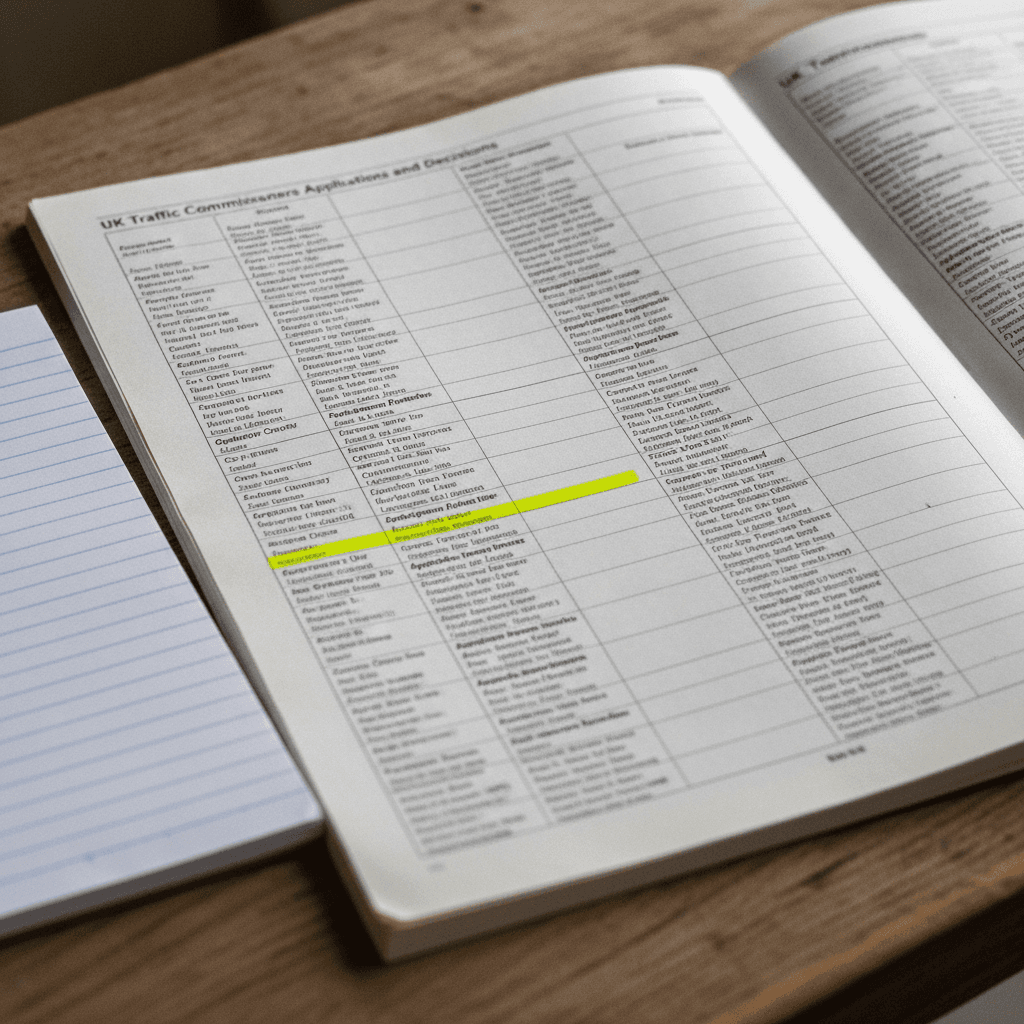
Most operators applying for a new operating centre treat the process like planning permission — submit the application, pay the fee, wait for approval. They don't think much about the 21-day window during which their application is published in Applications and Decisions, and anyone with a legitimate interest can formally object or make representations.
That was me in 2021. I was adding a second operating centre for a new depot in Suffolk. The application was straightforward. We had the space, the vehicles, the parking, the maintenance arrangements. Three weeks after publication, I got a letter from the Traffic Commissioner. A neighbour whose property backed onto the proposed depot entrance had submitted a formal representation. The TC was required to consider it before determining my application.
The process took four months instead of four weeks. We eventually got the operating centre approved — with a condition on vehicle movement hours. But I went into that application knowing nothing about who could object, on what grounds, or how the TC weighed what they received. Knowing this earlier would have saved me time and probably the condition.
What Applications and Decisions actually is
Applications and Decisions is the Traffic Commissioners' weekly publication, available on gov.uk. It lists every new operator licence application and variation application received. When a new operating centre application is submitted, the TC is required by regulation 7 of the Goods Vehicles (Licensing of Operators) Regulations 1995 to publish a summary of it in the next available edition.
The summary includes the applicant's name, the address of the proposed operating centre, the number of vehicles and trailers authorised, and the type of licence being applied for. It's publicly available — anyone can search it. Local authorities and planning authorities monitor it. Residents near proposed operating centres look for their addresses. Trade unions and haulage associations have standing to object on certain grounds and routinely review new entries.
The 21-day objection period runs from the date of publication (regulation 12 of the 1995 Regulations). Miss that window and — unless there are exceptional circumstances — the TC will not entertain an objection. The TC has discretion to accept late objections where exceptional circumstances exist, but it's discretion, not a right, and it's rarely exercised.
Who can object, and on what grounds
Section 12 of the Goods Vehicles (Licensing of Operators) Act 1995 sets this out. The categories are more specific than most operators realise.
Prescribed trade unions and associations, chief officers of police, local authorities, and planning authorities can object on the grounds that the applicant does not meet the requirements for grant of a licence — typically concerns about financial standing, professional competence, or good repute. These are the s.12(1)(a) objections. In practice, police objections are rare. Local authority objections on s.12(1)(a) grounds are uncommon but not unheard of for applicants with relevant criminal histories.
The same parties can also object under s.12(1)(b) on the grounds that the proposed operating centre is unsuitable on environmental grounds — essentially, that parking vehicles there would adversely affect the environment of the surrounding area.
Separately — and this is what caught me — any person who is the owner or occupier of land in the vicinity of the proposed operating centre can make a representation under s.12(4). The test is whether use of the place as an operating centre could cause adverse environmental effects that would prejudicially affect the use or enjoyment of their land. It's a broader test than it sounds. Noise from early-morning vehicle movements, exhaust fumes drifting toward a garden, light pollution from a floodlit yard — these can all support a valid representation if the land is genuinely nearby.
What the TC weighs
A valid objection or representation doesn't automatically block your application. The Traffic Commissioner has to consider it — but they also have to weigh the public interest in facilitating road transport operations, whether the concerns are substantial and substantiated, and whether conditions can be imposed that adequately address the issues raised.
In my case, the representation was about early-morning vehicle movements disturbing the neighbour's sleep. The TC didn't refuse the application. Instead, they attached a condition restricting vehicle movements to between 7 a.m. and 8 p.m. on weekdays and 8 a.m. to 6 p.m. on Saturdays, with no movements on Sundays. That's a reasonable outcome given the circumstances. But it was an operating constraint I hadn't factored into the contract I'd signed for the depot.
Where objections relate to financial standing or good repute rather than environmental concerns, the TC can refuse the application outright, require undertakings before granting it, or grant it with conditions. The standard grounds for refusal — operator not of good repute, transport manager lacking professional competence, insufficient financial standing — don't require a third-party objection; the TC checks these as a matter of course. But an objection that raises one of these grounds can prompt closer scrutiny.
How to handle this before you submit
The obvious move — and the one I didn't make — is to speak to your immediate neighbours before you apply. Not a legal obligation, but worth doing. If the person who would have objected had any idea I was planning to operate a small commercial fleet from the site, I might have been able to address their concerns through operational commitments before they ever needed to file a formal representation. By the time I knew about the representation, it was in the hands of the TC and the only avenue was the formal process.
Check the site against planning records too. If there's an existing planning permission for commercial use, the TC takes that into account — a site with lawful commercial use planning is less vulnerable to environmental representations than a greenfield or residential-adjacent site. The TC can't refuse your operating centre on environmental grounds if you have a qualifying planning certificate confirming the use is or would be lawful, although they can impose conditions.
For genuinely contentious sites — next to residential properties, near schools, in areas of existing planning disputes — factor the 21-day window and potential delay into your project timeline. Four months is not unusual when representations are submitted. Six months happens. If you're committing to a contract start date, add contingency.
Variation applications go through the same process
Adding vehicles or trailers to an existing operating centre, or adding a new operating centre to an existing licence, triggers the same publication requirement. Regulation 7 applies to variation applications as well as original applications. The 21-day window runs the same way. Representations and objections on the same grounds can be received.
This catches operators who assume that once an operating centre is approved, it's approved permanently regardless of changes. A significant increase in the number of vehicles authorised at a site can generate fresh environmental concerns — increased traffic movements, additional noise — and a representation from a neighbour who was fine with five trucks parked overnight but not fine with fifteen.
If you're planning a substantial increase in vehicle numbers at an existing centre, it's worth reviewing the operating centre's environmental context before you submit the variation. Has the area changed? New residential development nearby? New neighbours? The 21-day window applies equally to you as it does when you first applied.
Checking Applications and Decisions as a competitor monitor
The reverse is also worth knowing. You can monitor Applications and Decisions for competitors' licence applications. If a haulier is applying for an operating centre near yours, or applying for a substantial variation that will increase their fleet capacity, that information is public during the 21-day window. You have standing to object as a prescribed trade association member, though not as an individual operator. Direct competitor objections on commercial grounds aren't a legitimate basis — the TC doesn't protect competitive markets, they protect standards. But it's worth being aware of what's being published.
Applications and Decisions is published weekly on the Traffic Commissioners' section of gov.uk. It's searchable and free to access. I check it monthly now. Took me too long to start.