Tachograph calibration: the 2-year cycle, what DVSA checks for, and how to spot an overdue vehicle
I missed a calibration on a Volvo FH last year. Found it at a pre-inspection, not a roadside check. Here's how the 2-year cycle works, what triggers an early recal, and what I check for now.
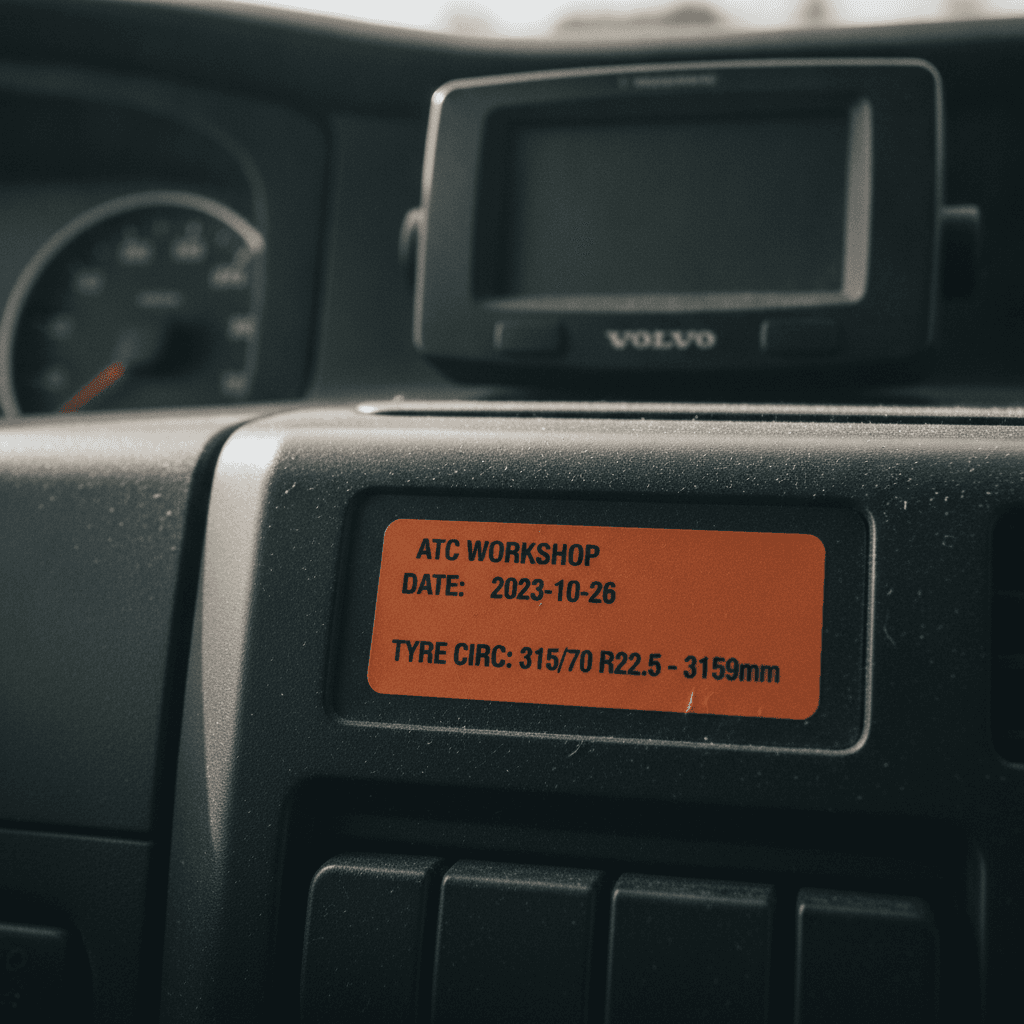
I nearly sent a vehicle to a DVSA inspection with an overdue tachograph calibration last year. The Volvo FH in question had been through two PMIs, a brake test, and a pre-MOT check in the preceding six months. Nobody looked at the calibration plaque. I only caught it because a driver mentioned the screen was showing a clock-sync warning — which turned out to be unrelated to calibration — but while I was poking around, I found the ATC sticker on the speedo housing and realised the 2-year anniversary had been three months ago.
It wasn't at the roadside. It didn't become a prohibition. But it would have. And explaining an overdue tacho calibration to a DVSA officer, on the record, with a potential impact on your OCRS, is an avoidable conversation.
The 2-year rule: where it comes from
UK-retained Regulation (EU) 165/2014 sets the calibration requirements for tachographs fitted to in-scope vehicles. The regulation requires that tachographs are calibrated at an Approved Tachograph Centre (ATC) at intervals not exceeding two years. Two years from the date of installation for a new vehicle, and then every two years from the last calibration — not from the registration date, not from the PMI date, from the last calibration.
That distinction matters. A vehicle that changes hands mid-cycle doesn't reset the clock. If you buy a second-hand truck and the calibration was done 18 months ago, you've got roughly six months before it needs doing again. The previous operator's ATC sticker is the record. If there's no sticker, or the sticker is missing or illegible, the calibration is due.
The two-year interval is the maximum. It's not the only trigger for calibration.
Three things that trigger early recalibration
Calibration doesn't only happen on a two-year rolling cycle. Three other situations require it regardless of where you are in the cycle.
First: any repair to or adjustment of the tachograph unit itself. If the ATC replaces a faulty card reader slot, recalibrates the clock, or swaps a damaged display, the whole calibration procedure follows. That's not a surprise — any intervention that could affect accuracy resets the need to verify it.
Second: any work that might affect the accuracy of the vehicle speed measurement. Tyre size changes are the most common cause of this on HGV fleets. If you change from one tyre specification to another — particularly if the rolling circumference changes — the tacho needs recalibrating to match. Operators fitting winter tyres in a different spec to summer tyres need to think about this. So do operators who re-spec tyres between steering axle and drive axle.
Third: if the tachograph produces a recorded speed that deviates from the actual speed by more than ±2%. This is usually caught at calibration when the ATC compares the tacho output against a reference speed measurement. If it's outside tolerance, the unit is adjusted and the whole calibration procedure runs.
What happens at an ATC calibration
An Approved Tachograph Centre is a DVSA-authorised workshop — most are commercial vehicle repair garages who've gone through the approval process. They hold workshop smart cards that allow them to interact with the tachograph in ways that normal downloads don't permit.
At calibration, the ATC does several things. They check and record the vehicle's tyre specification and measure the actual rolling circumference. They verify the odometer reading. They check the clock accuracy against a reference time source. They test the speed measurement against a known standard. They record all of this on the tachograph's internal memory using their workshop card, and they issue a calibration plaque — the sticker you should be able to find on the vehicle's dashboard or speedo housing — showing the ATC, the date, the tyre spec, and the due date for the next calibration.
The whole process typically takes between two and three hours, including the roller brake test bay time needed for the speed measurement. Book it in advance — ATCs can be busy, and turning up without an appointment at a busy truck workshop often means a day's wait.
How to track your fleet's calibration cycle
This is where most operators with more than 10 vehicles get into trouble. The calibration dates aren't linked to MOT dates, PMI dates, or any other maintenance cycle by default. They run on their own two-year clock per vehicle, all offset from each other depending on when each vehicle was last done.
The solution is simple but needs to be set up deliberately. Add a 'tacho cal due' date field to your maintenance planner for every vehicle. Set a reminder 60 days before the due date so you've got time to book the ATC appointment without rushing. When a vehicle comes in from its ATC visit, update the planner immediately — don't let the new date sit on a sticker on someone's desk.
I cross-reference calibration dates against our PMI schedule and try to align them where possible. Not always achievable — the two-year cycles don't map neatly to six-week PMI intervals — but if a vehicle's calibration is due six weeks after its next PMI, I'll sometimes bring the calibration forward to coincide with the PMI if the ATC has capacity. Saves a second vehicle off-road day.
Digital vs analogue: does it matter for calibration?
Both types need the same two-year calibration cycle. The process at the ATC is different — analogue tachographs have a sealed instrument that's calibrated and resealed, while digital and smart tachographs are programmed via workshop card — but the legal interval is the same. If you're running any pre-2006 vehicles with analogue tachos, the calibration requirements apply identically.
Smart tachographs (the second-generation digital units required on new vehicles registered from June 2019 onwards, and the third generation — DTCO and equivalents — more recently) add one wrinkle: they also need to have their GNSS data checked and their motion sensor connection verified at calibration. ATCs who are approved for smart tacho work have the relevant workshop card types. Not all older ATCs are approved for smart tacho calibration — check before you book.
What DVSA looks for at roadside and inspection
At a roadside stop, a DVSA examiner can check the calibration plaque directly. No plaque, or a plaque showing a date that's passed, and you're looking at a prohibition at worst, or a formal written warning that goes on your OCRS record. Neither is what you want.
At a formal DVSA operator inspection or Traffic Commissioner audit, the examiner will typically ask to see your maintenance records for vehicles, and calibration records fall within that scope. They're looking for a complete, continuous chain of calibration dates across your fleet — no gaps, no overdue vehicles, no vehicles where the plaque and the record disagree.
The OCRS weighting for a tacho calibration failure isn't enormous on its own. But it sits alongside every other vehicle maintenance item on the examiner's checklist. An overdue calibration alongside an overdue PMI alongside a defect not cleared promptly is the combination that starts a DVSA officer talking about referral to the Traffic Commissioner.
Second-hand vehicles: the calibration trap
Buying second-hand HGVs is where calibration oversight most commonly happens. You inherit the vehicle, it looks fine, it's just come through its annual test, and nobody specifically checks the calibration plaque during the handover inspection. The vehicle goes into service. Eighteen months later, someone looks at the plaque and realises the calibration was 18 months old when you bought it.
Every second-hand vehicle that joins my fleet gets a calibration check before it goes on the road. Not an ATC visit necessarily — I check the existing plaque first. If it's within the cycle and I can see the ATC details, the tyre spec, and the due date, I'll carry the existing calibration forward if there are months remaining. If there's no plaque, if the plaque is illegible, or if the vehicle has had any work done to the drivetrain or tyre spec since the last calibration, it goes to the ATC before it moves freight.
That pre-purchase check should also include a download of the vehicle unit to verify the calibration data stored internally matches the sticker on the dash. A sticker can be replaced. The data in the unit can't be faked.
The ATC invoice as a compliance record
Keep every ATC calibration invoice. Permanently, or at minimum for as long as you operate each vehicle. The invoice from the ATC records the workshop card serial number, the calibration parameters set, the tyre data used, and the outcome. That's the audit trail that proves the calibration was done, who did it, and when.
I file ATC invoices in each vehicle's compliance folder alongside the PMI certificates, MOT certificates, and DVSA check results. When DVSA requests the vehicle's maintenance history at an operator inspection, calibration records should be in that file as a matter of course — not something you're scrambling to locate separately.
Missing an ATC invoice doesn't mean the calibration didn't happen. But it means you can't prove it did. In a DVSA or TC context, the difference between those two positions is significant.
Two-year cycle, tracked properly, no exceptions
The calibration requirement isn't complicated. Two years. Approved centre. Plaque on the vehicle. Record in the file. What makes it catch operators out is the lack of a system to track it across a fleet where every vehicle is on its own offset cycle.
Add it to your maintenance planner. Book ahead. Don't let it drift. I've seen operators get a formal DVSA letter over a tacho calibration that was only two months overdue — two months that couldn't be explained because nobody had tracked the date at all. Two months is nothing. The paperwork consequences lasted considerably longer.