Got a letter from the Traffic Commissioner? Here's the 5-week process I've been through twice
The letter from the TC landed on a Friday afternoon. I've been through this twice. Here's what happens next, what you send, and where operators fall apart.
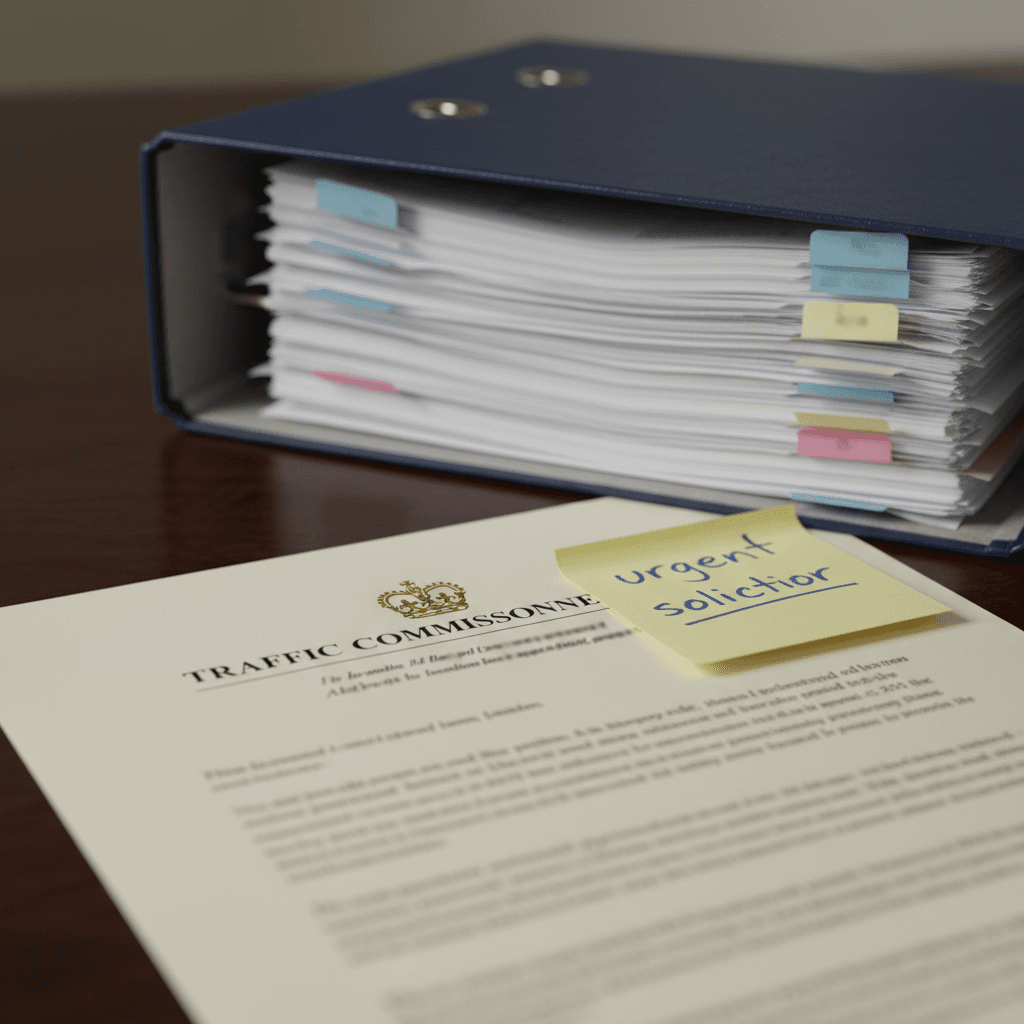
Both times it came on a Friday
I don't know if that's DVSA policy or coincidence, but both letters arrived on a Friday afternoon when the office was half-empty and there was nothing useful I could do until Monday. First time, 2017. Second time, 2022. Same format both times. Same controlled language. Same way of telling you that your operation had attracted the Traffic Commissioner's attention without actually explaining why in the opening paragraph.
The first time I panicked. The second time I knew what I was looking at. And the difference in how I handled the subsequent five weeks was significant.
There are three types of letter, and they're not the same
A lot of operators see a letter from the TC's office and assume it means a Public Inquiry. It often doesn't.
The most common letter is a maintenance query. Your OCRS has flagged something — a cluster of prohibitions, a gap in PMI records picked up during a check, a vehicle test failure showing up in the DVSA data. The TC's office writes asking for an explanation and some documents. It's not a PI call-up. It's a request for evidence that you're on top of things. If your response is good, it often ends there.
Second type: a call-up letter for a Public Inquiry. This one is explicit. It names a date, a venue — usually the regional TC's office in Birmingham, Leeds, Edinburgh, Cardiff, or Eastbourne depending on your operating centre — and the specific concerns that triggered the hearing. It also lists the licence sanctions the TC is considering: suspension, curtailment, revocation, disqualification of the named transport manager.
Third type: a snapshot audit. Less common, but increasingly used. DVSA attends your operating centre without advance notice and audits your records in real time. You might get a letter confirming the audit outcome rather than preceding one.
When the letter arrives, reading it carefully is not optional. The type of letter determines everything about your response.
The maintenance query: what to send back
On my first letter, I was asked to provide evidence of compliance with my maintenance intervals for three named vehicles over the preceding twelve months. Four weeks to respond.
Four weeks sounds comfortable. It isn't. Pulling together twelve months of PMI records for three vehicles, driver defect sheets, tachograph analysis records, and a coherent covering letter explaining anything that wasn't perfect — that takes time. Especially if your records system isn't set up to produce a clean PDF bundle quickly.
What to send: PMI inspection records for every service in the period, signed by the workshop. Tachograph download records showing regularity. Defect reporting records — driver-reported defects and the operator's response to each one. If there were delays in rectifying a defect, explain them clearly with evidence of why and what action was taken.
What not to send: anything you can't substantiate. A TC's office reads these bundles carefully. An unexplained gap is worse than an explained imperfection. If you missed a PMI by eight days because your regular workshop was closed and you couldn't get an alternative booked, say that. Attach the evidence. Don't paper over the gap with a later inspection date and hope nobody notices.
The Public Inquiry call-up: five weeks of preparation
A PI call-up typically gives four to six weeks' notice. The preparation work is substantial.
First thing I did both times: call a transport solicitor. Not a general solicitor. A specialist who has appeared before TCs regularly and knows the regional commissioner's approach. The cost is significant — typically £2,000-£5,000 for representation at a PI — but going in without proper legal representation at a Public Inquiry is like representing yourself in court. You can do it. I wouldn't recommend it.
Second: build the compliance bundle. The TC typically asks for the last 13 months of maintenance records, driver licence check records, tachograph analysis summary, driver hours records, financial standing evidence (bank statements or audited accounts), and your maintenance agreement contract with the workshop. DVSA guidance states maintenance records must be kept for at least 15 months — so if you've been compliant, you should have everything they ask for.
Thirteen months of maintenance records for a 15-vehicle fleet is a lot of paper. Or a lot of PDF. Get it organised before the hearing, tabbed and indexed. The TC will be reading it on the day. A neat, well-ordered bundle says "this operator knows what they're doing." A chaotic pile says the opposite.
What the TC actually looks at first
A transport solicitor I work with — twelve years in this field, appearances before TCs in five regions — tells me the first thing most TCs reach for is the maintenance schedule and the PMI record dates. Is the stated maintenance interval being adhered to? Are the vehicles getting their six-weekly inspections? Are brake tests being done at every PMI?
Second: driver licence checks. If there's any suggestion that drivers have been operating on expired licences or with undisclosed endorsements, that's very serious. Regular DVLA electronic checks showing ongoing verification help enormously.
Third: the transport manager's engagement. If I'm named on the licence, the TC wants to know that I'm actually doing the job — not just a name on a form while someone else runs the operation. Evidence includes signed-off PMI records, tachograph analysis records I've personally reviewed, and driver disciplinary records where hours issues were addressed.
Possible outcomes: what the TC can actually do
A Traffic Commissioner can take the following actions on an O-licence after a public inquiry.
No action — the TC finds that concerns were addressed and the operator is compliant. This is what you're working towards.
Formal undertakings — conditions added to your licence. Common ones: a maintenance audit at a set date, restriction on fleet size until compliance improves, mandatory training for the named transport manager.
Curtailment — reduction in authorised vehicles. From 15 down to 10, pending further review.
Suspension — licence suspended for a period. You can't operate during that time. Commercially devastating for most operators.
Revocation — licence revoked. The end of the operation, with a disqualification period before you can apply again.
Disqualification of the transport manager — you lose your good repute and are removed from the licence. If you're the owner-operator, this effectively ends the licence unless another qualified TM takes over immediately.
The seriousness of the outcome tracks the seriousness of the failings and the strength of your remediation evidence. An operator who arrives with a clear compliance bundle, acknowledges specific failings honestly, and demonstrates credible improvements already in place has a realistic chance of formal undertakings at most. An operator who turns up with incomplete records and tries to minimise serious issues tends to find the TC less forgiving.
One thing I wished I'd done differently the first time
I'd spent the four weeks before that first PI focused entirely on the records bundle and legal preparation. What I hadn't done was sit down and write a clear, honest narrative of what had gone wrong and what I'd changed since.
My solicitor had to coach me through it on the way into the hearing room. But a well-written, specific, dated improvement plan — submitted before the hearing as part of your response — signals to the TC that you understand the issues and have already addressed them. It's not weakness. It's the most important piece of evidence you can produce.
If the letter arrives on a Friday afternoon — and it will arrive on a Friday afternoon — try not to spend the weekend spiralling. Get the date, make the call to the solicitor on Monday morning, and start pulling your records. You've got time. Use it properly.