Digital tachograph downloads and archiving: what you have to do, when, and why it bites you if you don't
Vehicle unit every 90 days. Driver card every 28. Archive for a year minimum. Sounds simple until you've got 40 vehicles, 60 drivers, a broken card reader, and a DVSA officer asking for records from 18 months ago. Here's how to keep on top of it without losing weekends.
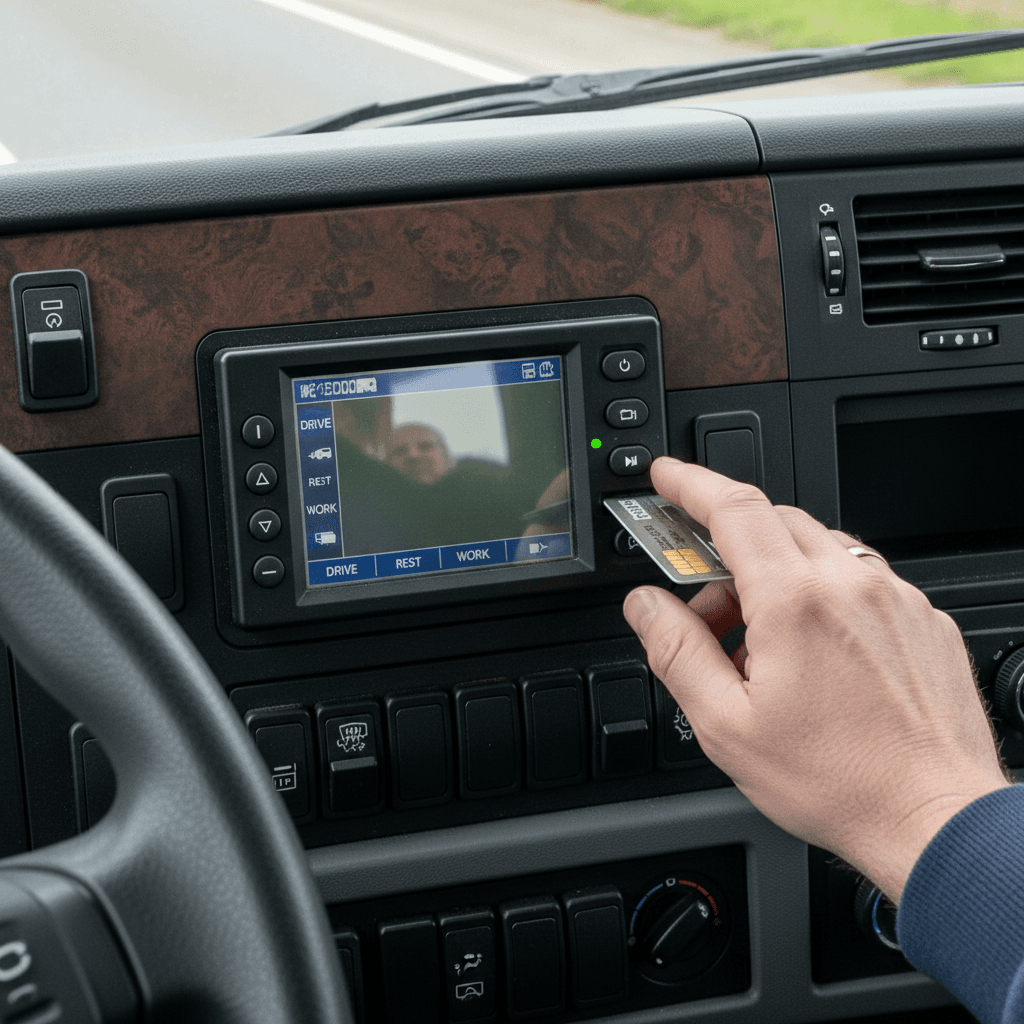
Let me tell you about a fleet I was called into help in the Midlands. Good operator, decent fleet, clean-ish record. DVSA wrote to them asking for the digital tachograph data for six specific vehicles covering a three-month window 14 months previously.
They could not produce it. The card reader had broken in the interim, the replacement wasn't set up the same way, and about four months of vehicle unit data was just — gone. Not lost, exactly. Never downloaded in the first place.
That cost them a Public Inquiry. Not because the drivers had done anything wrong in the missing period — the drivers had been fine. Because the Transport Manager could not evidence that she had been actively managing the data. And "managing the data" starts with actually having it.
So this post is about how to not be that operator.
The two downloads, the two deadlines
Two separate data sources you have to download and retain:
- Driver card — every 28 days minimum, under retained Regulation (EU) 165/2014 and the UK Passenger and Goods Vehicles (Recording Equipment) Regulations. You're downloading the driver's activity history from the card itself.
- Vehicle unit (VU) — every 90 days minimum, for every vehicle. You're downloading what the vehicle recorded about its activity, regardless of which driver was in it.
You need both. They're not duplicates of each other. Driver card data shows what the driver did across multiple vehicles. Vehicle unit data shows what happened in one vehicle across multiple drivers. A DVSA officer will sometimes want one, sometimes the other, and sometimes both to cross-reference.
Miss the 28-day driver card window by a significant amount and you've created a gap in that driver's record which cannot be reconstructed after the fact. Same story with the 90-day VU window — miss it and that quarter's data for that vehicle is lost to the record.
What "retain" actually means
The minimum retention period is 12 months from the date of recording. So data from today has to be retrievable for at least 12 months. For Working Time compliance the safer position is 24 months — the Working Time directive evidence horizon is longer than the drivers' hours one, and you don't want to find that out the hard way when an employment tribunal asks for it.
In practice, I kept everything indefinitely. Storage costs nothing. A proper analysis tool will hold years of data for the cost of a software subscription. I've had DVSA ask me for data 18 months old more than once, and the 12-month regulatory minimum does not stop them asking.
The safer position: keep everything for at least two years, cleanly organised so you can pull any driver, any vehicle, any date range, in under five minutes. If it takes you longer than five minutes to find it, your filing is wrong.
The thing about driver cards
Driver cards carry about 28 days of activity before they start overwriting the earliest data. Which is exactly why the 28-day download cycle exists. If a driver hasn't downloaded in 35 days, the earliest week of data is already overwritten and gone.
This is not a technicality. It's literally how the card works. The chip doesn't have infinite storage; it's a rolling buffer.
So when a driver disappears on annual leave for two weeks and then a bank holiday and you miss a download cycle — that's when you lose data. Not through malice, not through negligence, just because nobody was watching the calendar.
I used to have a simple rule: every driver card downloads on the 1st of the month, without exception. If the driver was on leave on the 1st, the download happens the moment they're back, not at the end of the month. Same-day.
Card readers and why they break
Dusty cabs. Sticky cards. Cheap readers bought to save £40 that fail in the middle of a peak week.
Buy two card readers. Always. One in the office, one as a backup, ideally one portable for out-of-hours downloads. They're not expensive and when the main one breaks on a Friday afternoon with 15 drivers due to download, you'll thank yourself.
Do not rely on the garage doing downloads during vehicle inspections. Some garages offer it; some even do it properly. But it's your legal responsibility, not theirs, and outsourcing the download doesn't outsource the responsibility if it goes wrong.
The format question
Downloads come as .DDD files, occasionally .TGD depending on your system. These are not plaintext. You need analysis software to actually read them.
The analysis software does three things:
- Decodes the raw data into a readable format.
- Flags infringements (missed breaks, exceeded driving limits, etc.).
- Archives it in a searchable way.
Good analysis software does a fourth thing: cross-references driver card data against vehicle unit data and flags discrepancies. Which is where you catch problems that would otherwise go unnoticed — a driver claiming to be in one vehicle when the VU says they were in another, missing breaks, and so on.
Do not download data and leave it un-analysed. The download is not the compliance step. The analysis is the compliance step. Having 18 months of un-analysed .DDD files is worse than useless — it's evidence that you have the data and chose not to look at it.
Infringement management
The analysis flags infringements. So what?
So, the Traffic Commissioner and DVSA both want to see that when an infringement is flagged, something happens. Specifically:
- The driver is told about it.
- The cause is identified (was it a dispatch problem, a planning issue, or a driver decision?).
- Corrective action is recorded.
- Repeat offenders go through the disciplinary process.
"Driver signed the infringement form" is not sufficient. Plenty of operators have a system where the driver initials every flagged infringement and that's considered closed. It isn't. The Traffic Commissioner wants to see evidence of root-cause analysis and change, not a filing system.
What works — and this is not original, but it works — is a simple grid: date, driver, infringement type, cause (driver / planner / traffic / equipment), action taken, date closed. Keep it as a living document. Review it monthly. Look at the pattern.
In one fleet I supported, that grid immediately revealed that 70% of infringements were coming from one planner's routes. Same driver across routes: fine. Same routes across drivers: infringement. The problem wasn't the drivers. That's useful information you cannot get from filing signed forms.
I covered the broader question of what DVSA actually checks on tachograph data in the driver hours piece. The download-and-archive process is the foundation; the analysis-and-action process is what turns that foundation into something compliant.
What DVSA asks for when they ask
When a DVSA officer requests tachograph data, they'll typically ask for:
- A specific date range — usually 6 to 12 weeks.
- Specific vehicles — often the ones involved in a recent encounter.
- Or sometimes specific drivers.
They expect the data in standard format, usually the raw .DDD files, sometimes an exported PDF report from your analysis software. DVSA typically gives you 21 days on an enforcement letter — sometimes less, check the letter itself — but once that clock starts, you can't just ask for more time without a good reason. In practice, a TM with their filing in order responds within 24-48 hours because it looks like confidence. A TM who takes 20 days of the 21 looks like they were scrambling. That impression matters more than people think.
The common failure modes
Across operators I've worked with, the tachograph archive failures I see over and over:
- Downloaded but never analysed. The file is there; nobody ever looked at it; infringements piled up unnoticed.
- Analysed but infringements not actioned. Reports generated, sat in a folder, no driver conversations.
- Downloads skipped during holiday cover. TM away, nobody deputised, three weeks of missing data.
- Mixed software over time. Operator changed analysis providers, old data stayed in old format, unretrievable in the new system.
- Vehicle units not downloaded when vehicles are sold. Truck leaves the fleet with un-downloaded data still in the VU. Data gone.
That last one is specific and painful. When you sell or defleet a vehicle, download the VU the same day you know it's leaving. The new owner has no obligation to share the data with you, and if DVSA later asks about the period before the sale, you need that data in your own archive.
The simple working rhythm
Right. If I were starting fresh tomorrow with a fleet of 40 vehicles, here's the working rhythm I'd put in place:
- Driver cards downloaded on the 1st of every month, with a secondary sweep on the 15th to catch anyone who was off on the 1st.
- Vehicle units downloaded in three cohorts — one third at the start of each month, so no VU ever exceeds its 90-day window.
- All data auto-imported to the analysis software within 24 hours.
- Infringement report reviewed weekly, not monthly. Weekly means you catch a pattern early. Monthly means the driver has already done four more of the same before you noticed.
- A monthly rolling report filed, even when there are no infringements. That monthly report is the evidence trail DVSA and the Traffic Commissioner want.
Is this more work than the minimum regulatory requirement? Slightly. But it's the difference between a TM who is visibly managing the operation and one who can show a regulator a stack of raw files and nothing else. That difference is the whole game.
The honest last word
Tachograph downloading is the most tedious, least glamorous part of running a fleet. Nobody's ever been promoted for being brilliant at tacho administration. But it's the most easily verifiable piece of evidence a regulator has about whether you're actually managing the operation.
If your downloads are clean, punctual, analysed, and followed up, the Traffic Commissioner will treat that as evidence of a competent operation and cut you slack on ambiguous matters. If they're messy, late, or incomplete — the benefit of the doubt evaporates, regardless of how well-run everything else looks.
Get this one right and a lot of other things get easier by implication.