Lost tachograph card: 15 calendar days, two printouts a day, and the DVLA deadline your drivers miss
My driver lost his card on a Tuesday. Fifteen calendar days to keep driving — but there's a 7-day DVLA deadline and daily printouts most operators don't brief.
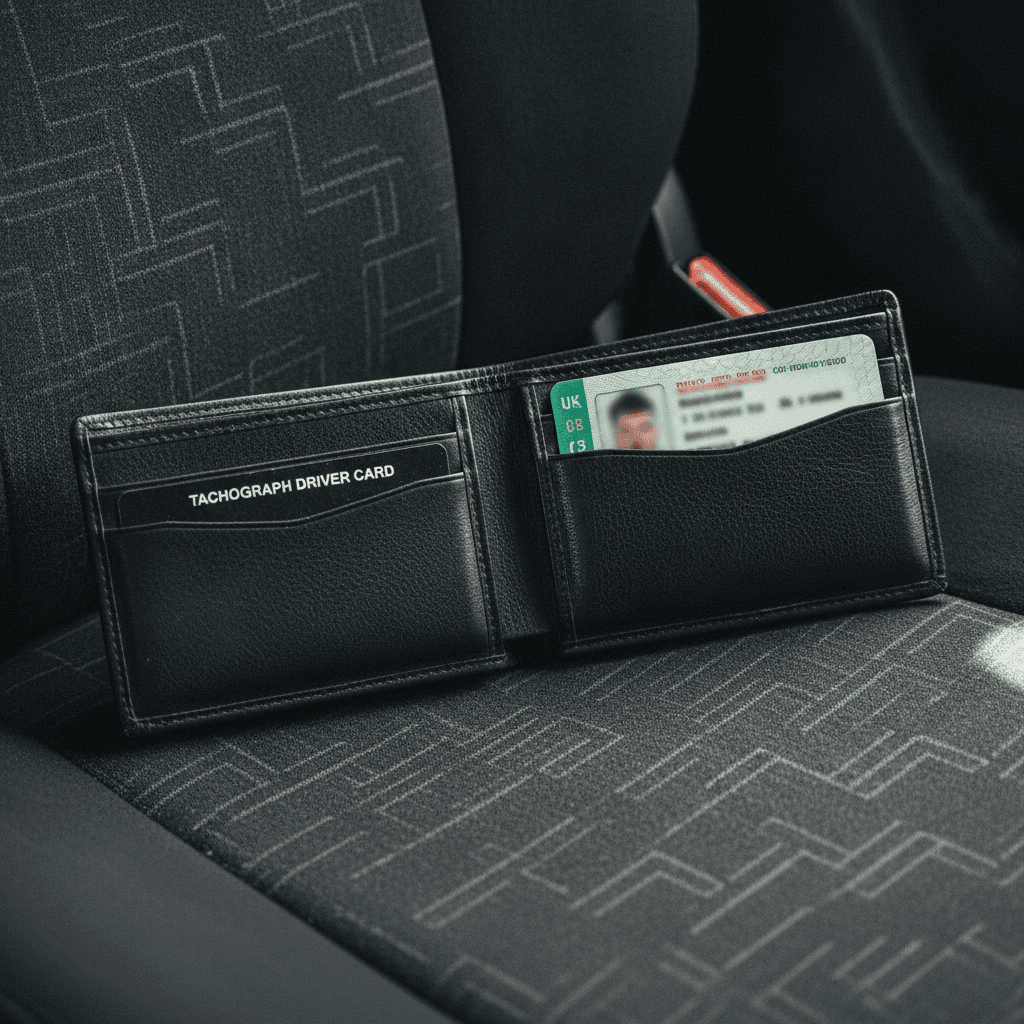
One of my drivers called from Moto Stafford North on a Wednesday morning. Hand in jacket pocket, card wasn't there. He wasn't sure when he'd last had it — possibly his other jacket, possibly left in the vehicle unit slot the evening before.
I told him I'd check the rules and call back. I didn't know them well enough off the top of my head — and I'd been a named TM for four years at that point. Here's what I found out, and what I wish I'd already known.
The 15 calendar days
Under EC Regulation 561/2006 — the assimilated version still applicable in the UK — a driver who loses their tachograph card can continue driving for a maximum of fifteen calendar days without it. Or longer if the sole purpose is returning the vehicle to the operator's premises.
Calendar days. Not working days. Not business days. Calendar days from the day the card went missing or became unusable.
I've seen operators brief drivers that they have "about two weeks" — which is close enough to create a problem. Fifteen calendar days starting on a Tuesday means the card must be back in use (or the driver must stop driving commercially without one) by the Wednesday a fortnight later. Count it wrong by one day and the driver is operating illegally.
The 7-day DVLA reporting deadline
Alongside the fifteen-day driving allowance, there's a separate, shorter deadline: the driver must report the loss to DVLA and apply for a replacement card within seven calendar days of discovering the card is lost or damaged.
Seven days. From the day they discovered it was gone. Not from when they apply. From when they knew.
This is the one most operators miss. There's no legal reason the driver can't keep driving for another week while the card application goes in — they've got fifteen days in total before they're illegal in the cab. But the DVLA reporting obligation is seven days, and failing it is a separate breach.
The application goes to DVLA, not DVSA. The form is D750, available from the DVLA website. Replacement cards are typically issued within about ten working days of DVLA receiving a valid application. If your driver waits until day seven to apply, they may hit the fifteen-day driving limit before the card arrives. Tell them to apply on day one.
The printouts: what the driver must produce each day
During the period without the card, the driver must keep manual records. Two printouts per working day from the vehicle unit — one at the start of the shift, one at the end.
Each printout must contain: the driver's name or card number so they can be identified; manual entries covering any periods of other work, availability, rest, or break not automatically recorded; and the driver's signature.
The first printout must be produced before any driving begins that day — not at the end of the shift. Before departure. The second printout comes at the end of the working period.
One thing drivers ask: does the vehicle unit keep its own internal record even without a card? Yes — the VU records continuously regardless of card presence. But that doesn't replace the driver's obligation. The printout is a contemporaneous, signed daily record. The VU download is a separate obligation. Both are required; one doesn't substitute for the other.
If the driver changes vehicles during the day
Two vehicles in one working day means separate printouts for each. A start-of-stint printout from the first vehicle, an end-of-stint printout from the first vehicle, a start-of-stint printout from the second, and a final printout from the second vehicle at end of day.
So four printouts for two vehicles. More vehicles, more printouts. The goal is a complete record of the driver's activity across all vehicles used during the day, in the absence of a card that would have captured it automatically.
Keep all printouts. DVSA can ask to see them at a roadside stop, and the operator must retain records going back at least twelve months. The printouts form part of that archive.
Damaged cards — same rules, different story
A damaged card — one the reader can't read — is treated the same way as a lost card for most purposes. Switch to manual records immediately. The fifteen-day window applies. The DVLA seven-day reporting obligation applies.
Don't let the driver throw a damaged card away. Collect it and send it to DVLA with the D750 application. DVLA can sometimes retrieve residual data from a damaged card. More importantly, keeping it demonstrates you haven't disposed of evidence. A damaged card that's been discarded looks different to an investigator than one that was submitted alongside the replacement application.
What DVSA check at a roadside stop during the period
If your driver is pulled in the fifteen-day window, DVSA will want to see the daily manual records — printouts for that day, signed, annotated. They'll want the driver's Group 2 licence. And they'll want confirmation that the loss was reported to DVLA.
The driver should carry a reference number or receipt from the DVLA application — something that shows the seven-day obligation was met. If they can't demonstrate this, the situation gets more difficult. DVSA officers have discretion: everything in order, driver continues. Printouts missing or the DVLA deadline passed without application, and you're looking at a fixed penalty notice for failure to keep proper records.
Operator records during this period
Your obligations don't end at briefing the driver.
The daily printouts must come back to you. Driver hands them in at the end of each shift — or sends photos if they're away from base overnight. You file them with the rest of the driver's tachograph records. Log who told you the card was lost, when, what action was taken, and when the DVLA application was submitted.
I keep a simple spreadsheet for this. Driver name, date card lost, date reported to DVLA, expected card return date, and a daily checkbox for printouts received. Five minutes to set up, has saved me embarrassment twice.
Preventing it happening again
The most common cause of lost cards: drivers leaving the card in the vehicle unit's slot overnight instead of taking it with them. Brief your drivers — the card comes out at the end of every shift. It goes in the driver's wallet or a dedicated card holder. Not loose in a jacket pocket, not in the centre console, not in the door pocket.
Some operators issue small branded card wallets as part of induction. Costs pence per driver. The bigger return is the briefing that accompanies it: the card is personal to you, it's your work record, treat it like your driving licence.
Also brief them on what to do the moment they think it's missing. Report it the same day. Don't assume it'll turn up. Don't wait until Monday. The seven-day DVLA deadline runs from the day they discovered it was gone — and "I wasn't sure if it was lost" isn't a defence that works in writing.
Three things to do today
First: does your driver briefing cover card loss? Specifically the fifteen calendar days, the two daily printouts, and the seven-day DVLA reporting deadline? If not, add it to your standard induction.
Second: do you have the D750 application link or form ready to send at short notice? Keep it in a fleet manager folder so you're not searching for it when a driver calls at 7am from a motorway services.
Third: check whether your driver briefing instructs drivers to remove cards from the vehicle unit at the end of every shift. If it doesn't say that explicitly, add it.
Driver responsibility vs operator responsibility
The obligations split in an interesting way when a card goes missing.
The driver is responsible for reporting the loss to DVLA within seven calendar days. That obligation sits with them personally. The driver is also responsible for producing the daily printouts and keeping them safe until they hand them in.
The operator is responsible for ensuring there's a system in place that makes this possible. If a driver doesn't know about the seven-day deadline — because it was never in a briefing, never in the driver handbook — the operator has a harder time arguing due diligence at a public inquiry when the driver blows the deadline.
When DVSA look at a card-loss incident in an audit, they look at both sides. Did the driver do what they should have? Did the operator's systems support that? A briefing record showing the driver was told about the seven-day deadline, combined with a prompt DVLA application, is a defensible position. No briefing record, no evidence the operator did anything — that's harder.
OCRS and the impact of getting it wrong
Driving after the fifteen-day window — on day sixteen or later, without a card — is a prohibition offence. DVSA can issue a roadside prohibition and it will hit OCRS as an unlicensed-driver-record infringement. For the operator, it's an operator-system failure: you either didn't know the driver was running without a card, or you knew and let it continue. Neither is a good position.
A missing daily printout during the compliant fifteen-day window is a lesser offence — a record-keeping failure rather than a substantive breach. But it still goes on the record if DVSA issue a notice, and it suggests your monitoring during the period was slack.
The clean version of this scenario: card lost Monday, DVLA told by Friday, replacement applied for, daily printouts in, card back in twelve days, records filed. Nothing on OCRS. That's achievable if your system is ready when it's needed.
Multi-driver vehicle complications
If the vehicle runs with two drivers — tractor unit on a long-haul overnight configuration — driver 2 uses card slot 2. A lost card for driver 2 creates the same obligations as for driver 1. Separate printouts, same deadlines.
The practical issue: driver 2 may not interact with the transport office as regularly as driver 1. They may be doing their own legs of a journey without daily contact. Brief your multi-driver crews specifically — each driver is individually responsible for their own card, and each driver must manage the loss process independently if their card goes missing.
Also worth noting: card mix-ups in two-driver vehicles happen. Driver 1 puts their card in slot 2. Driver 2 puts their card in slot 1. Neither card records the right driver's data. When this comes up in analysis, it's flagged as an anomaly. If the drivers swap cards deliberately — one driver using another's card to spread hours — that's a different and much more serious breach. DVSA distinguish between a genuine mistake and deliberate misuse. Keep the distinction clear in your briefings.
What the fifteen-day period looks like in your records
During the fifteen days, you should have: the driver's signed printouts for each working day, filed in chronological order; a record of when DVLA was notified (date and reference); a record of when the D750 was submitted (date and confirmation); and the expected replacement date so you know when the driver can switch back to card-based recording.
Keep all of this together in the driver's file. It creates a clear narrative: card lost, reported, applied for, recorded manually throughout, replacement received. If DVSA ask about this in an audit — which they will if they spot a gap in a driver's card data — you can show them exactly what happened and what you did about it.
The worst outcome is a gap with no explanation. Card data stops, manual records don't appear, DVLA application either not submitted or not filed. That looks like avoidance rather than administration. Make sure your system creates the paper trail automatically when a card goes missing — not as an optional extra when you remember.