Traffic Regulation Orders for HGV deliveries: loading bans, lorry routes and what local authorities can actually do
My driver got a PCN for unloading on a double yellow kerb line during a loading ban. I'd never briefed him on what those kerbside markings mean. Here's how TROs work and what operators need on file.
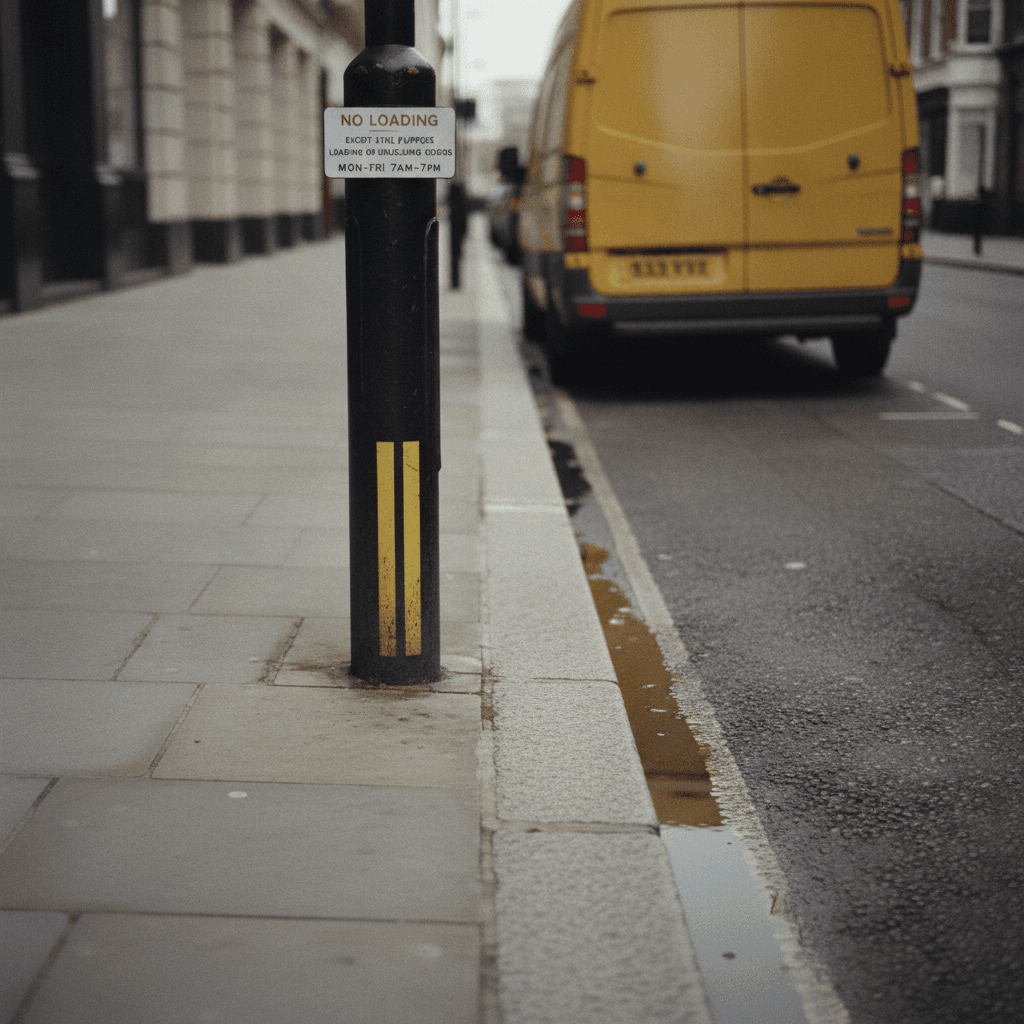
I had a driver come back from a central London drop with a Penalty Charge Notice that I initially assumed was a parking ticket. It wasn't. It was a loading ban infringement. He'd stopped on a yellow kerb line to drop a pallet and left the engine running. The loading restriction applied. I'd never told him it existed.
That was partly ignorance on my part. I understood loading bans in a vague way — "you can't stop on double yellow kerb lines during certain hours" — but I hadn't looked closely at how Traffic Regulation Orders work, what they authorise, or what exemptions operators can apply for. When you're running into urban areas, you need to understand TROs. They're not just parking rules.
What a Traffic Regulation Order is
A Traffic Regulation Order is a formal legal instrument made under the Road Traffic Regulation Act 1984. Local authorities — county councils, London boroughs, unitary authorities — have powers under the RTRA 1984 to make TROs that restrict, prohibit, or regulate traffic on specific roads within their area.
Nationally, the Secretary of State can make TROs on trunk roads. Local authorities cover the rest of the network. The orders have to be advertised before they're made — there's a notice period, a consultation, and local objectors can formally respond. Once made, TROs are permanent law until revoked or amended.
Experimental Traffic Orders (ETOs) under Section 9 of the RTRA can be made without full consultation, lasting up to 18 months. These are common in areas trialling pedestrianisation, delivery consolidation schemes, or cycling infrastructure. If you've started running into an area where the kerbside situation has changed recently, it may be an ETO rather than a permanent TRO.
What TROs can restrict for HGVs
The range of restrictions a TRO can impose is wide. For goods vehicle operators, the most commonly encountered are:
- Weight restrictions: "No vehicles over X tonnes" — expressed as Maximum Gross Weight or Maximum Axle Weight. These apply to roads or bridges where structural limits apply, or simply to residential areas wanting to exclude heavy traffic. Marked with a circular red sign showing the tonnage figure
- Time-restricted loading bans: Kerb markings (single or double yellow kerb lines) with associated time plates showing when no loading or unloading is permitted. Single yellow kerb lines usually mean restricted hours; double yellow means no loading at any time. The time plates confirm the specific restriction
- Lorry routes: Local authorities can designate specific roads as lorry routes under Section 1 of the RTRA 1984, requiring HGVs over a certain weight to use only those designated roads within the controlled zone. Areas like inner London, Edinburgh and central Birmingham have lorry route restrictions. Using a non-designated road is a criminal offence, not just a PCN matter
- Time-restricted HGV prohibition: Some roads are prohibited entirely to HGVs above a specified weight during certain hours — typically overnight or during school run periods. Night delivery restrictions fall into this category
- Delivery hours restrictions: Some areas impose conditions on when deliveries can physically occur through planning conditions rather than TROs — but TROs can replicate the same effect through prohibition orders
Kerb markings explained
Double yellow kerb lines (two parallel yellow lines on the kerb face) indicate a continuous loading ban — no loading or unloading at any time, with no exceptions. Single yellow kerb lines indicate a time-restricted loading ban — the time plate on the nearest sign shows when it applies.
Time plates are mounted on posts and show days and hours. They're often missed by drivers who stop quickly and leave the engine running. "I was only there two minutes" doesn't get you out of a PCN.
The loading ban is about loading and unloading, not just parking. A vehicle parked fully on yellow kerb lines during a loading ban restriction period is in violation even if the driver is out delivering goods. The 2-to-3-minute drop doesn't create an exemption.
Lorry route orders
Lorry route restrictions require particular attention. These aren't restrictions on stopping — they restrict where the vehicle can drive at all. In a lorry route zone, only designated streets are legally accessible to HGVs over the weight threshold (commonly 5 tonnes or 7.5 tonnes).
Sat-nav typically doesn't distinguish between lorry route streets and prohibited streets within a controlled zone. If you've got regular deliveries into a lorry route area, you need to identify the designated streets and brief your drivers explicitly. The penalty for using a non-lorry route in a designated zone is a Fixed Penalty Notice under the Road Traffic Offenders Act 1988 — criminal, not civil, unlike a loading ban PCN.
Permits and exemptions
Most TROs have an exemption mechanism. For loading bans, vehicles loading or unloading goods are sometimes exempt under the standard RTRA exemptions — but this only applies where the TRO explicitly carries the exemption, and many urban loading bans have had the exemption removed specifically to control freight delivery behaviour.
Local authorities running delivery management schemes often issue permits for specific operators — allowing access outside normal restriction hours, or access to streets within lorry route zones. These permits are usually applied for through the highway authority. If you're regularly delivering into a heavily restricted urban area, it's worth contacting the local traffic management team directly to ask what permit process exists.
TfL in London operates a Night Time Delivery scheme. Some local authorities operate Freight Operator Recognition Schemes (FORS-linked). The process varies, but most have a form and a fee, and the permit is valid for a defined period.
What operators need on file
DVSA's interest in TRO compliance is secondary to the Traffic Commissioner's interest in penalty points and PCNs. A driver accumulating PCNs for loading ban breaches or lorry route violations isn't just a cost — it's a pattern that reflects on operator compliance management. The Traffic Commissioner looks at driver penalty conviction records. A string of TRO-related offences, unaddressed, is a compliance failure.
For routes into TRO-restricted areas, the route file should identify the restrictions — weight limits, time restrictions, lorry route requirements — and the briefing to the driver should explicitly address them. Not "be aware of parking restrictions" — that's not enough. The specific restrictions, specific roads, specific hours.
I should have had that for central London in 2015. I didn't. The PCN was £130. The briefing would have taken 10 minutes.