DVSA Earned Recognition: the real cost in hours, and who it pays back for
I costed Earned Recognition for a 40-vehicle fleet last year. The paperwork is real. The roadside drop-off is real too. Here's the hour count, and the size of fleet where the maths breaks down.
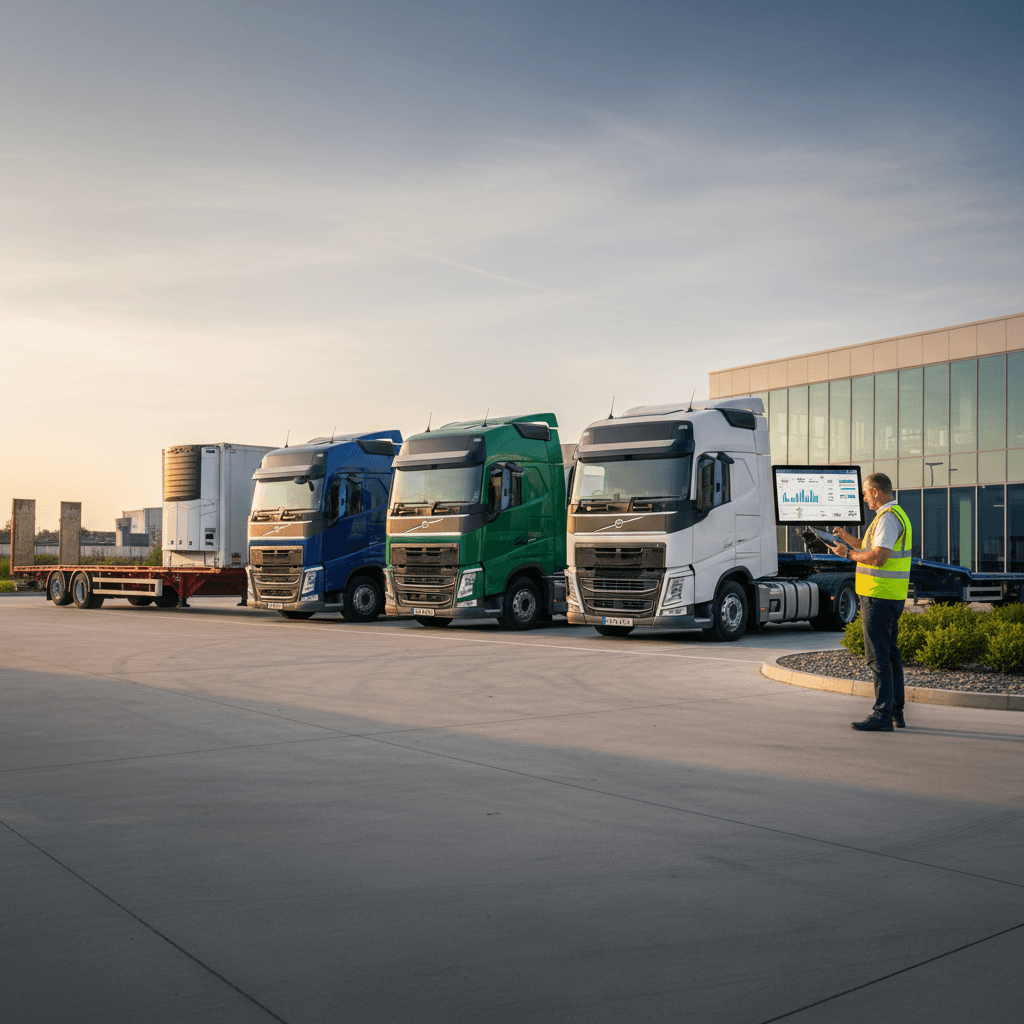
Earned Recognition has been around a few years now and I still get the same question every time a new operator asks me about it: "Is it worth the hassle?"
Proper answer: it depends on your fleet, what compliance software you're already running, and how much appetite you've got for having DVSA look at your data continuously instead of occasionally. Some operators love it. Some regret signing up. Let me break it down properly so you can decide.
What Earned Recognition actually is
It's a voluntary DVSA scheme for operators who can demonstrate consistently high compliance. You sign up, get audited by an approved auditor, install IT that reports specific KPIs to DVSA automatically, and in return your vehicles get fewer roadside stops and you get a nice badge for the website.
The KPIs reported are specific:
- Vehicle MOT first-time pass rate
- Prohibition rate (PG9s as a percentage of encounters)
- Annual test pass rate
- Tachograph infringements as a percentage of data
- Missed inspection dates
- Driver hours compliance
Cross the thresholds DVSA sets and you're in good standing. Miss them for two consecutive reporting periods and you get a warning. Miss them for three and you're out.
And being out of Earned Recognition, having once been in, is noticed. It's not neutral. Which is one of the things nobody tells you up front.
What you get out of it
The practical benefits, in rough order of how much they actually matter:
Reduced roadside attention. DVSA's targeting software deprioritises ER operators. Your vehicles still get pulled sometimes — the system isn't perfect and nor should it be — but the rate drops noticeably. For a fleet running high mileage on targeted corridors, this is real money in lost-production-time terms.
Insurance premium benefit. Some insurers will take 3-5% off a commercial fleet premium for ER status. Worth asking. Nowhere near as dramatic as the marketing suggests — I've seen brokers claim 10-15%, which I have never, once, actually seen delivered.
Tendering advantage. Some large customers — mostly supermarkets, some construction framework contracts, occasionally government — will ask about ER status as part of procurement. If you're chasing big contracts, having it on the sheet helps.
The badge. The DVSA earned recognition logo on your website and your trucks. Some operators love this. Some think it's marketing fluff. Honestly, for end customers it means very little — the general public doesn't know what it is. It's more useful to other operators and procurement people.
What it actually costs
Here's where the maths gets interesting. The scheme itself is free to join. DVSA don't charge you. But:
- The audit. You need an audit by an approved auditor to get in, and another one every two years to stay. Expect £1,000-£2,500 per audit depending on fleet size.
- The IT. You need compliance software that can report the specified KPIs directly to DVSA. This is usually an add-on to whatever fleet management tool you're already running, costing somewhere between £5 and £25 per vehicle per month depending on the provider.
- The internal time. Someone — usually your Transport Manager — needs to spend roughly half a day a month reviewing the KPI dashboard, investigating any anomalies, and documenting corrective action. That's their time, which isn't free.
- The corrective pressure. This is the cost nobody talks about. Once you're in, every missed PMI, every infringement, every prohibition feeds directly into the report. You can't let anything drift because drift shows up in the next quarter's numbers.
The IT cost is the one that catches operators out. If you're already paying for a solid fleet management system, the marginal cost of the ER reporting module is small. If you're still running on spreadsheets and garage receipts, joining ER means buying an entire compliance software stack, which changes the maths entirely.
Who it works for
In my experience, Earned Recognition makes clear sense for:
- Fleets over 30 vehicles where the roadside stop reduction is meaningful.
- Operators already running decent compliance software (so marginal IT cost is low).
- Fleets chasing large contract tenders where ER status is a procurement question.
- Operators with exceptionally good underlying compliance (who'll clear the KPI thresholds without stress).
And it's questionable for:
- Small fleets under 10 vehicles where the audit cost is disproportionate.
- Operators whose compliance is borderline — you'll sign up, fail the KPIs, and be ejected, which is worse than not joining.
- Operators running tight-margin local work with minimal roadside exposure anyway.
The thing about the KPI thresholds
The published thresholds look reasonable on paper. In practice, a couple of them are harder than they sound.
The MOT first-time pass rate threshold sits at 95% for fleets of more than 20 vehicles. Sounds easy, right? But if you're running 10 vehicles through the test in a year and one fails on something genuinely minor — a cracked lens, a wiper blade — you're already at 90%, well under the 95% bar. That's why DVSA actually runs a separate rule for fleets of 20 or fewer: no more than one initial fail in 13 rolling measurement periods, rather than a flat percentage target. Small fleets are exposed to statistical volatility in a way a percentage threshold doesn't really account for, and the alternative rule exists precisely because of it.
Same story with prohibition rate. One PG9 in a small fleet can tip you below threshold for the quarter.
If you're sitting at 99% compliance, you're fine. If you're sitting at a genuinely realistic 92-94%, Earned Recognition is going to feel tight.
What the audit looks like
Right. I sat in on one as an observer for an operator I was advising. Let me tell you what actually happens.
An approved auditor — not a DVSA officer, someone commercial — spends 1-2 days on site. They go through:
- Maintenance records for a sample of vehicles (usually 5-10% of the fleet).
- Driver records — CPC, licences, right to work, training evidence.
- Tachograph data and infringement management process.
- Your written policies — drivers' hours, fatigue, defect reporting, disciplinary.
- Your IT system — are the KPIs actually being captured accurately?
They're looking for systems and evidence, not just compliance snapshots. Having clean vehicles today isn't enough — they want to see that you've got a process that produces clean vehicles consistently.
If you've been running proper compliance management for a couple of years, this audit is a one-day gentle conversation. If you've been winging it on charm and luck, it's a very bad two days. No middle ground.
The ongoing reporting burden
Here's the bit that surprises new joiners. ER isn't a one-off audit. It's continuous reporting — your IT system feeds KPI data to DVSA effectively in real time. That means:
- A missed PMI shows up the next day in the dashboard.
- A PG9 shows up within hours of being issued.
- An infringement pattern shows up at the next tachograph analysis cycle.
You don't get a chance to quietly fix things before anyone sees. DVSA sees everything. Which is fine if you're genuinely running a tight ship. If you're not, it's exposing.
What I'd do
Honestly? If I were running a fleet of 40+ vehicles with existing compliance software and a decent track record, I'd join. The roadside stop reduction alone pays for the audit cost within 12 months, and the procurement advantage opens up contracts that were previously out of reach.
If I were running 12 vehicles on a mix of tight-margin local work and I'm still tracking PMI dates on a wall calendar, I wouldn't join — yet. I'd spend 18 months getting my compliance process up to scratch, install compliance software that I'd benefit from regardless, and then reassess. Joining with weak underlying systems is worse than not joining.
And I'd never join because it sounds impressive. The badge does not, by itself, pay for the IT or the ongoing work. I covered the broader question of what DVSA actually focuses on when watching operators in the O-licence audit piece — Earned Recognition is essentially a formalisation of that attention, applied continuously.
The question I get asked most
"Does Earned Recognition protect you from a Public Inquiry?"
No. Not really. Being an ER operator is a positive factor that the Traffic Commissioner will note. But if you've genuinely messed up — a serious prohibition pattern, a fatal accident linked to maintenance failure, a financial standing problem — ER status doesn't get you out of the room. It might get you sympathy. It doesn't change the facts.
Think of ER as a signal that you're in the top quartile of operators. Not as a shield.
One last thing
ER membership numbers have grown steadily since the scheme launched, and there's an increasing sense that tenders in certain sectors will start treating it as essentially required within the next few years. That's not DVSA policy — DVSA is explicit that the scheme is voluntary — but it's a real commercial dynamic.
Which means the "should I join?" question may, for some operators, gradually become "when should I join?" That's not a reason to rush in unprepared. But it is a reason to start building the compliance systems that would let you join if you wanted to, regardless of whether you pull the trigger this year.
Get the systems right first. ER is a consequence of good compliance, not a cause of it. Operators who join in the hope that membership will tighten up their operation have — every time I've watched it happen — been ejected within 18 months. Do the work first. Apply later.