O-licence changes you must tell the Traffic Commissioner about — and how long you have
My named TM left on a Friday. I had 28 days to notify the TC — from the day she left, not the day I appointed her replacement. I nearly got it wrong.
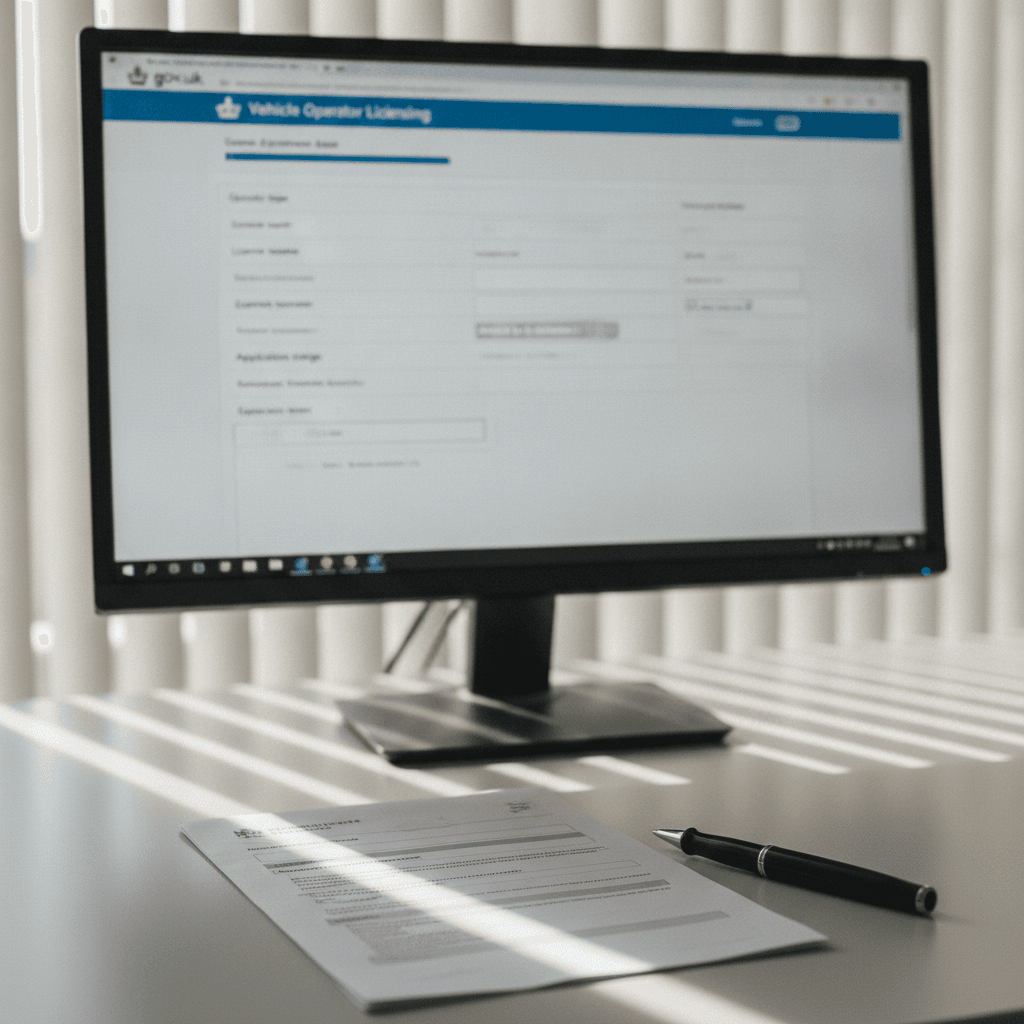
My named TM handed in her notice on a Wednesday. Left on the Friday three weeks later. I spent those three weeks looking for a replacement and found one two weeks after she left — five weeks in total from resignation to new appointment. When I finally logged into VOL to make the notification, I was already nine days past the 28-day window.
I made the notification late, explained the delay in writing to the Traffic Commissioner, and it didn't become a formal issue — but only because I was otherwise in good standing and the explanation was credible. It was a close call that shouldn't have been close at all.
The 28-day window runs from the date the change happened. Not the date you noticed. Not the date you sorted the replacement. The date of the change.
Transport manager changes: the 28-day rule
When your named transport manager leaves — resignation, retirement, dismissal, or any other reason — you have 28 days to notify the Traffic Commissioner. The notification goes through VOL online and is non-chargeable.
If you appoint a new TM on day 27, you still have one day left to make the notification. The system doesn't care about the gap — it cares about whether you notified within 28 days of the departure date.
The notification requires the new TM's CPC number and the date they took on the role. If you're operating without a TM beyond the 28-day window — whether because you haven't appointed one yet or because you're using a temporary arrangement — you need to be talking to the TC proactively, not hoping nobody notices. An unlicensed operation without a TM is a serious compliance matter.
Other changes that must be notified
The transport manager change is the most commonly cited 28-day obligation, but it's not the only one. Several other changes to your business or operations must be notified to the Traffic Commissioner:
Changes to the licence holder's business structure. If you're a limited company and there's a change of director, that should be notified. A change in ownership of the business — a partner leaving a partnership, a business acquisition — is relevant to the TC because the licence is granted to a specific entity with specific people at the helm. New directors or owners may be subject to their own good repute assessment.
Conviction of a relevant offence. If the licence holder, a director, or the named TM is convicted of certain offences — particularly those involving dishonesty, road traffic law, or health and safety — the TC must be informed. This isn't a 28-day window; it should happen as soon as reasonably practicable. Waiting to see whether the conviction becomes relevant is not an option.
Insolvency or significant financial difficulty. If your business enters administration, receivership, or voluntary arrangement, the TC must be notified. O-licences are granted on the basis of financial standing — a company that's no longer financially viable in the way declared at the time of licensing has to tell the TC. Licences can be suspended or revoked if financial standing collapses.
Prohibition notices and serious incidents. You're not required to notify the TC of every PG9 prohibition — but a pattern of prohibitions feeds through to your OCRS, which the TC monitors. A serious incident or a category of prohibition notice that suggests systemic maintenance failure is the kind of thing that prompts proactive notification rather than waiting for the TC to ask.
Operating centre changes: a different process
Worth being clear: changes to your operating centres are handled through a formal variation application, not a simple 28-day notification. Adding a new operating centre requires a minimum nine-week application window with local advertising and the possibility of objections. That's separate from the notification obligations described above — and the two are often confused.
If you close an operating centre and still have at least one remaining, that removal can be done without a chargeable variation. But you need to update your licence on VOL to reflect the change rather than simply leaving a centre on the licence that you're no longer using.
The VOL online system
Most of these notifications go through the Vehicle Operator Licensing system at gov.uk. It's the same system you used to apply for your licence. If you haven't logged in recently, do it now — before you need it urgently. The login details are tied to your business, and losing access to them when you're trying to make an urgent notification adds an unnecessary problem to an already difficult situation.
Keep a record of your VOL login details, your licence number, and your TM's CPC number in a place accessible to more than one person. I keep a sealed envelope in the company safe with the key account details for exactly this scenario — the situation where I'm not available and someone else needs to access the licence record urgently.
When in doubt, notify
The general principle with TC notifications is: if you're not sure whether a change needs to be notified, notify anyway. A proactive, voluntary notification of a change that turned out not to be strictly required is never held against you. Failing to notify a change that should have been reported — and being found out later — is a very different position to be in.
Traffic Commissioners are generally more sympathetic to operators who communicate proactively than to operators who go quiet and hope things resolve themselves. That's not a rule, it's a pattern I've observed watching how TC decisions read. Operators who communicate tend to get the benefit of the doubt. Those who don't, often don't.