S-marked prohibition: the first 72 hours and what lands on the Traffic Commissioner's desk
An S-marked prohibition shut my truck down at the roadside. What I did in the 72 hours after determined how the Traffic Commissioner reacted.
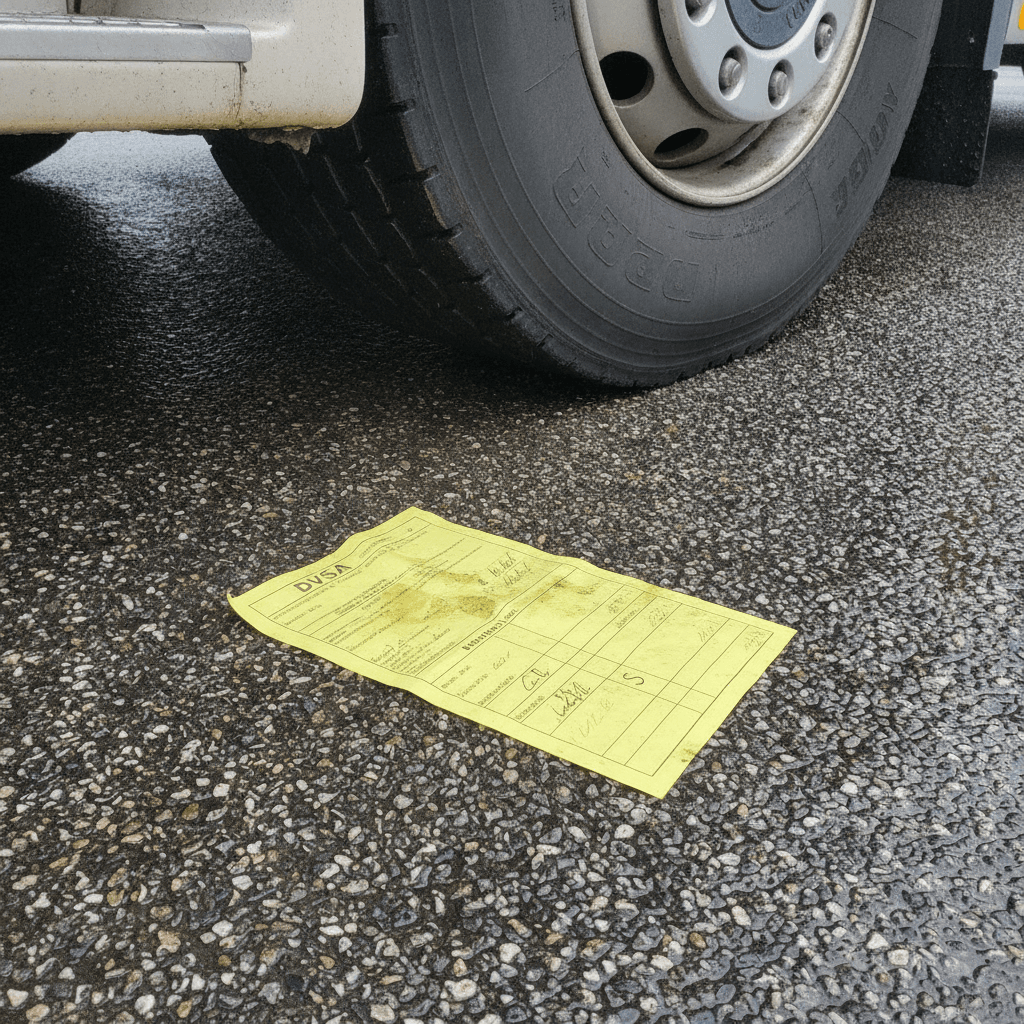
An S-marked prohibition is not the same as an ordinary PG9. I learned the difference the hard way in 2019, when DVSA issued one on a Scania R450 after a brake failure check at Cinderford.
The ordinary prohibition — an immediate PG9 — says: fix the defect and the vehicle can go. An S-marked prohibition says something different. It says: this defect is serious enough that we need to understand how it happened, not just that it's been fixed.
What you do in the hours and days after an S-marked prohibition shapes how the Traffic Commissioner responds. Here's the process I follow now.
What the S-mark means
When a DVSA examiner issues a prohibition notice — the PG9 form — they can add an S-mark. The S stands for "serious." It's the examiner's way of recording that the defect was sufficiently dangerous or systemic to warrant further scrutiny.
An S-marked prohibition gets reported to the Traffic Commissioner's office as a matter of course. Your OCRS score takes a significant hit — S-marked prohibitions carry more weight than standard immediate prohibitions. And the TC has the option to write to you asking for an explanation, or to call you in for a preliminary hearing or public inquiry.
The vehicle still can't move until the prohibition is lifted. Same as an ordinary PG9. But lifting the prohibition doesn't close the file — the S-mark investigation runs separately.
What triggers an S-mark
Common causes include brake efficiency failures — particularly where the vehicle's brakes are significantly below the legal minimum rather than marginally low. Serious steering defects. Tyre failures where the tyre is in a condition that could cause a blowout. Structural damage to the chassis or body that affects vehicle safety.
The examiner's judgement call is whether the defect represents a failure of the operator's maintenance system rather than a one-off mechanical issue. A brake pad that wore out between inspections is bad. A brake pad that should have been caught at the last PMI and wasn't — that's what triggers the S-mark.
DVSA aren't just assessing the defect. They're assessing whether your maintenance system is working.
The first hour
When the prohibition is issued, the first job is getting the vehicle off the road legally and safely. If it's on a motorway or A-road, get a recovery unit to the vehicle. Don't move it under its own power if the prohibition is immediate.
Get the PG9 form and keep it. Read the S-mark section. Note the defect description word for word — this is what you'll be explaining to the TC. Photograph the prohibition notice. Photograph the defect if you can access it safely.
Call your workshop. Get the vehicle booked in for inspection. Make clear to the workshop this is an S-marked prohibition — the defect description from DVSA needs to be examined, recorded, and the root cause identified, not just the defect fixed.
The workshop report: what it must say
When the workshop repairs the vehicle, you need more than a job sheet saying "brake pads replaced." The root cause investigation is what matters.
The workshop report should cover: the defect found, confirming the DVSA description; why the defect occurred — whether it developed after the last inspection, was missed at the last PMI, or resulted from a component failure; what was done to fix it; and what changes to the maintenance schedule, if any, are recommended.
If the defect should have been caught at the last scheduled PMI and wasn't, the workshop report needs to say that clearly. You then need to address why it was missed — was the inspection carried out properly? Was the inspector qualified? Was the inspection frequency adequate?
A report that says "brakes repaired" helps no one. A report that says "brake efficiency below minimum, identified as wear beyond expected PMI interval, recommendation to increase frequency of brake efficiency checks on high-mileage vehicles in fleet" helps the TC understand you've taken this seriously.
Notify the Traffic Commissioner
Operators are required to notify the Traffic Commissioner of events that affect their O-licence undertakings — including prohibitions that suggest maintenance failures. The S-marked prohibition creates a specific expectation of communication.
Don't wait for the TC to write to you first. Write to them. Send a brief letter — or use the VOL online system — explaining what happened, what the defect was, what investigation you carried out, what action you took, and what you've changed as a result.
This isn't admission of guilt. It's demonstration that you run an operator who takes compliance seriously. TCs respond differently to operators who report proactively compared to operators they have to chase.
The letter should be factual. Avoid language that's defensive or minimising. State what happened, what you found, what you did. Attach the workshop report. Attach the inspection records for that vehicle showing the PMI history.
Review your PMI records for that vehicle
Pull every PMI record for the vehicle going back at least six months — twelve months if the O-licence undertaking specifies it. Look at what was checked at each inspection, who signed it off, what defects were noted and when they were cleared.
If the brake defect that triggered the S-mark was evident at a previous PMI and wasn't properly recorded or followed up, you need to know that before the TC does. Better to identify it yourself, address it in your letter, and explain what you've done to improve inspection quality than to have DVSA or the TC's office pull the records and find it themselves.
If the records are missing — PMIs not completed, records not signed, gaps in the schedule — that's a separate problem. Fix it immediately and document that you've fixed it.
Driver debrief and management review
The driver should be debriefed. Did they report any defect prior to the prohibition being issued? Was there anything in the walkaround check that morning that should have flagged a problem?
If the walkaround check form from the day of the prohibition shows "no defects," and the brake issue was significant enough to trigger an S-mark, that raises questions about the quality of the walkaround. Not necessarily blame on the driver — some brake defects aren't visible at a walkaround — but it's worth documenting the conversation.
The debrief record, the walkaround form, and the workshop report together give you a coherent picture of what happened and what you've done about it. That's the package you send to the TC.
The OCRS impact and what follows
The S-mark will show on your OCRS record. There's no avoiding it. But OCRS is a rolling picture — it reflects what you do after an S-mark as well as the S-mark itself.
Operators with a strong OCRS history — good inspection records, clean roadside check results — absorb one S-marked prohibition without being pushed into the red band. Operators who were already borderline may find themselves moved to red, which increases targeted roadside check frequency and may trigger a maintenance investigation visit.
The best response to an S-marked prohibition is a thorough, documented letter to the TC followed by sustained clean maintenance records over the following months. It doesn't erase the S-mark, but it puts it in context.
What the TC letter says and how to respond
If the TC writes to you following an S-marked prohibition, they're typically asking for an explanation of what happened and what you've done about it. Respond in writing within the timeframe they specify.
Don't get a solicitor unless you're also facing a public inquiry. For a written explanation request, a clear, factual letter with the supporting documentation is more effective than legal language. TCs have seen every kind of response. The ones that land well are the ones that show the operator understands what went wrong and has taken it seriously.
If you're called to a preliminary hearing or public inquiry — which is more likely if you have a history of prohibitions or poor maintenance records — then yes, get specialist advice. But for a first S-marked prohibition on an otherwise clean licence, a well-written letter usually keeps it from going that far.
The OCRS picture after an S-mark
S-marked prohibitions carry significantly more OCRS weight than standard immediate prohibitions. The OCRS system assigns scores to enforcement encounters — roadside checks, prohibitions, annual test failures — and uses those scores to calculate a risk band. S-marked prohibitions sit near the top of the weighting table for maintenance-related findings.
The OCRS band — green, amber, or red — determines how frequently DVSA target your vehicles for roadside checks. A red-band operator can expect significantly more frequent stops than an amber-band one. More stops mean more data. If the maintenance issue that triggered the S-mark hasn't been properly resolved, more stops mean more findings.
So the S-mark isn't just about the immediate prohibition — it's about what it does to your check frequency for the next twelve to twenty-four months. Clean checks in the period after the S-mark start to rebuild the score. Another prohibition in the same period compounds it.
Fleet-wide inspection: check the others too
When DVSA issue an S-mark for a defect that suggests a maintenance system failure — brake pads worn beyond safe limits, steering component not caught at PMI — it's worth inspecting the rest of your fleet for the same defect class. Not just because DVSA might visit, but because the failure mode that showed on vehicle A may exist on vehicles B, C, and D.
I've done this twice following prohibitions. Once found nothing across the rest of the fleet — the defect was vehicle-specific and had developed faster than expected. Once found a similar brake wear issue on a second vehicle that would have shown up at its next PMI in a fortnight anyway. Caught it early. The preventive repair cost a fraction of what another S-mark and the associated management time would have cost.
Document the fleet inspection. Inspection date, vehicles checked, findings (or absence of findings), signed off by who. If DVSA or the TC ask whether you checked the rest of the fleet after the S-mark, you want to be able to say yes and produce the records.
Using a solicitor or transport consultant
For a first S-marked prohibition on an otherwise clean operator licence — one with no prior history of prohibitions, a consistent PMI record, and a responsive attitude — a well-drafted letter from you directly, with supporting documentation, is usually sufficient to address the TC's concerns.
The moment you receive a public inquiry summons — not an explanation request, but a full PI notice — get specialist help. A transport solicitor or accredited transport consultant who knows how public inquiries work is worth the cost. The hearing itself isn't like a standard legal proceeding, but how you prepare and present your case matters enormously.
Some operators feel that engaging a lawyer makes them look guilty. It doesn't. TCs are experienced practitioners who know the difference between an operator preparing properly for a formal hearing and an operator trying to deflect. The question at the PI is whether you're fit to hold an operator's licence. Come prepared.