Smart tachograph v2 on new HGVs: what changed in August 2023 and what DVSA can pull at a roadside stop
Every HGV registered from August 2023 must have a smart tachograph v2. Here's what's different, what DVSA can now see before you've stopped, and what to brief your drivers on.
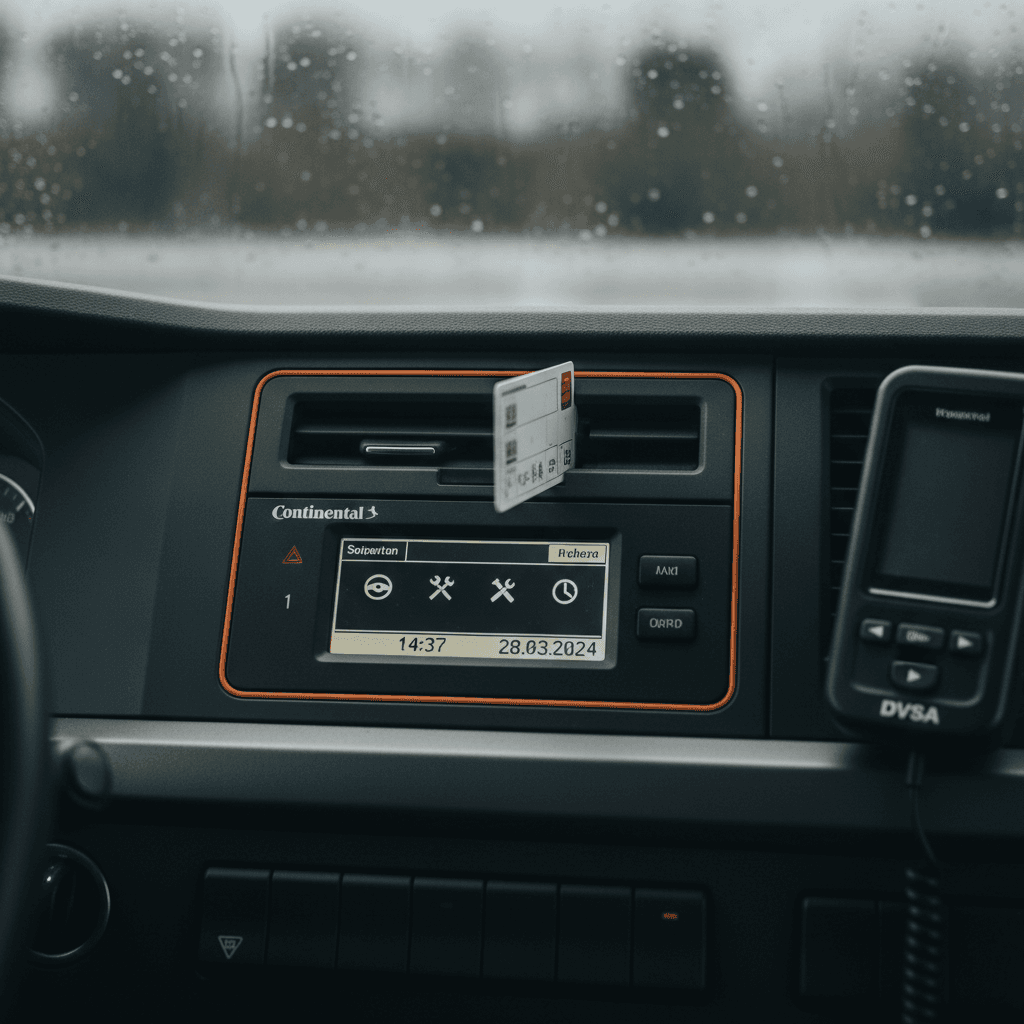
I bought three new Volvos in April 2024. FH13s, all registered after the cutoff date. When the DVSA officer pulled one of them at Keele services last October, he connected his roadside unit to the truck and had data off the tachograph before my driver had finished finding his licence. Different from the old analogue days. Different, actually, from even the digital tachographs we were running five years ago.
The reason: smart tachograph version two. From August 2023, every new vehicle in Great Britain requiring a tachograph must be fitted with one. If your fleet is running vehicles registered before that date, you're on the older equipment — and the difference is significant enough that it's worth both systems.
Smart tachographs before 2023
Smart tachograph version one came in from around 2019 for new EU registrations, adopted in the UK from 2020. It was called "smart" because it added two things the earlier digital tachographs didn't have: a built-in GNSS receiver and an ITS-G5 short-range wireless interface.
ITS-G5 is a short-range vehicle-to-infrastructure protocol. Roadside enforcement units can communicate with it from up to about 150 metres. So when an officer has the right equipment, the tachograph can confirm basic data — driver card status, kilometres driven, activity records — before the vehicle even stops. By the time your driver opens the door, the officer already has a snapshot.
Version one also recorded the vehicle's GPS position at the start and end of the daily working period and at every 3-hour interval of accumulated driving time. Four or five position fixes on a long day's run. Enough for a rough route trace.
What version two adds
Smart tachograph v2 — sometimes called the second-generation smart tachograph — kept all of that and added one thing with specific implications for fleets doing European work: it automatically records the vehicle's GPS position every time it crosses a national border.
That sounds minor. It isn't. For UK operators running into the EU, it means the tachograph now creates an automatic, tamper-resistant audit trail of every country crossing — including the time, date and satellite position. No more "we were in Belgium by Tuesday evening" on a handwritten note or delivery schedule. The unit records it, independently of anything the driver does.
The border-crossing record matters because of cabotage rules. EU member states limit how many domestic loads a UK haulier can pick up on a return leg. Those rules are time-limited and entry-date-dependent. If a French officer wants to know when your truck entered France, they can query the tachograph and get a cryptographically signed record. You can't argue with it.
Version two also has improved anti-tampering measures: stronger cryptographic signing, better internal logging of manipulation attempts, and more sensitive GNSS receiver. The data is harder to interfere with than on a v1 unit.
What the ITS-G5 interface does at a roadside stop
The thing most operators haven't briefed their drivers on: with a v2 unit, an officer with the right handheld can query your tachograph from their vehicle without stopping you first. By the time your driver pulls in to the check site, the officer already has a snapshot of the last 24 hours of activity. They know if there's an obvious rest-period breach. They know if the driver card matches the vehicle unit. They may already have a reason to look harder.
ITS-G5 was in version one too. But v2 implementations are more standardised, DVSA has been equipping officers with compatible units, and the interrogation is faster. I treat any vehicle registered from 2023 as fully readable at a roadside stop before the driver steps out of the cab.
What I tell my drivers: if you get pulled at a check site, the officer already has data. Don't try to explain things before they've asked. Let the tachograph records speak first. If you've got a legitimate reason for an apparent anomaly — roadworks causing a delayed rest, a technical fault on the unit — say so when asked, not immediately on stepping out.
Which vehicles are affected
The requirement covers new vehicles that already require a tachograph: goods vehicles over 3.5t GVW used commercially, operating on roads. Light vans under the 3.5t threshold don't need a tachograph, so they're not in scope for v2.
Vehicles registered before August 2023 with a version one unit can keep running it. There's no retrofitting obligation. When those vehicles need a tachograph unit replacement — typically at a calibration where the unit itself is defective, or at a major rebuild — the replacement will need to be a v2-capable unit.
If your fleet buys second-hand, this matters. A 2022-registered truck with a smart tachograph is likely on version one. A 2024-registered truck is on version two. The equipment looks similar on the dashboard. The capability and the data it records are different.
The calibration cycle doesn't change
Two-year calibration cycle still applies. At each calibration, the DVSA-approved tachograph centre checks the unit, verifies the speed sensor, tests the GNSS receiver, and updates the calibration plaque. Same interval, same process. Version two adds the ITS-G5 unit test and the GNSS sensitivity check to the calibration record.
One thing to check: not every tachograph workshop is approved for version two equipment yet. The technology is relatively recent and some smaller operators have found their usual workshop isn't tooled up. Confirm your approved workshop is v2-capable before the next calibration is due on a newer vehicle.
European work and border recording — brief your drivers
For fleets doing cross-channel runs, the brief is straightforward:
The tachograph records each country entry automatically. Time, position, satellite coordinates. It's signed with a cryptographic key tied to the vehicle unit. You can view it on the tachograph display if you know the menu structure, but you can't modify, delete or influence the stored record.
Practically: drivers shouldn't try to work out cabotage eligibility on a handwritten notepad. The tachograph has an independent record of when the vehicle crossed into France or Germany — which may differ from what's on the delivery notes. If there's a discrepancy, enforcement will use the tachograph record.
On cabotage specifically: under the UK-EU Trade and Cooperation Agreement, UK hauliers can perform up to two cabotage operations in an EU member state within seven days of completing an inbound international journey there. The v2 unit now gives enforcement an automatic, verifiable record of when that international journey finished. That's a meaningful change in enforcement capability relative to a year ago.
Analysis software — check it handles v2
If you're using tachograph analysis software, confirm it handles version two data correctly. V2 adds new record types — country border records, road category records — that older software versions may ignore or flag as unknown. I found one system I was trialling that simply skipped those records. Not good enough if you're auditing EU compliance.
Most of the major platforms have updated. If yours hasn't, push them. And if you're buying analysis software now, make sure v2 support is confirmed in writing before signing anything.
What stays exactly the same
Despite the new unit, the core compliance obligations haven't moved:
- Vehicle unit download: every 90 days maximum
- Driver card download: every 28 days maximum
- Infringement review: required after each download, documented
- Record retention: tachograph data held for a minimum of 12 months; 24 months if tachograph records are your primary WTD evidence
The 2-year calibration obligation remains, triggered also by changes to the tachograph installation — new speed sensor, tyres significantly changing rolling circumference, or unit replacement.
One thing most operators have missed
Version two was mandatory from August 2023. If you've added vehicles to the fleet since then and assumed the tachograph obligations are the same as your older trucks, check: the data the unit stores, the remote interrogation capability, and the European border-crossing records all affect your compliance picture in ways version one didn't.
DVSA officers are being equipped with compatible roadside units. The gap between what's on your truck and what enforcement can access at a stop is narrower than it was three years ago. Well-run fleets won't find this a problem — the data will reflect what they already knew. But if your downloading or analysis has been lax, version two makes it harder to argue ambiguity at the roadside.
Worth half an hour with whoever does your tachograph analysis to confirm they're seeing v2 data correctly. A quiet conversation now costs a lot less than a roadside prohibition later.