Defect reporting and PG9 prohibitions: what triggers them, what they cost, and how to avoid the S-mark
A PG9 isn't a fine — it's a prohibition on using the vehicle until the defect is fixed. Same form, two flavours: the ordinary one, which hurts, and the S-marked one, which can end your O-licence. Here's what DVSA officers actually look at, and how defect reporting from your drivers either saves you or sinks you.
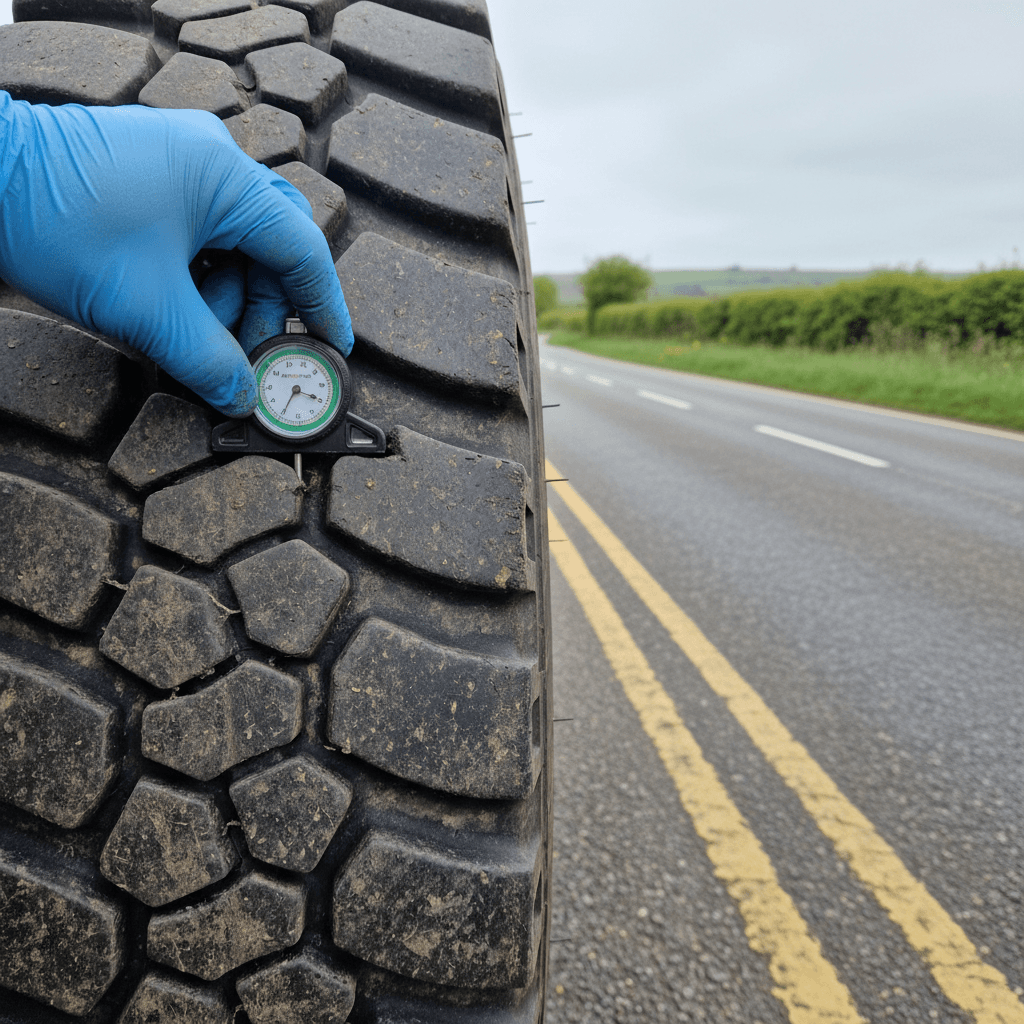
PG9 is the form every operator dreads and very few quite understand until they've had one written against a vehicle.
PG9 is just the DVSA form number for a goods-vehicle prohibition — the "PG9" is the paperwork name, and every fleet manager knows what landing one means. DVSA officers carry pads of them. When something is found during a roadside encounter or annual test that's too serious to let the vehicle continue, they write a PG9 — and from that moment, legally, the vehicle cannot move under its own power until the defect is repaired and cleared.
That part most operators get. What most operators don't quite get is the difference between a PG9, a delayed PG9, and an S-marked PG9. Because those three variants have wildly different consequences.
The three flavours
Immediate PG9. The defect is serious enough that the vehicle cannot move. Full stop. It has to be repaired on the spot or recovered. Cannot be driven to the depot. Cannot be driven to a garage. If it's in a lay-by on the A1, you're calling a recovery truck.
Delayed PG9. The defect is serious but not quite immediate. The officer gives you 10 days (usually) to have it rectified. You can drive it home, book it into the garage, get it fixed. A delayed PG9 still counts on your OCRS. It's a prohibition that just happens to be time-deferred.
S-marked PG9. "Significant" failure. This means the defect indicates a serious underlying failing in the operator's maintenance system — not just one dodgy component, but evidence the system itself isn't working. An S-mark always gets reported straight to the Traffic Commissioner and triggers a DVSA follow-up — desk-based assessment or site visit — and frequently escalates to a Public Inquiry, though it depends on the operator's wider compliance picture. Don't assume a PI is guaranteed, but don't assume it isn't either.
The difference between a PG9 and an S-marked PG9 is not about the severity of the defect in isolation. It's about what the defect says about your operation.
What earns an S-mark
Here's the bit officers don't advertise but is absolutely the pattern from the cases I've watched:
- A defect that should have been found on the driver's daily walkaround — missed.
- A defect that should have been found on the last PMI — missed.
- A defect that corresponds to a previously-reported issue that was never actioned.
- A safety-critical fault with evidence of prior knowledge (scribbled defect in the book, not addressed).
- Multiple defects on the same vehicle, indicating systematic neglect.
The bar isn't the type of defect. It's the evidence that your systems should have caught it and didn't. A brake failure from a sudden air leak that couldn't reasonably have been spotted two days earlier? Ordinary PG9. A brake failure where the driver's defect book has "brakes soft" written three weeks running with no corresponding maintenance record? That's an S-mark.
Why driver defect reporting is the whole game
This is the thing I try to hammer into every operator I advise. Driver defect reporting — the daily walkaround report, the post-trip defect report, the book in the cab — is not a box-ticking exercise. It's the single most important document in your compliance chain.
Here's why. When a DVSA officer finds a defect at a roadside encounter, the first thing they do — after dealing with the immediate safety issue — is ask for the driver's recent defect book. They want to see:
- Did the driver report this defect?
- If not, why not — was it detectable on a proper walkaround?
- If yes, was it actioned, and how quickly?
If the driver reported the defect three days ago and it wasn't fixed, you're in deep trouble — that's clear evidence of systematic failure and a likely S-mark. If the driver didn't report it and it was detectable, that's evidence your driver training or discipline is weak. Also bad.
The only good answer is: "The driver reported this today. It's recorded. We were already planning to action it." Which means the defect was caught at the earliest possible moment.
I wrote about what DVSA inspectors actually look at during walkaround checks in the walkaround piece — the defect reporting process is the other side of the same coin. The walkaround is how you find the defect; the reporting is how you prove you found it.
Making defect reporting actually work
Most drivers' defect books are filled in at 50 miles per hour during the first leg. "Nil defects" written automatically for every line. Which means when there is a defect, it's either missed entirely or buried in a sea of identical handwriting.
Right. Here's what I'd do instead, and it's not original, just what works:
- Drivers report in the yard, not on the move. The report has to be completed before the vehicle moves. This is a cultural shift, usually. Push it.
- A "no defects" entry has to include the specific items checked. Not just a tick box. Brief notes. Tyres, lights, brakes, air build, wipers, mirrors — one or two words each.
- Defects reported go into a register, separate from the driver's book. The driver's book shows what happened on that day with that driver. The register shows what's been reported across the fleet and what's been done about it. Cross-reference the two when auditing.
- Every defect report gets an outcome recorded the same day. Fixed, scheduled, noted-and-monitored. Not left open.
- Repeat defects on the same vehicle within 30 days trigger investigation. Same issue reported three times? Not a driver problem — a maintenance problem.
Digital defect reporting apps are now the standard approach and they solve most of the handwriting and retrievability issues. But — and this matters — the app doesn't change the culture. A driver who taps "no defects" on a phone without looking at the vehicle is no better than one who ticks a box on paper without looking. The tool is not the fix. The discipline is.
What a PG9 actually costs you
The immediate costs of a PG9, assuming no S-mark:
- Recovery and repair. An immediate PG9 in a lay-by on the M6 costs £400-800 for recovery, plus repair. You're not moving that truck without it.
- Lost productivity. The customer is waiting for their load, the driver is stuck, the next job's schedule is collapsing. Depending on the run, you're easily looking at a four-figure knock-on.
- OCRS impact. The prohibition feeds into your OCRS. Covered in detail in the OCRS piece — short version: you'll feel the score movement for the next 18 months. And if it's an S-mark, the points double on OCRS — so one S-mark event hits your score twice as hard as an ordinary prohibition.
- Clearance cost. You need to have the defect rectified and the prohibition cleared. That's a garage job plus a potential re-inspection.
The cost of an S-mark, separately:
- A letter from the Office of the Traffic Commissioner within a few weeks.
- An invitation — meaning summons — to a Public Inquiry.
- At the Public Inquiry, potential outcomes range from a warning through a curtailment of your licence to revocation in serious cases.
- Your Transport Manager may also be called to answer for their own good repute.
Look, I'm not trying to scare you. Most operators will never see an S-mark. But if you're running a system where they're possible, you need to know what you're risking.
What to do when you've been served a PG9
Right. Scenario. DVSA officer at the roadside has written a PG9 against one of your vehicles. What now?
Step one: do exactly what the officer tells you about immediate movement. If it's an immediate prohibition, do not under any circumstances allow the vehicle to be driven — not even a few yards. Recovery vehicle only.
Step two: get the defect rectified properly. Not bodged. If it's brakes, full test after repair. If it's tyres, proper replacement. The officer may have noted a specific rectification requirement on the PG9 itself — read it.
Step three: clearance. Depending on the severity and the officer's notes, you may need a DVSA inspection to clear the prohibition, or you may be able to clear it with a certified garage test. The PG9 will tell you. Get the clearance paperwork.
Step four: internal investigation. Do not skip this. Within 48 hours, file a written note on what the defect was, how it was missed, what you've done about it system-wise, and who reviewed it. That note is your evidence of an effective management response. If DVSA later asks — and for S-marks they will — you've got it.
Step five: driver conversation. Not disciplinary automatically. A conversation. What did the walkaround look like? Was the defect genuinely detectable? Is the driver giving you a straight answer? Decide the action based on that, not on a reflex.
The one pattern that'll sink you
If I had to pick one operational pattern that kills operators more than any other, it's this: vehicles returning to the yard with reported defects that don't get actioned before the vehicle goes out again.
This is almost always a communication failure, not a malicious one. Driver reports, hands the book in, the defect notice sits in the tray, the vehicle goes out the next morning with a different driver who doesn't know. Then a roadside encounter, a PG9, and a conversation with DVSA about why the defect was in your records but the vehicle was still operating.
That conversation is devastating. Because you have literally written proof, in your own system, that you knew about the defect and used the vehicle anyway.
The fix is procedural. Defect reports do not go in a tray. They go immediately onto a physical or digital board that dispatch has to look at before releasing a vehicle. Vehicle with outstanding defect does not go out. No exceptions, no "it's probably fine", no "we'll do it tonight". No. Defect open: vehicle grounded.
Last thing
A well-run fleet still gets PG9s occasionally. It happens. Components fail between inspections. Tyres pick up a defect between the morning walkaround and the afternoon encounter. Nobody's perfect.
What separates well-run fleets from the ones that end up in Leeds is how the system responds around each PG9. Clean defect book, fast rectification, documented internal review, driver conversation — that's an operator having a bad day. Messy defect book, slow rectification, no paper trail, no driver follow-up — that's an operator on a slide toward a Public Inquiry.
You can't prevent every defect. You can, absolutely, prevent the pattern.